

In every Irish kitchen worth its salt, there exists a dish so simple it needs no introduction — yet so profound it can reduce a grown Irish emigrant to tears at the mere smell of it. Champ is not famous. It has no Instagram moment. It never made it onto the tourist menus in Temple Bar. But ask any Irish grandmother, and she’ll tell you it’s the only thing that matters on a cold winter’s night.
What Exactly Is Champ?
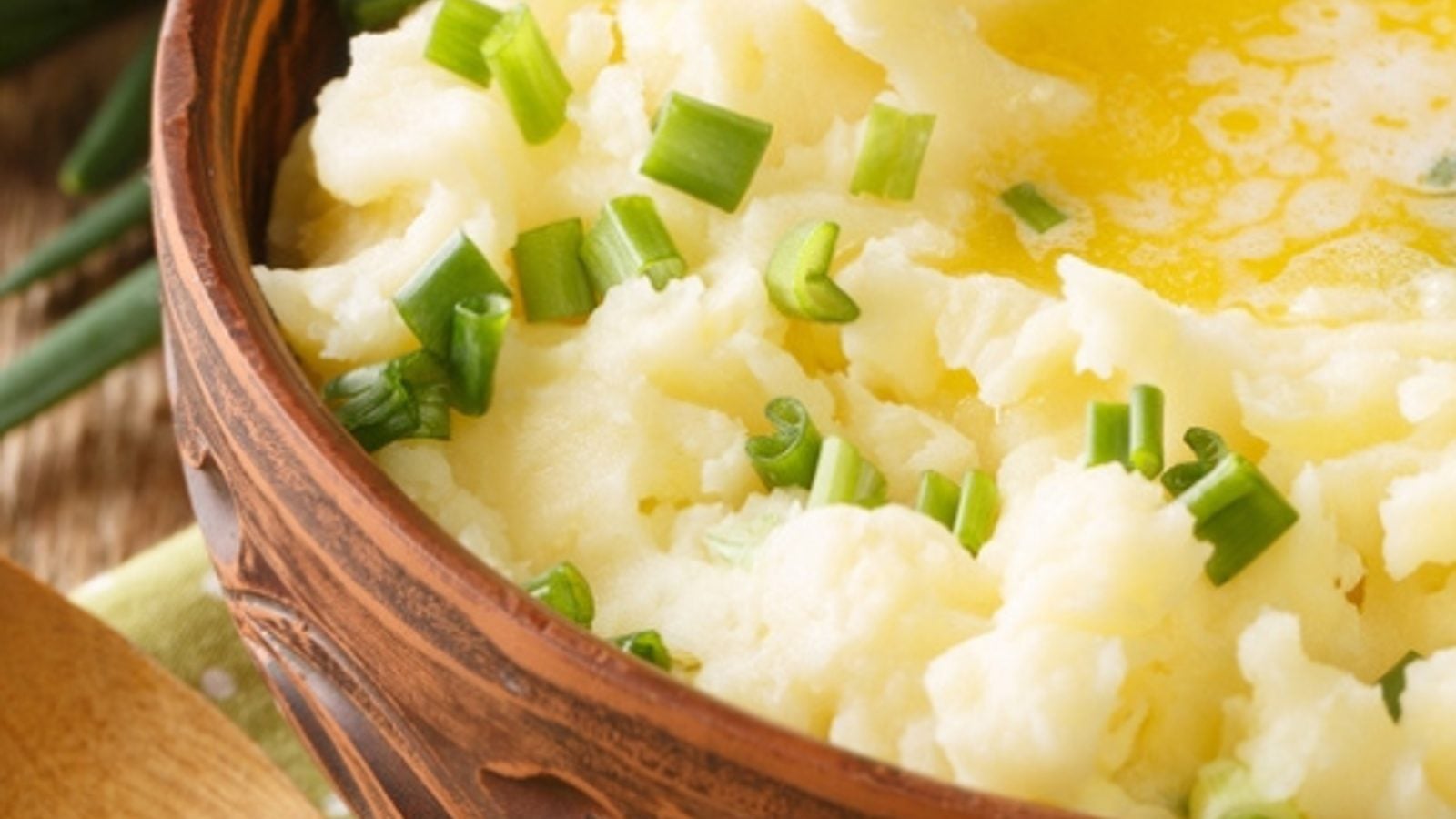
Champ is mashed potato — but that barely begins to describe it. The potatoes must be floury, boiled to within an inch of falling apart, then beaten with hot milk and butter until they reach a consistency that can only be described as clouds.
Into this goes a generous handful of spring onions (or scallions, as they’re known in Ireland), their green tops and white bulbs chopped and stirred through while everything is still piping hot.
At the very end, a well is made in the centre of the mound, and a knob of butter — always too much, and never quite enough — is dropped in to melt into a golden pool. That pool is sacred. Every Irish child knows you eat around the edges first, saving the buttery centre for last.
The Story Behind the Spud
The potato arrived in Ireland in the late 16th century and became, within a few generations, the near-exclusive diet of the rural poor. When the Great Famine struck in 1845 and the crops failed, over a million people died and another million fled.
Those who remained held onto their potato culture with a fierce, almost defiant tenderness. Champ emerged from that poverty as something more than sustenance — it was warmth, it was home, it was survival distilled into a bowl.
The saying that endured was simple: “In the house of the poor, champ was king.” It needed no explanation. Every family knew exactly what it meant.
Champ Belongs to Ulster — and Everyone Else
☘️ Love Irish Food & Culture?
Every Wednesday, we send our best Irish recipes, food stories, and kitchen traditions straight to your inbox. Join 64,000+ readers who love Ireland.
While champ is eaten throughout Ireland, it has its deepest roots in Ulster — the northern province. In counties Antrim, Down, and Tyrone, no proper Sunday dinner was considered complete without it. Some of the finest champ in Ireland is still made in farmhouse kitchens in the Ards Peninsula, where spring onions are grown in the garden and the potatoes are varieties you’ll never see in a supermarket.
In some homes, it went by different names: poundies in parts of the north, mushed in others. The spring onion is the defining ingredient — not chives, not leeks, not garlic. Those are imposters. Real champ uses the slim, mild scallion that smells of spring mornings and Irish rain.
If you’re planning a trip and want to experience the authentic food traditions of the north, our Ireland travel planning guide has everything you need to get started.
☘️ Enjoying this? 64,000+ Ireland lovers get stories like this every week. Subscribe free →
The Halloween Ritual Nobody Talks About
Champ had a life beyond the dinner table. On Samhain — the ancient Irish festival that became Halloween — it was believed that the fairies walked the earth and needed feeding.
Young unmarried women would take a mound of champ and leave it at the base of a boundary hedge at nightfall as an offering to the Good People. If a fairy found it, the reward was clear: you would be married before the following Samhain.
If the champ was gone in the morning, the omen was good. Nobody asked what actually ate it. Some things in Ireland are better left unquestioned.
Why Chefs Are Finally Paying Attention
For most of the 20th century, champ was invisible in restaurants. It was too plain, too simple, too honest for a menu. Then something shifted.
A new generation of Irish chefs, part of the revival that rediscovered traditional Irish food with pride and intention, began putting champ on their menus — not as a curiosity, but as a foundation. A properly made champ, with good Irish butter and fresh-grown scallions, turns out to be one of the best things a plate can hold.
It sits beneath a slow-cooked piece of Atlantic cod, or a pan-fried lamb chop, and transforms the whole dish into something quietly magnificent. The same kitchens celebrating Dublin’s other great comfort dishes have quietly come to understand what every Irish granny already knew.
How to Find the Real Thing
The best champ you will ever eat won’t be in a restaurant. It will be at a Sunday table in County Down, ladled from a pot that’s been on the hob since midday, passed round with no ceremony and very few words.
If you’re travelling through the north of Ireland — or indeed anywhere on the island — look for small local restaurants and cafés that still cook from scratch. You might find it listed as “champ” or simply “mashed potato with spring onions.” Order it. Eat it from the outside in. Save the butter pool for last.
Just as Irish whiskey has made a remarkable comeback after years of being overlooked, champ is quietly reclaiming its place at the table — both in Ireland’s finest kitchens and in the hearts of the diaspora who never forgot the taste of it.
Champ has survived a famine, outlasted empires, and fed a nation through its darkest years. It asks nothing of you except a little patience and a good knob of butter. That, perhaps, is the truest thing about Irish cooking — it never needed to be grand to be perfect.
☘️ You Might Also Love
Love Ireland? So do 65,000 of us.
Every week, our free newsletter delivers hidden gems, seasonal guides, local stories, and practical travel tips — straight to your inbox. Join the community that loves Ireland as much as you do.
☘️ Get More Irish Recipes & Stories
Join 64,000+ readers for weekly Irish recipes, food traditions, travel guides, and hidden gems. Free every morning.
📥 Free Download: Ireland Travel Planning Guide
Our most popular resource — itineraries, insider tips, and the 50 places you must not miss.
Tours & experiences you might love


Powered by Viator. Some links are affiliate links — we may earn a small commission at no extra cost to you.
Secure Your Dream Irish Experience Before It’s Gone!
Planning a trip to Ireland? Don’t let sold-out tours or packed attractions spoil your journey. Iconic experiences like visiting the Cliffs of Moher, exploring the Rock of Cashel, or enjoying a guided walk through Ireland’s ancient past often sell out quickly—especially during peak travel seasons.

Booking in advance guarantees your place and ensures you can fully immerse yourself in the rich culture and breathtaking scenery without stress or disappointment. You’ll also free up time to explore Ireland’s hidden gems and savour those authentic moments that make your trip truly special.
Make the most of your journey—start planning today and secure those must-do experiences before they’re gone!