

Somewhere beneath the Irish peat right now, there is butter. It might be 300 years old. It might be 3,000. It has been sitting there, slowly changing colour, slowly hardening, while empires rose and fell above it.
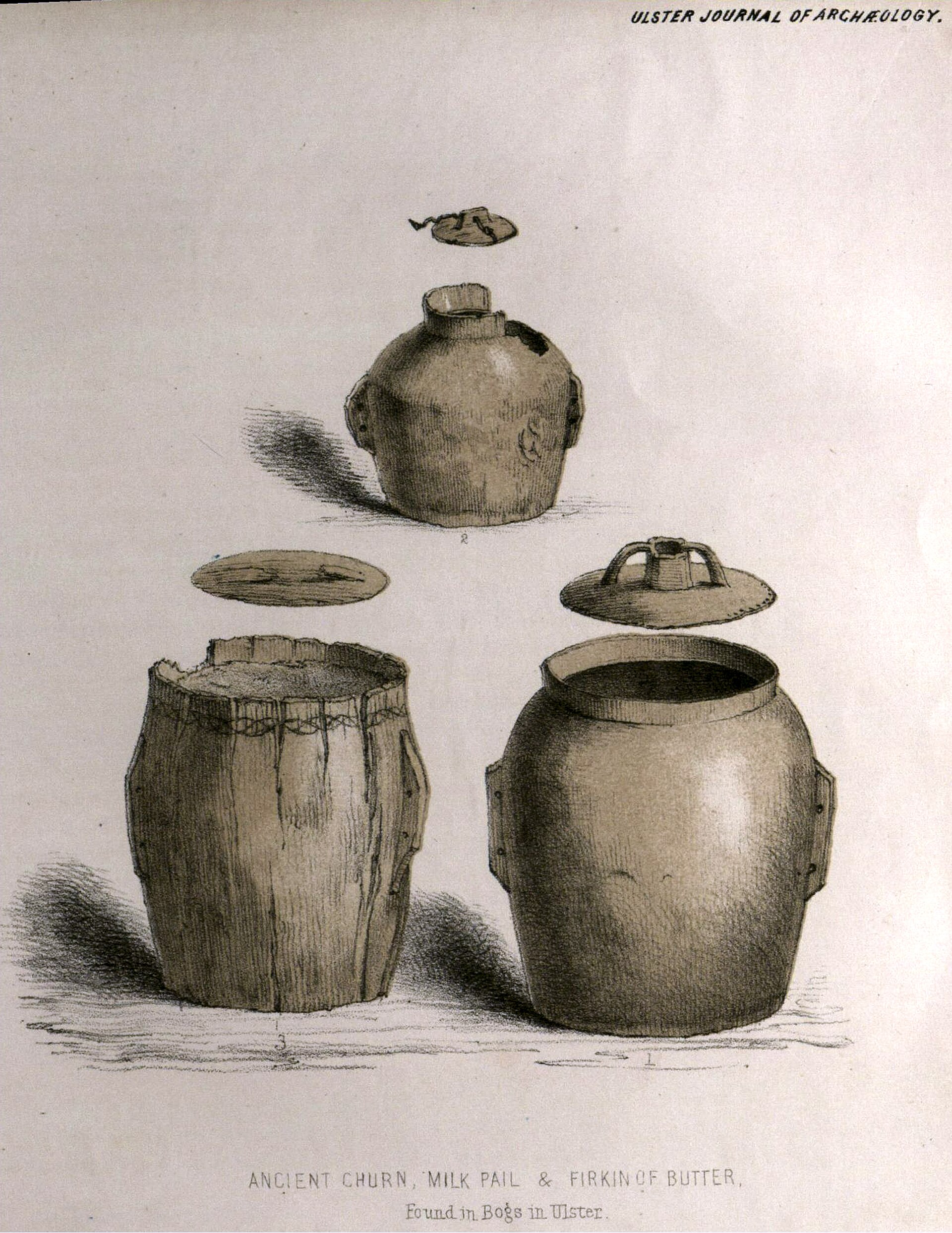
Since the Iron Age, people across Ireland walked into bogs carrying wooden containers of butter and left them there. Archaeologists have found hundreds of examples. Some of it still smells like food.
The Bog That Preserves Everything
The Irish bog is an extraordinary environment. Cold, airless, and saturated with sphagnum moss that produces natural antibiotics, it stops organic matter from rotting in its tracks.
Bodies have emerged from Irish bogs looking as though they died last year, when in fact they died thousands of years ago. Leather bags, wooden tools, woollen cloth — all preserved in extraordinary detail.
Butter was no exception. When fat enters a bog, it undergoes a slow chemical transformation. The original milk fats begin to break down into waxy compounds called adipocere. The butter becomes harder, greyer, and unusual in smell — but it does not rot. It simply waits.
Why Were They Doing This?
The most obvious answer is cold storage. Before the cellar or the freezer, the bog was Ireland’s most reliable natural refrigerator.
Autumn slaughter left farmers with more fat than they could use quickly. Cows gave milk in summer when surplus could not be sold or consumed fast enough. The bog kept it cool and safe.
But it was not simply practical. In early Irish society, butter carried serious value. Cattle were wealth. Dairy was currency. Rents were paid in butter. Taxes were collected in butter. A cache of preserved butter buried in a bog was like money in the bank — underground, invisible, and safe from raiders.
Some archaeologists believe certain deposits were never intended to be retrieved at all. They may have been offerings. A gift to the bog, or to whatever forces were believed to dwell within it.
What Did It Actually Taste Like?
☘️ Love Irish Food & Culture?
Every Wednesday, we send our best Irish recipes, food stories, and kitchen traditions straight to your inbox. Join 64,000+ readers who love Ireland.
Several people have tasted bog butter. The results are described consistently as pungent, funky, and intensely savoury — somewhere between very strong aged cheese and rancid fat.
Modern food historians who have studied medieval Irish texts note that different grades of bog butter were recorded based on burial duration and intended use. This was not an accidental discovery or a last resort. It was a deliberate product with its own tradition and value.
The Celts apparently loved it. Written sources from early medieval Ireland describe bog butter as a luxury item, offered at feasts and traded as a premium good.
☘️ Enjoying this? 64,000+ Ireland lovers get stories like this every week. Subscribe free →
The Numbers Are Remarkable
Hundreds of bog butter deposits have been found across Ireland. The largest examples weigh tens of kilograms. Some are contained in birch bark, some in wooden casks, some wrapped in animal hides.
Most are found by turf cutters — people working the bog for peat fuel — who slice down through centuries with their spades and hit something hard, wooden, or sharply aromatic. It happens regularly enough that Irish museums have established protocols for receiving new finds.
A number of significant examples are held at the National Museum of Ireland in Dublin, alongside the preserved farmland and other organic material recovered from the same peat landscape. County museums in Cavan, Tipperary, and Offaly also hold local examples.
A Tradition That Spans Two Thousand Years
The earliest confirmed bog butter deposits in Ireland date to around 400 BC. The most recent confirmed examples are from the 18th century AD. That is over two thousand years of the same behaviour: walk to the bog, lower the container, mark the spot, return later.
Some never returned. Wars, famine, sudden death — for whatever reason, certain deposits were simply abandoned. They waited, unaware that the world had moved on entirely above them.
The tradition also extended to Scotland and Scandinavia. But Ireland produced the greatest concentration of finds, reflecting how central bogland was to Irish farming life. The Irish relationship with food and land has always run deeper than most visitors expect.
Where You Can See Bog Butter Today
The National Museum of Ireland in Dublin holds several examples. Bog butter sits in climate-controlled cases, waxy and grey, looking like nothing you would recognise as food until you read the label.
If you want to explore these stories in person, county museums across Ireland are often the best places to encounter the unexpected — the objects that never made the history books but shaped everyday life for thousands of years.
If you are planning a visit and want to go beyond the usual sights, our guide to planning your trip to Ireland is a good place to start.
The bog butter story is not just archaeology. It is a reminder that ordinary life — feeding a family, paying a debt, preparing for winter — has always been the real story of Ireland.
Every buried container represents someone’s decision, someone’s work, someone’s winter. Most came back for it. Some did not. The bog held all of it. It still does.
☘️ You Might Also Love
☘️ Join 64,000+ Ireland Lovers
Every Friday, get Ireland’s hidden gems, local secrets, and travel inspiration — the kind you won’t find in any guidebook.
Love more? Join 43,000 Scotland lovers → · Join 30,000 Italy lovers → · Join 7,000 France lovers →
Free forever · · Unsubscribe anytime
☘️ Get More Irish Recipes & Stories
Join 64,000+ readers for weekly Irish recipes, food traditions, travel guides, and hidden gems. Free every morning.
Tours & experiences you might love


Powered by Viator. Some links are affiliate links — we may earn a small commission at no extra cost to you.
Secure Your Dream Irish Experience Before It’s Gone!
Planning a trip to Ireland? Don’t let sold-out tours or packed attractions spoil your journey. Iconic experiences like visiting the Cliffs of Moher, exploring the Rock of Cashel, or enjoying a guided walk through Ireland’s ancient past often sell out quickly—especially during peak travel seasons.

Booking in advance guarantees your place and ensures you can fully immerse yourself in the rich culture and breathtaking scenery without stress or disappointment. You’ll also free up time to explore Ireland’s hidden gems and savour those authentic moments that make your trip truly special.
Make the most of your journey—start planning today and secure those must-do experiences before they’re gone!