

Walk into any pub on a Friday night in Ireland and you will hear it before you see it. A deep, rhythmic thump rising beneath the fiddles and the flutes. It holds the whole session together — yet nobody can agree on where it actually came from.
The bodhrán (pronounced boh-rawn) is Ireland’s most recognisable drum. And it is almost certainly the country’s most disputed instrument.
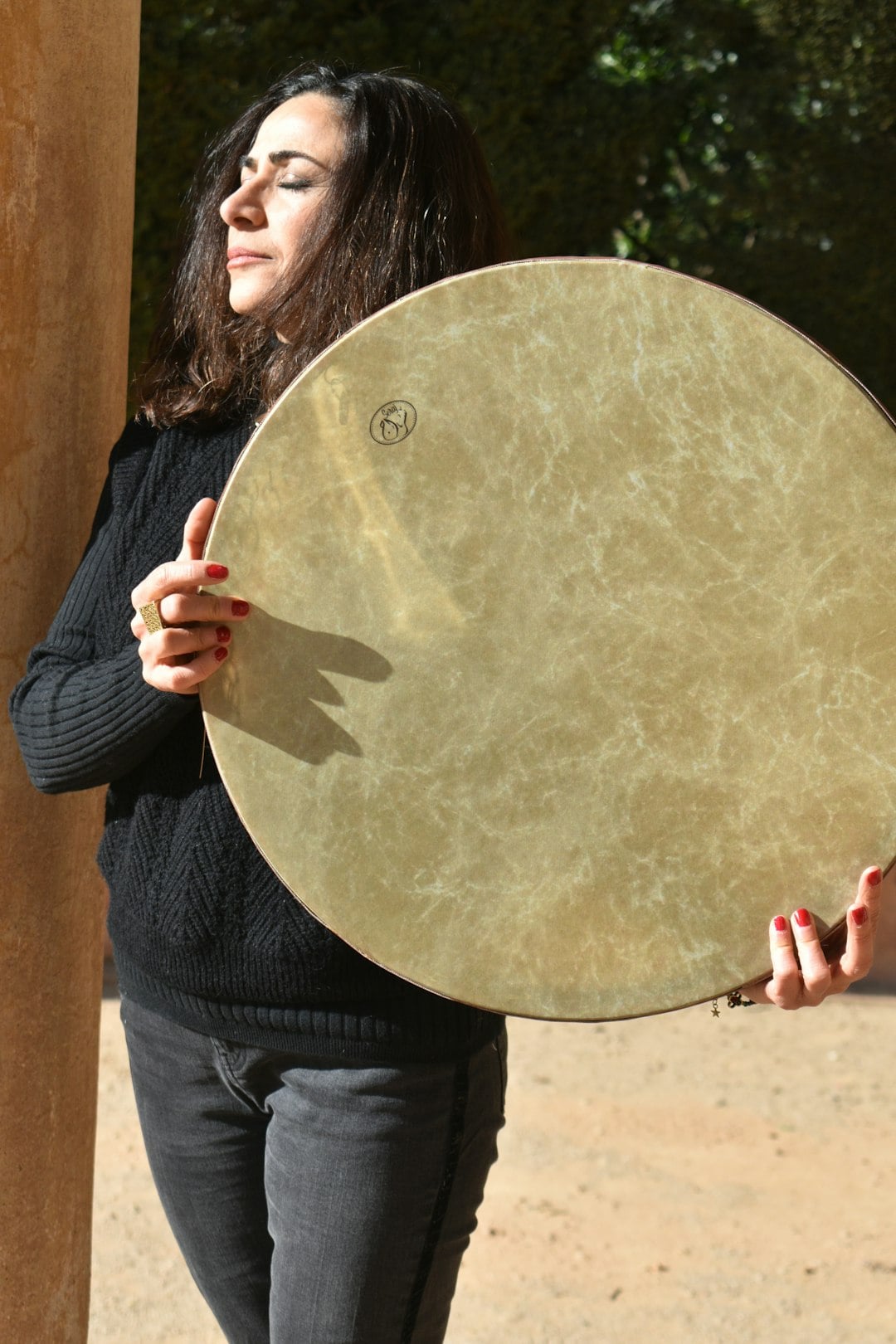
What Exactly Is a Bodhrán?
The bodhrán is a shallow, handheld frame drum. One side is open; the other is covered with a skin head — traditionally goatskin. A player holds it vertically with one hand inside the frame and strikes the skin with a short double-headed stick called a tipper, or cipín.
The sound is unmistakable. Soft, resonant, rhythmic. In a trad session, it sits beneath everything else — not dominating, but anchoring. Remove it and the whole thing feels slightly unmoored.
The word bodhrán itself comes from the Irish for “deaf” or “dull” — a nod, perhaps, to the dry, muted thud of the skin. Or possibly an older meaning entirely. Even the name is contested.
The Man Who Made It Famous
The figure most associated with the bodhrán’s modern rise is Seán Ó Riada. He was a Cork-born composer and musician who, in the early 1960s, placed the drum at the centre of Irish traditional music through his groundbreaking ensemble Ceoltóirí Chualann.
Before Ó Riada, the bodhrán was almost invisible in formal trad circles. Many musicians had never seen one at a session. Some believe he essentially created its modern role — that he took a farm implement or ceremonial object and transformed it into a musical instrument.
Ó Riada himself said he had encountered bodhráns being used in rural Munster long before his involvement. But those accounts are impossible to verify. He died in 1971, aged just 40, and took much of what he knew with him.
The Ancient Theories
Some scholars argue the bodhrán has roots far older than the 1960s. They point to Celtic harvest rituals where frame drums were used in seasonal ceremonies tied to festivals like Samhain and Bealtaine. Similar instruments appear in early Irish manuscripts — though the connection to the modern bodhrán is never quite clearly established.
Others connect it to the Wren Boys — the straw-masked figures who march through Irish villages every St Stephen’s Day. Some historians believe these midwinter processions once used frame drums as part of their rituals, long before formal musical traditions codified them into something more recognisable.
There are also intriguing comparisons to similar drums found across North Africa, the Middle East, and Scotland — raising questions about ancient trade routes and shared cultural traditions stretching back far beyond written record.
A more prosaic theory grounds the bodhrán in the farmyard rather than the ritual circle: some historians argue it began as a grain-winnowing tray or a frame used in wool-dyeing, repurposed as a drum once someone picked up a stick. Music researcher Fintan Vallely, after years of study, concluded the bodhrán has likely only been part of Irish traditional music for around 200 years — a data point that complicates the “ancient instrument” story as much as it supports the “1960s invention” one.
☘️ Enjoying this? 64,000+ Ireland lovers get stories like this every week. Subscribe free →
Why the Argument Still Matters
To outsiders, this might seem like a minor academic quarrel. But to many Irish musicians, it goes to the heart of cultural identity.
If the bodhrán is genuinely ancient, it carries the weight of a continuous tradition — a living link to an Ireland that existed before famine, colonisation, and the systematic suppression of the Irish language and culture. If it was essentially invented or popularised in the 1960s, it tells a different story. One of a culture actively rebuilding itself, reaching for instruments and symbols it could claim as its own.
Neither version is less valid. Both reflect something true about Ireland. But they mean different things to the people who play it every week in pubs from Cork to Donegal.
Hearing It for Yourself
You do not have to look hard. Step into any Irish trad session and the bodhrán will almost certainly be there. The best sessions tend to happen on weekday evenings, when the tourists have thinned out and the locals have settled in.
Some sessions have an informal rule: newcomers should not bring a bodhrán until they can hold a rock-steady rhythm. Others welcome all players. Much depends on the landlord, the mood, and the musicians already at the table.
Workshops run regularly across Clare, Galway, and Kerry. A basic playable bodhrán and tipper typically starts from around €70–€100 at Irish music shops, with cheaper souvenir-grade versions sometimes sold for less. If you are planning a trip to Ireland, building in a trad session night is one of the best decisions you can make.
Whatever its true origins, the bodhrán has more than earned its place at the heart of Irish music. Every session it anchors. Every note it supports. And every time someone hears it for the first time — that deep, rhythmic pulse beneath a fiddle reel — they stop, they listen, and they feel something they cannot quite name.
That might be the oldest Irish tradition of all.
☘️ You Might Also Love
☘️ Join 64,000+ Ireland Lovers
Every Friday, get Ireland’s hidden gems, local secrets, and travel inspiration — the kind you won’t find in any guidebook.
Free forever · Unsubscribe anytime
Tours & experiences you might love


Powered by Viator. Some links are affiliate links — we may earn a small commission at no extra cost to you.
Secure Your Dream Irish Experience Before It’s Gone!
Planning a trip to Ireland? Don’t let sold-out tours or packed attractions spoil your journey. Iconic experiences like visiting the Cliffs of Moher, exploring the Rock of Cashel, or enjoying a guided walk through Ireland’s ancient past often sell out quickly—especially during peak travel seasons.

Booking in advance guarantees your place and ensures you can fully immerse yourself in the rich culture and breathtaking scenery without stress or disappointment. You’ll also free up time to explore Ireland’s hidden gems and savour those authentic moments that make your trip truly special.
Make the most of your journey—start planning today and secure those must-do experiences before they’re gone!