

There is a ring that Irish people wear every day that carries a silent message — one that anyone from Ireland can read at a glance. Most visitors to Ireland have seen it without knowing what they were looking at. The Claddagh ring speaks without a word.
What the Three Parts Really Mean
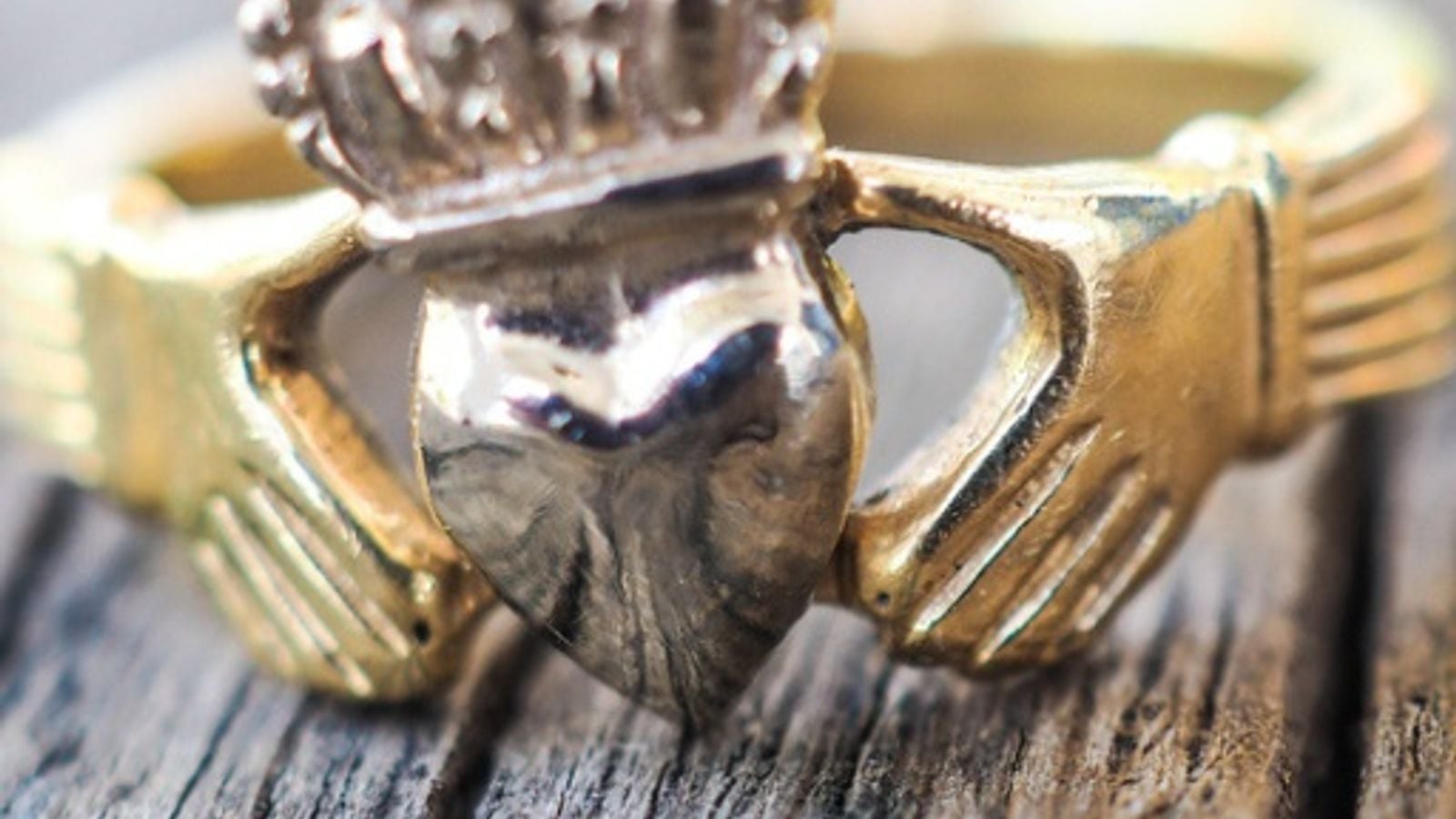
The Claddagh ring has three elements: a heart held by two hands, topped with a crown. Each part stands for something specific. The heart represents love. The hands represent friendship. The crown represents loyalty.
These aren’t decorative choices. They reflect what the Irish have always valued most in a relationship — not wealth, not status, but these three qualities together. Strip any one of them away and something is missing.
The design is simple. That’s the point. It says everything it needs to say in a single glance, without a word spoken.
The One Rule That Changes Everything
How you wear a Claddagh ring tells a story that every Irish person learns early — usually from a grandmother or aunt, not a textbook.
On the right hand with the heart pointing outward — away from the body — the message is clear: the heart is open. Unspoken for. Free to love.
On the right hand with the heart pointing inward — towards the body — the message shifts: someone has claimed this heart. It’s no longer available.
On the left hand with the heart pointing inward: engaged or married.
Generations of Irish people have read these positions without being formally taught them. At a céilí, a dance, or a quiet pub, a quick glance at someone’s ring said more than an introduction ever could.
The Village Where It All Started
The ring takes its name from a small fishing village called An Cladach — the Claddagh — in Galway city, where the River Corrib meets the sea. This ancient community lived apart from the walled town of Galway for centuries, with its own customs and unwritten rules.
Legend credits the ring’s creation to a Claddagh man named Richard Joyce, taken by Algerian pirates in the late 1600s. Forced to work as a goldsmith, he poured his longing for home into a design. When he was eventually freed and returned to Galway, the ring came with him.
Whether every detail of that story is accurate matters less than what it shows: the ring was born from heartbreak and homecoming. That’s part of why it still carries weight.
☘️ Enjoying this? 64,000+ Ireland lovers get stories like this every week. Subscribe free →
How It Became a Global Irish Symbol
The Claddagh ring spread with the Irish diaspora. When families left during the Famine, mothers slipped rings onto daughters’ fingers as they said goodbye — a token of home, of love, of everything left behind.
Today the ring is found everywhere from jewellers on Shop Street in Galway to gift shops in Boston and Chicago. It has been worn by Irish presidents, given as first communion presents, and tattooed on skin. Queen Victoria is said to have owned one.
But it is most powerful when it is inherited. A ring passed from grandmother to granddaughter carries decades of meaning that no shop-bought piece can replicate. The metal is the same. The weight of it is entirely different.
What Locals Know That Tourists Often Miss
Most visitors buy a Claddagh ring as a souvenir without knowing the wearing rules. In Ireland, the position genuinely matters to many people.
Wearing the heart pointing outward while in a committed relationship is seen — by many Irish people — as an accidental broadcast that you’re single. It’s a small thing, but in a culture where symbols still carry weight, it’s worth knowing before you slip it on.
If you’re planning a trip to Ireland, the Claddagh area in Galway is worth an hour of your time. The old fishing community is long gone, but the spot where it once stood sits quietly by the river, away from the busier streets of the city.
A Symbol That Still Works
Celtic symbols come and go in fashion. But the Claddagh ring hasn’t aged because it isn’t really about Celtic history. It’s about three things every human being wants: to love, to be loved, and to be loyal to someone worth keeping.
That’s why an Irish grandmother will still press a ring into a young person’s hand and say: “Mind it.”
The ring is a reminder. Of where you came from. Of who matters. Of what the heart is for.
If you ever find yourself in Galway, walk down to the old Claddagh area at dusk. The river runs quietly there. Locals pass without ceremony. And somewhere nearby, a ring just like the one you’re picturing is waiting in a jeweller’s window — heart pointing inward, waiting for its owner.
☘️ You Might Also Love
Tours & experiences you might love


Powered by Viator. Some links are affiliate links — we may earn a small commission at no extra cost to you.
Secure Your Dream Irish Experience Before It’s Gone!
Planning a trip to Ireland? Don’t let sold-out tours or packed attractions spoil your journey. Iconic experiences like visiting the Cliffs of Moher, exploring the Rock of Cashel, or enjoying a guided walk through Ireland’s ancient past often sell out quickly—especially during peak travel seasons.

Booking in advance guarantees your place and ensures you can fully immerse yourself in the rich culture and breathtaking scenery without stress or disappointment. You’ll also free up time to explore Ireland’s hidden gems and savour those authentic moments that make your trip truly special.
Make the most of your journey—start planning today and secure those must-do experiences before they’re gone!