

If you have ever wandered into an Irish bakery and wondered about the distinctive bread stacked in those heavy square tins — all golden on top with pale, soft sides where the loaves sit snugly against each other — then you have met the batch loaf. It is one of the most quintessentially Irish breads imaginable, a staple of kitchens from Dublin to Donegal, and now thanks to Chris at The Irish Baker Abroad, you can make four proper batch loaves in your very own home. This is the recipe he used to launch his YouTube channel, and it is every bit as satisfying to make as it is to eat.
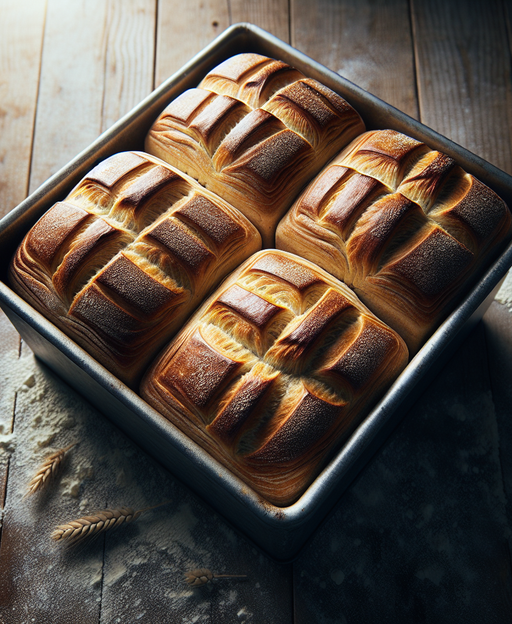
The batch loaf holds a special place in Irish food culture. Unlike a standard tin loaf, batch loaves are baked packed tightly together in a deep square tin. As they rise and bake, the sides of each loaf press against its neighbours, creating the characteristic soft, pale “batch” sides — a texture that is almost pillowy compared to the crunchy top crust. When you pull them apart, each loaf has that satisfying tear, and the crumb inside is airy but substantial. Toasted with a generous spread of Kerrygold Irish butter, it is the kind of thing that makes you feel at home no matter where in the world you happen to be.
What Makes Batch Loaf Special?
The batch loaf is distinct from most other white breads in a few key ways. First, the bake: the loaves are proved in a single deep tin and baked at a high initial temperature — 250°C — before being brought down to a more moderate heat. This two-stage baking gives you that dramatic golden crust on top while the interior develops fully. The high initial heat also contributes to good oven spring, giving you loaves with height and structure.
Second, the technique. Chris uses a proper enriched dough — one that includes butter — which adds flavour and gives the crumb a slightly softer texture than a lean dough would. The kneading process is important here: the gluten needs to develop fully to support four large loaves, and Chris’s method — slow, medium, then full speed in a stand mixer — builds a strong, elastic dough that holds its shape beautifully through the long prove.
What is also clever about this recipe is that Chris includes a no-knead alternative for those without a stand mixer or with wrist issues. By combining the dough loosely and allowing it to rise and be knocked back multiple times, the gluten develops naturally. It is a technique borrowed from artisan no-knead bread methods, and it works a treat. If you enjoy slow-ferment breads, you might also want to look at Chris’s Guinness Bread, another wonderful Irish loaf with a rich depth of flavour.
The Full Recipe: Traditional Irish Batch Loaf
This recipe makes four loaves and is scaled for a 30x30cm square tin that is at least 10cm deep. If you only want two loaves, simply halve all the quantities.
Ingredients
☘️ Love Irish Food & Culture?
Every Wednesday, we send our best Irish recipes, food stories, and kitchen traditions straight to your inbox. Join 64,000+ readers who love Ireland.
- 1,400g strong white bread flour
- 800ml tepid water
- 50g fresh yeast (or 17g dried yeast)
- 3 teaspoons of salt
- 50g butter, softened
Equipment
- Stand mixer with dough hook (or large mixing bowl)
- Deep square baking tin, approximately 30x30cm x 10cm
- Large plastic bag or cling film
- Pastry brush
Method
- Prepare your oven. About 40 minutes before you plan to bake, preheat your oven to 250°C (fan 230°C / gas mark 9). You want it fully up to temperature before the loaves go in.
- Activate the yeast. If using dried yeast, add it to the 800ml of tepid water and leave for 5 minutes to activate before proceeding. If using fresh yeast, simply dissolve it directly in the water.
- Mix the dough. Pour the yeast-water mixture into the bowl of your stand mixer fitted with the dough hook. Add the flour and softened butter. Mix on the lowest speed until everything is well combined — about 5 minutes.
- Add salt and develop the gluten. Add the 3 teaspoons of salt, then increase to medium speed and knead for a further 5 minutes. Finally, advance to full speed for 4 more minutes. The dough should be smooth, slightly tacky, and pulling away from the sides of the bowl.
- First prove. Turn the dough out onto a lightly floured surface and dust the top lightly with flour. Cover with plastic film or a damp cloth and leave to rise until doubled in size — typically 1 to 1.5 hours at room temperature, depending on conditions.
- Knock back and rest. Punch the dough down firmly to release the gas, then shape it into a ball again. Dust lightly with flour, cover, and allow to rest for a further 15 to 20 minutes. This second stage helps to relax the gluten and makes shaping easier.
- Shape and tin the loaves. Divide the dough into 4 equal pieces of approximately 550g each. Shape each piece into a round ball, then place them side by side in a well-greased deep square tin — four loaves in a 2×2 arrangement.
- Prove in the tin. Brush the tops of the loaves with water (this prevents a skin from forming). Slip the whole tin into a large plastic bag and trap some air inside so the bag doesn’t touch the tops of the loaves. Tie the bag closed. Leave to prove at room temperature until the loaves have doubled in size again — roughly 45 minutes to 1 hour. If your kitchen is cold, the hotpress or airing cupboard works perfectly.
- Bake the loaves. Once fully proved, remove from the bag and place in the preheated oven. Bake at 250°C for 15 minutes, then reduce the temperature to 180°C and continue baking for a further hour. The loaves are done when golden on top and sound hollow when tapped on the base.
- Cool before cutting. Allow the loaves to cool in the tin for 10 minutes, then turn out onto a wire rack. Do not cut into them until they have cooled fully — the crumb will be gummy if you slice too soon.
Tips and Variations from the Video
Chris shares a few key tips in the video that can make the difference between a good batch loaf and a great one:
- Watch your flour. The dough should be slightly sticky to the touch. Chris advises holding back a little of the flour at the start and adding it gradually. If the dough starts out too dry, it will be even tougher by the time you shape it, because the rises absorb moisture. A slightly sticky dough going in will be perfect by the time it is proved.
- Darker crust option. If you prefer a deeper colour on top, extend the initial high-heat baking: 20 minutes at 250°C, then 55 minutes at 180°C. The total baking time remains similar but the crust develops more colour.
- More compact loaves. If you prefer a denser loaf similar to shop-bought batch bread, shape the dough into balls after the first rise (before the second rest stage) and go straight into the tin. This gives a tighter crumb.
- No-mixer method. For those without a stand mixer, simply combine all the ingredients in a large bowl using a spoon. Cover and leave to double in size. Knock back and repeat the rise and knock-back cycle twice more. Each fold-and-rest cycle tightens the gluten naturally. Then shape and tin as normal.
- The home prover trick. Trapping air in the plastic bag over the tin is a brilliantly simple way to create a warm, humid proving environment — your own DIY prover. If your house is cold, a hotpress or airing cupboard does the job perfectly.
This kind of thoughtful, practical advice is what makes Chris’s approach so accessible. Whether you are a seasoned baker or just starting out, these tips address the things that actually go wrong in a home kitchen. If you enjoy Irish baking, do also try Chris’s Traditional Irish Soda Bread or his Irish Soda Farls — both brilliant recipes that need no yeast at all.
Watch the Video
See Chris make the batch loaf from start to finish — including the moment he sets a little competition for viewers — in the video below:
Serving Suggestions
A batch loaf is incredibly versatile. Freshly baked and still slightly warm, it is perfect with butter and a cup of tea. The next day, it toasts brilliantly — the high-hydration crumb crisps up beautifully and is superb with marmalade or jam. It is also the traditional bread for a proper Full Irish breakfast, where thick-cut slices soak up egg yolk and bacon juices to magnificent effect.
If you find yourself with a day-old loaf, it makes excellent toast, and any remaining bread is perfect for homemade breadcrumbs or a simple bread and butter pudding. Batch bread is also excellent alongside a bowl of hearty Irish soup — the soft batch sides are perfect for mopping up every last drop.
Storing Your Batch Loaf
Once fully cooled, wrap the loaves individually in cling film or a clean tea towel and store at room temperature for up to three days. For longer storage, slice and freeze — the slices go from freezer to toaster perfectly. This makes the recipe especially practical, as you end up with four loaves and can freeze most of them for future use.
Ireland has a rich tradition of bread baking that stretches back centuries, from the simple soda breads made without yeast to enriched doughs like this batch loaf that require time and technique. If you want to explore more of that tradition, Love Ireland has a whole collection of Irish food and drink guides to help you discover what makes Irish cuisine so special.
Frequently Asked Questions
Can I use instant dried yeast instead of fresh yeast?
Yes, absolutely. The recipe calls for 50g of fresh yeast or 17g of dried yeast — that is roughly a one-to-three ratio of dried to fresh. If using instant dried yeast (the type you add directly to flour without activating), you can mix it straight into the flour rather than dissolving it in water first. Active dried yeast, however, should be dissolved in the tepid water for about 5 minutes before mixing, exactly as Chris describes. Make sure your water is genuinely tepid — around 35-38°C — as water that is too hot will kill the yeast.
Why is my batch loaf too dense?
A dense crumb is usually caused by one of three things: under-proving, dough that was too dry, or yeast that was not fully activated. Make sure your dough genuinely doubles in size at each prove stage — do not rush this. Check your yeast is fresh and your water temperature is correct. And remember Chris’s advice: hold back a little flour and keep the dough slightly sticky — a dough that feels correct going in will be perfect after its rises.
What size tin do I need?
Chris uses a 30x30cm square tin that is 10cm deep for four loaves. This is deeper than most standard baking tins, so it is worth looking for a proper deep tin. The depth is important — the loaves need room to rise above the sides of the tin during baking. If you only want to make two loaves, you can halve the recipe and use a smaller tin, or use a standard 2lb loaf tin for each individual loaf.
Why are the sides of my batch loaf pale?
Pale sides are actually the hallmark of a proper batch loaf — that is exactly what you want! Because the loaves bake pressed together in the tin, the sides never get direct heat and do not colour. The characteristic pale, soft batch sides are what distinguish this bread from an ordinary tin loaf. When you pull the loaves apart after baking, the pale sides will be soft and slightly pillowy — perfect for sandwiches or just tearing off and eating warm with butter.
A Final Word
There is something deeply satisfying about pulling four proper batch loaves from the oven — the golden tops, the soft sides, the wonderful yeasty smell filling the kitchen. The Irish Batch Loaf is a humble bread in the best possible sense: honest, straightforward, and utterly delicious. Whether you grew up eating it in Ireland or you are discovering it for the first time, this recipe from Chris at The Irish Baker Abroad is the real deal. Give it a try this weekend — and if you are looking for more Irish baking inspiration, do not miss Chris’s No-Knead Dinner Rolls or the ever-popular Chris’s Fruit Soda Bread for your next bake.
☘️ You Might Also Love
64,000 Ireland lovers can’t be wrong.
Every week, our free newsletter delivers hidden gems, seasonal guides, local stories, and practical travel tips — straight to your inbox. Join the community that loves Ireland as much as you do.
FREE GUIDE: 25 Hidden Gems of Ireland That Most Tourists Never Find (PDF)
☘️ Get More Irish Recipes & Stories
Join 64,000+ readers for weekly Irish recipes, food traditions, travel guides, and hidden gems. Free every morning.
📥 Free Download: Ireland Travel Planning Guide
Our most popular resource — itineraries, insider tips, and the 50 places you must not miss.
Tours & experiences you might love


Powered by Viator. Some links are affiliate links — we may earn a small commission at no extra cost to you.
Secure Your Dream Irish Experience Before It’s Gone!
Planning a trip to Ireland? Don’t let sold-out tours or packed attractions spoil your journey. Iconic experiences like visiting the Cliffs of Moher, exploring the Rock of Cashel, or enjoying a guided walk through Ireland’s ancient past often sell out quickly—especially during peak travel seasons.

Booking in advance guarantees your place and ensures you can fully immerse yourself in the rich culture and breathtaking scenery without stress or disappointment. You’ll also free up time to explore Ireland’s hidden gems and savour those authentic moments that make your trip truly special.
Make the most of your journey—start planning today and secure those must-do experiences before they’re gone!