

The night before Bridget Murphy sailed from Cobh for Boston in 1851, her family did something that might seem contradictory. They held a party.
There was music in the kitchen, the smell of turf smoke and stout, neighbours arriving from three townlands over. There was dancing, and toasts, and children falling asleep in corners. And underneath it all — a grief so total that there was only one word the Irish had for it.
They called it a wake.
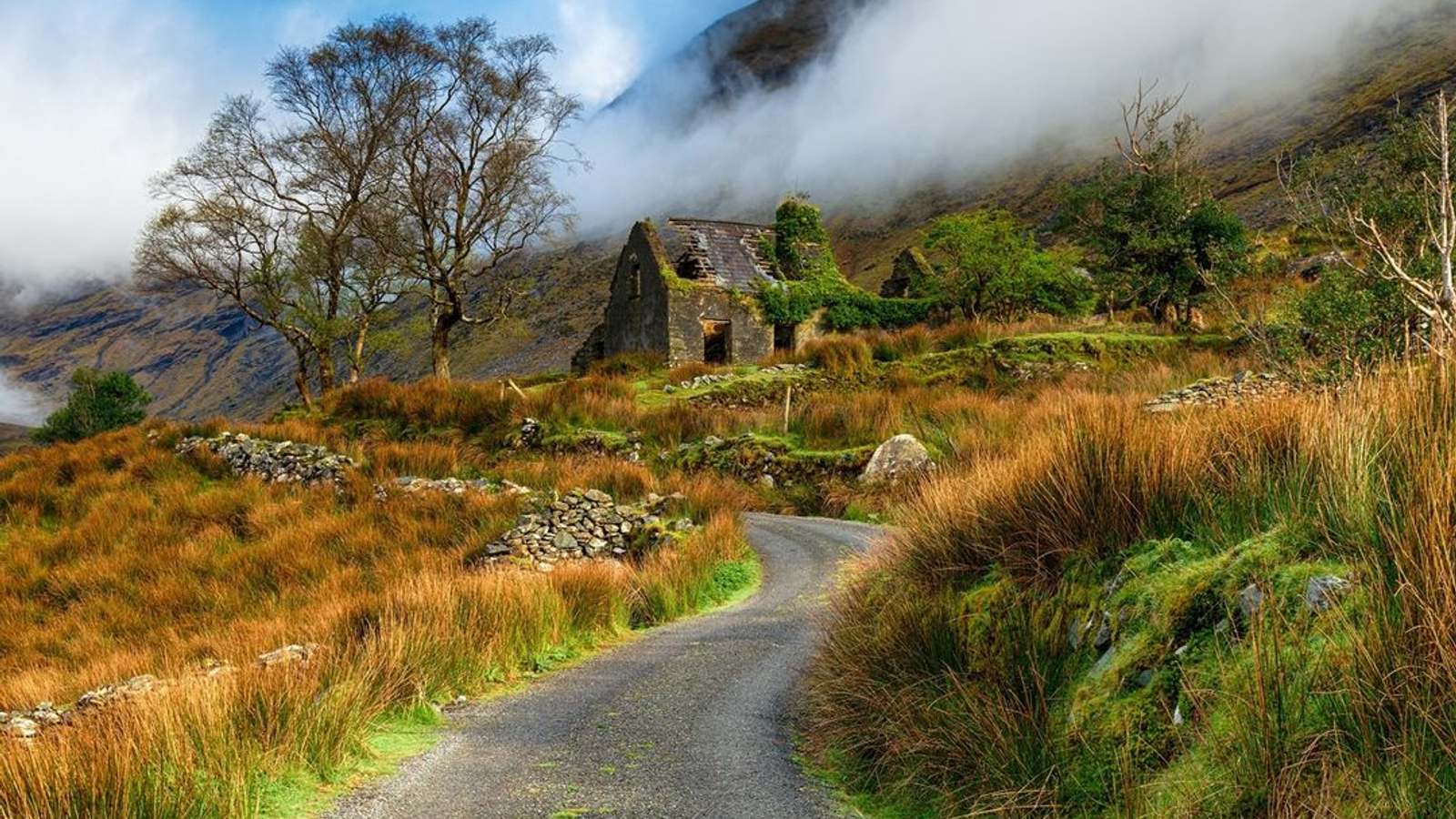
The Goodbye That Was Meant to Last Forever
The American Wake wasn’t morbid for its own sake. It was practical.
In the decades following the Great Famine, emigration from Ireland was rarely a matter of choice. The land was gone. The harvests had failed. America, Australia, and Britain were the only alternatives to starvation. Families sent their children away knowing the crossing took weeks, the fare could not be repeated, and letters might arrive once a year if they were lucky.
These emigrants weren’t just leaving the country. They were, in all likelihood, leaving forever.
And so the farewell was treated with the gravity it deserved. The same rituals that surrounded a death were brought to the night before departure: the gathering of community, the music played through tears, the stories shared and retold, the prayers offered. If the living could not hold a funeral, they would hold something that served the same purpose — a final, total honouring of the person who was about to be lost.
What Happened on the Night
An American Wake began at dusk and lasted until the emigrant had to leave for the port — sometimes dawn, sometimes later.
The kitchen was cleared. A fiddler played. People came who hadn’t been seen in months, because everyone understood the weight of the occasion. Food was laid out — whatever could be spared, which in the post-Famine years was rarely much. Poitín was passed in silence between men who couldn’t find the words.
The emigrant sat at the centre of it all, trying to memorise every face.
There were songs that were never sung at any other occasion — farewell songs, emigration songs, songs that named the ships and the ports and the cities of America. Songs like The Emigrant’s Farewell and Slieve Gallon Braes that made no pretence of hope. They were songs that acknowledged, plainly and honestly, that this was the end.
If you’re interested in tracing the heritage of families who made this crossing, the history of Irish surnames in County Cork offers a remarkable window into the communities that emigration shaped and scattered across the world.
The Letters That Kept the Connection Alive
After the emigrant left, the American Wake was over. But the connection was not.
For generations, emigrant letters — known simply as “American letters” — were the lifeline between the two worlds. A letter from Boston or New York or Philadelphia might be read aloud at the kitchen table to everyone in the townland. It carried news, small amounts of money, and occasionally a prepaid passage for the next family member to go.
Many of these letters survive in Irish archives. They are heartbreaking in their specificity — the emigrant asking after the neighbour’s cow, the price of potatoes, the health of the priest. The details of a life they already knew they would never return to.
Families who emigrated didn’t forget. Their children didn’t forget. And the grandchildren and great-grandchildren who now visit Ireland with a surname on a piece of paper and a vague feeling they’ve been here before — they are the living legacy of every American Wake that was ever held in a country kitchen.
Why the Tradition Still Resonates
Ireland today has one of the largest diaspora populations in the world relative to its homeland. An estimated 70 million people worldwide claim Irish heritage. For many of them, the story of a family member who left is not ancient history — it is living memory, passed down through photographs, names, and the faint echo of an accent.
The American Wake is not a tradition that is formally performed today. But its spirit endures every time an Irish family gathers at an airport departure gate, or every time someone lands in New York for the first time and feels, inexplicably, like they’ve come home.
Cobh — the harbour in County Cork from which so many emigrants sailed — now carries those stories quietly in its painted terraces and cathedral silhouette, including at the Cobh Heritage Centre, which documents many of these same emigrant departures. If you’re planning a trip to Ireland and want to feel that history beneath your feet, Cobh is a place that makes it impossible to remain unmoved.
The Tradition That Changed a Nation
The American Wake did something remarkable. It gave grief a shape.
In a country where so much had been taken — land, language, livelihood — the American Wake gave communities a ritual to hold onto. It acknowledged loss without euphemism. It said, plainly: someone we love is gone, and that matters, and we will mark it.
That instinct — to gather, to sing, to share food and stories in the face of something too large to bear — is perhaps the most Irish instinct of all. If you want to understand the places that were shaped by these departures, the Irish towns with stories that echo your own still hold those whispers in their walls.
The people who left never stopped loving Ireland. And Ireland, in its way, never stopped loving them back.
Read more on why the Irish called it an American Wake, the wake Irish emigrants were given before leaving for America, and why the night before emigrating was called a wake in old Ireland.
If you’d like more stories from the heart of Irish culture — the traditions, the legends, the things that don’t make it into the guidebooks — the Love Ireland newsletter is where we share them every week.
☘️ You Might Also Love
☘️ Your Irish family has a story waiting to be found.
Discover where your Irish ancestors came from — their county, their name, their story. Our free step-by-step guide walks you through every record, DNA tool, and ancestry archive. Join 64,000+ readers staying connected to Ireland.
☘️ Want More Hidden Ireland?
Join 64,000+ subscribers who discover Ireland’s best-kept secrets every week.
Subscribe Free — Join the Community →
Free forever · Unsubscribe anytime · No spam
📥 Free Download: Ireland Travel Planning Guide
Our most popular resource — itineraries, insider tips, and the 50 places you must not miss.
Tours & experiences you might love


Powered by Viator. Some links are affiliate links — we may earn a small commission at no extra cost to you.
Secure Your Dream Irish Experience Before It’s Gone!
Planning a trip to Ireland? Don’t let sold-out tours or packed attractions spoil your journey. Iconic experiences like visiting the Cliffs of Moher, exploring the Rock of Cashel, or enjoying a guided walk through Ireland’s ancient past often sell out quickly—especially during peak travel seasons.

Booking in advance guarantees your place and ensures you can fully immerse yourself in the rich culture and breathtaking scenery without stress or disappointment. You’ll also free up time to explore Ireland’s hidden gems and savour those authentic moments that make your trip truly special.
Make the most of your journey—start planning today and secure those must-do experiences before they’re gone!