

Most Irish ghost stories are vague. A shape at a window. A cold feeling on the stairs. The White Lady of Charles Fort is different. Her name is known. Her grief had a cause. And the night everything went wrong has been retold for more than three hundred years.
The Night That Started It All
The year was 1681. A young woman known as Wilful — daughter of Colonel Warrender, the governor of Charles Fort — had just married a soldier named Captain Trevis.
It was meant to be the beginning of a long and happy life. Instead, it became the most tragic evening in the fort’s history.
Trevis slipped away from the celebrations to pick wildflowers for his new bride. He was spotted in the darkness by a sentry who did not recognise him. Following standing orders, the sentry called out a challenge. Trevis did not respond in time. The sentry fired.
A Decision Made Without Knowing
When news reached Colonel Warrender, he faced a soldier’s dilemma. A sentry had fired on an unidentified figure approaching the fort in the night. It was regulation. The sentry had followed orders.
Warrender ordered the sentry executed. Military discipline had to be maintained, even on his daughter’s wedding night. It was only afterwards — when the identity of the man shot became known — that the full horror of what had happened became clear.
The soldier his sentry had killed was his new son-in-law. Wilful heard everything.
What the Sentries Reported
She threw herself from the fort walls before dawn.
Sightings of a woman in white began appearing in records within a generation. Sentries described a pale figure walking the ramparts in wedding dress, moving without sound, and vanishing when approached. One account placed her near the bastion closest to where Trevis had fallen. Others described her simply standing at the sea wall, looking toward the harbour.
What made these reports hard to dismiss was who was making them. Soldiers — men who were professionally sceptical and trained to report accurately — kept describing the same thing across different centuries. The descriptions, from the 1700s through to the 20th century, remained strikingly consistent.
You can read more about the tradition of castle ghost stories across Ireland and why locals take them seriously even today.
☘️ Enjoying this? 64,000+ Ireland lovers get stories like this every week.
Thinking about it seriously? If you’ve started actually planning a move, our complete the full Move to Ireland guide walks through every step, every cost, and the paperwork that catches most people out.
The Fort That Still Stands
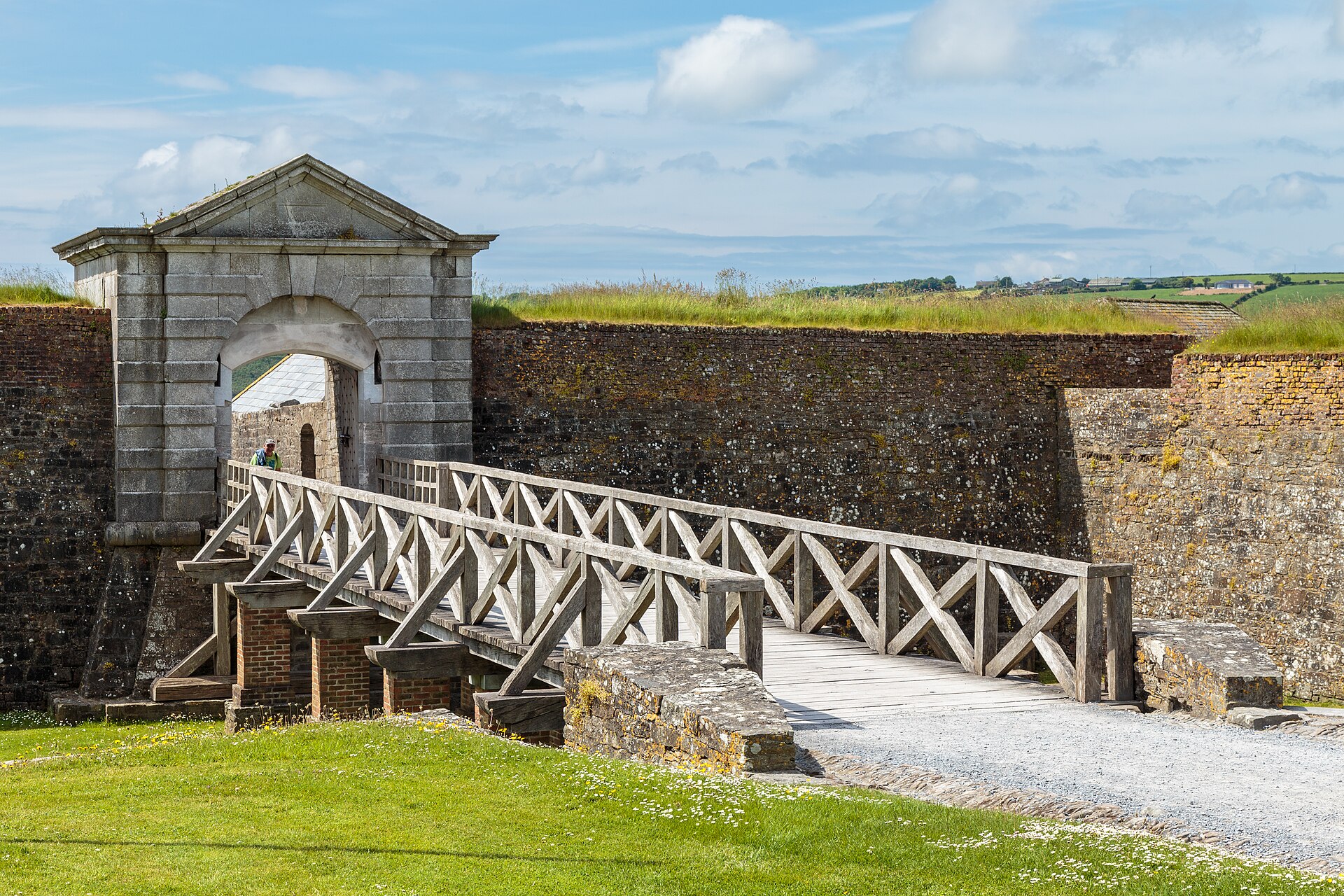
Charles Fort sits on a promontory at the mouth of Kinsale Harbour in County Cork. It was built in 1677 — just a few years before the night in question — and served as a working military garrison until 1922.
The star-shaped design is one of the best-preserved examples of 17th-century military architecture in Europe. Five bastions project outward from the main body, giving defenders clear sightlines in every direction. It was built to be unbreakable.
It was not built to hold grief.
The fort is now managed by the Office of Public Works and is open to visitors year-round. Walking the same ramparts the White Lady is said to haunt is a quietly unsettling experience, even on a bright summer afternoon. The audio guide covers both the military history and the legend in detail.
Kinsale and Charles Fort Today
Kinsale itself is one of the most beautiful towns on the south coast — colourful facades, narrow winding streets, and a harbour that was once among the most strategically important in Europe.
Visiting Charles Fort takes around an hour on foot. The views across the harbour toward Kinsale town are worth the trip alone. For a full guide to the area, see the best things to do in Cork — it covers Kinsale, the fort, and dozens of other stops worth making.
If you’re planning a trip to this part of Ireland, the County Cork travel guide has everything you need to plan your visit, from coastal drives to hidden villages.
Why This Story Has Lasted
Other Irish ghost legends have a distant, mythological quality — ancient gods, shapeshifting spirits, creatures from beyond the veil. The White Lady is different because her grief is specific, domestic, and entirely human.
She lost a husband on her wedding night. Her father — not knowing what he had done — effectively took him twice. And the military order that ended Captain Trevis’s life was, technically, correct. There was no villain. Just a terrible sequence of events that nobody could have stopped once it started.
That is why the story has lasted. It contains the kind of tragedy that has no clean ending and no one to blame.
Ireland keeps its grief carefully. It turns it into song, into story, into legend. The White Lady of Charles Fort is the country’s way of saying that some sorrows are too heavy to simply bury. Better to give them a white dress and let them walk the walls forever, visible to anyone willing to look.
☘️ You Might Also Love
☘️ Join 64,000+ Ireland Lovers
Every Friday, get Ireland’s hidden gems, local secrets, and travel inspiration — the kind you won’t find in any guidebook.
Subscribe free — enter your email:
Already subscribed? Download your free Ireland guide (PDF)
Love more? Join 43,000 Scotland lovers → · Join 30,000 Italy lovers → · Join 7,000 France lovers →
Free forever · · Unsubscribe anytime
Tours & experiences you might love


Powered by Viator. Some links are affiliate links — we may earn a small commission at no extra cost to you.
Secure Your Dream Irish Experience Before It’s Gone!
Planning a trip to Ireland? Don’t let sold-out tours or packed attractions spoil your journey. Iconic experiences like visiting the Cliffs of Moher, exploring the Rock of Cashel, or enjoying a guided walk through Ireland’s ancient past often sell out quickly—especially during peak travel seasons.

Booking in advance guarantees your place and ensures you can fully immerse yourself in the rich culture and breathtaking scenery without stress or disappointment. You’ll also free up time to explore Ireland’s hidden gems and savour those authentic moments that make your trip truly special.
Make the most of your journey—start planning today and secure those must-do experiences before they’re gone!
Subscribe Free