

There is something deeply comforting about a tray of raisin scones fresh from the oven. Split them open and the warm steam rises up, carrying that sweet, slightly tangy scent that only buttermilk baking can produce. Chris from The Irish Baker Abroad has been making these fruit scones his entire life, and in this recipe he shares the frozen-butter technique that guarantee a light, fluffy result every single time. If you’d like his original take on the classic, see Chris’s original Irish Baker Abroad raisin scones recipe.
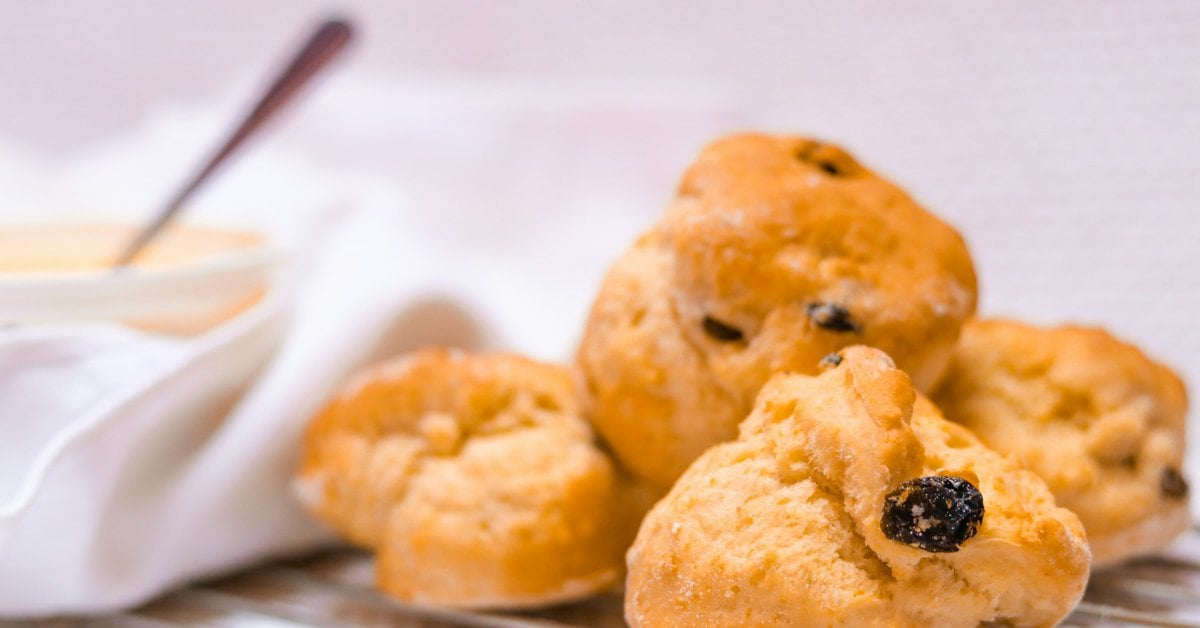
Fruit scones — or raisin scones, as they are often called — are one of the great staples of Irish home baking. You’ll find them in every café, every farmhouse kitchen, and on every afternoon tea table from Cork to Donegal. They are humble, honest food. And when they’re made well, they are extraordinary.
Why This Raisin Scone Recipe Works
Chris’s method relies on two key techniques that separate average scones from exceptional ones. The first is frozen butter. By grating cold, frozen butter directly into the flour, you distribute it in tiny shards throughout the dough. Those shards melt in the oven and create pockets of steam — giving you that light, layered, pull-apart texture inside a golden crust.
The second technique is buttermilk. Buttermilk’s natural acidity reacts with the baking powder to produce extra lift. The result is a scone that rises tall and proud, with a tender, fluffy crumb that holds together just long enough to be split and loaded with jam and cream.
These two elements — frozen butter and buttermilk — are what transform a perfectly decent scone into something genuinely memorable. If you’ve ever wondered why café scones taste different from home-baked ones, this is usually why. Most home recipes use room-temperature butter. This one doesn’t.
Ingredients for Irish Raisin Scones
- 500g plain flour
- 30g baking powder
- Pinch of salt
- 100g frozen butter
- 80g caster sugar
- 150g raisins
- 200ml buttermilk
- 2 eggs (plus 1 for egg wash)
These quantities make approximately 8 to 10 scones. Note the generous amount of baking powder — 30g for 500g of flour. This is not a typo. That amount of leavening is exactly what gives these scones their characteristic height and lightness. Don’t be tempted to reduce it.
Method: How to Make Chris’s Raisin Scones
Step 1: Prepare the Oven
Preheat your oven to 200°C. Turn the fan off. Fan ovens can cause uneven browning in scones and sometimes prevent them from rising evenly. A conventional setting at 200°C is ideal.
Step 2: Combine the Dry Ingredients
Weigh 500g of plain flour into a large bowl. Sieve in 30g of baking powder and add a pinch of salt. Mix briefly to combine. Sieving the baking powder is important — it prevents lumps and ensures it distributes evenly through the dough.
Step 3: Grate in the Frozen Butter
Take your frozen butter from the freezer. Grate it directly into the flour mixture using a coarse grater. Work quickly. The goal is to keep the butter as cold as possible throughout this step. If it starts to soften, return it to the freezer for five minutes.
Step 4: Rub in the Butter
Use your fingertips to rub the butter into the flour. Lift the mixture and let it fall through your fingers. Work until the mixture resembles fine breadcrumbs with no large lumps remaining. Avoid using your palms — they transfer too much heat. Fingertips only.
Step 5: Add Sugar and Raisins
Add the caster sugar and raisins to the bowl. Stir through the flour and butter mixture until evenly distributed. The raisins should be coated in a little flour — this prevents them from sinking during baking.
Step 6: Mix the Wet Ingredients
Crack 2 eggs into a jug. Add 200ml of buttermilk. Whisk together until combined. You’ll notice the mixture looks slightly curdled — that’s the buttermilk’s natural acidity at work. That’s exactly what you want.
Step 7: Form the Dough
Make a well in the centre of the dry ingredients. Pour in the wet mixture gradually. Use a wooden spoon or spatula to bring the dough together. Stop as soon as it forms. The dough will be soft and slightly sticky — that’s correct. Do not overmix. Overworking scone dough develops the gluten and makes scones tough.
Step 8: Shape and Cut
Lightly flour a clean surface. Tip the dough out and knead it gently — just three or four folds to bring it together. Shape it into a round disc about 3cm thick. Use a 7cm ring cutter to cut out the scones.
This is the most important step: push the cutter straight down into the dough. Do not twist it. Twisting seals the edges and prevents the scone from rising evenly. Push straight down, then lift straight up. Gather the scraps, reshape gently, and cut again.
Step 9: Egg Wash and Chill
Place the scones on a baking tray lined with parchment paper. Beat the remaining egg and brush it over the tops of each scone. Put the tray into the fridge while you wait for the oven to reach temperature. Chilling the scones firms them up. It also relaxes any gluten that developed during cutting, helping them rise straight and tall rather than spreading sideways.
Step 10: Bake
Bake the scones at 200°C (fan off) for 18 minutes. They should be golden brown on top, risen tall, and sound hollow when tapped on the base. Transfer to a wire rack to cool for at least five minutes before serving.
How to Serve Irish Raisin Scones
Split each scone in half while still slightly warm. The inside should be light and fluffy, with raisins distributed throughout. Serve with good strawberry jam and a generous spoonful of clotted cream or whipped cream.
In Ireland, the tradition is jam first, then cream — the opposite of the Devonshire method. There is no wrong answer, but if you’re eating them in the company of anyone Irish, just know that jam-first is considered the correct way.
These scones also pair beautifully with a strong cup of Barry’s or Lyons tea — the real Irish staples. For more on why Irish tea tastes so different, see our feature on why Irish tea is different from anywhere else in the world.
About The Irish Baker Abroad
Chris from The Irish Baker Abroad is an Irish baker based abroad (as the name suggests) who has been sharing traditional Irish recipes on YouTube for years. His style is warm, practical, and deeply rooted in authentic Irish home baking. He doesn’t overcomplicate things. He shows you the steps, explains the why behind each technique, and trusts you to get on with it.
This raisin scone recipe is typical of his approach — a classic recipe, well-explained, with a couple of professional tips that make all the difference. If you enjoy baking, his channel is well worth exploring — or read more about him in Meet The Irish Baker Abroad.
We’ve also published his recipes for traditional plain Irish scones and blueberry scones using the overnight method — all well worth trying for an Irish baking afternoon.
Tips for Perfect Raisin Scones
- Keep everything cold. Cold butter means steam in the oven. Steam means lift. Warm butter means flat scones.
- Do not overmix. Stop as soon as the dough comes together. The less you work it, the lighter the scone.
- Don’t twist the cutter. Push straight down. This is the single most common mistake home bakers make.
- Chill before baking. Five to ten minutes in the fridge before the oven makes a real difference to the rise.
- Fan off. Use conventional heat at 200°C. Fan dries out the surface too quickly.
If you love Irish baking, you might also enjoy Chris’s recipe for traditional Irish soda bread — another cornerstone of the Irish kitchen — or his method for Waterford blaas, the soft white rolls unique to County Waterford.
Watch Chris Make These Raisin Scones
See every step in action in the original video from The Irish Baker Abroad:
☘️ Join 64,000+ Ireland Lovers
Every Friday, get Ireland’s hidden gems, local secrets, and travel inspiration — the kind you won’t find in any guidebook.
Subscribe free — enter your email:
Get the free guide
Enter your email and we will send you straight to the download.
Love more? Join 43,000 Scotland lovers → · Join 30,000 Italy lovers → · Join 7,000 France lovers →
Free forever · · Unsubscribe anytime
Frequently Asked Questions
Can I use plain dried fruit instead of raisins?
Yes. Currants, sultanas, or mixed dried peel all work well in this recipe. Some bakers use a combination of raisins and currants for a more complex flavour. The quantity remains the same — 150g of whatever dried fruit you prefer.
Can I make these scones without buttermilk?
You can substitute buttermilk by adding one tablespoon of lemon juice or white vinegar to 200ml of regular milk. Stir and leave for five minutes. The milk will curdle slightly — that’s the acidity you need. The result won’t be quite as tangy, but the scones will still rise well and taste delicious.
Why did my scones come out flat?
There are three common causes. First, the butter was too warm — always use frozen butter and work quickly. Second, the dough was overmixed — stop as soon as it comes together. Third, the cutter was twisted — a twisted cutter seals the sides and stops the scone rising. Push straight down and lift straight up.
How long do these scones keep?
Raisin scones are at their absolute best on the day they are made, ideally within two hours of coming out of the oven. Store any leftovers in an airtight container and eat within two days. To refresh them, warm gently in the oven at 150°C for five minutes before serving.
If you’re planning a traditional Irish afternoon tea spread, pair these fruit scones with Chris’s classic plain scones and a pot of strong Irish tea. And if you’re looking to explore more of Ireland’s food culture, don’t miss our guide to traditional Irish boxty — the potato pancake that was once a staple in every kitchen west of the Shannon.
Thinking about it seriously?
If you’ve started actually planning a move, our complete the full Move to Ireland guide walks through every step, every cost, and the paperwork that catches most people out.
Tours & experiences you might love


Powered by Viator. Some links are affiliate links — we may earn a small commission at no extra cost to you.
Secure Your Dream Irish Experience Before It’s Gone!
Planning a trip to Ireland? Don’t let sold-out tours or packed attractions spoil your journey. Iconic experiences like visiting the Cliffs of Moher, exploring the Rock of Cashel, or enjoying a guided walk through Ireland’s ancient past often sell out quickly—especially during peak travel seasons.

Booking in advance guarantees your place and ensures you can fully immerse yourself in the rich culture and breathtaking scenery without stress or disappointment. You’ll also free up time to explore Ireland’s hidden gems and savour those authentic moments that make your trip truly special.
Make the most of your journey—start planning today and secure those must-do experiences before they’re gone!
Subscribe Free