

County Down holds a special place in Irish history. Saint Patrick chose this land. He came back to Ireland and built his first stone church here. He is buried here. The Irish surnames from Down carry that same depth. They trace to ancient Gaelic kingdoms, Norman lords, and the great Scots-Irish migration that shaped America. If your family name comes from County Down, you are connected to a story that spans fifteen hundred years.
Free Irish ancestry tool ☘️
Have an Irish surname? Find your ancestral Irish county — we’ll trace your name to where the family originated, with a short note on its history.
Irish Surnames from Down: Ulster’s Ancient Heart
County Down sits at the north-east corner of Ireland. It borders the Irish Sea and the Mourne Mountains. The county is part of Northern Ireland today. But its roots go deep into Gaelic Ireland.
Two great Gaelic septs ruled County Down before the Normans arrived. The Magennis family held the south and west, a territory called Iveagh. The McCartan family held the east, a region known as Lecale. Both families traced their power back centuries before the Norman invasion of 1169.
The Normans changed everything. John de Courcy conquered Ulster in 1177. He brought new lords, a new language, and new surnames. Then in 1606 came the Montgomery-Hamilton Plantation. Thousands of Scottish settlers arrived on the Ards Peninsula. They brought a wave of surnames that still dominate County Down today.
Our guide to planning an Irish heritage trip covers how to find your ancestral townland and what to do when you get there.
Magennis – Mac Aonghusa: Lords of Iveagh
☘️ Your Irish family has a story waiting to be found.
Discover where your Irish ancestors came from — their county, their name, their story. Our free step-by-step guide walks you through every record, DNA tool, and ancestry archive. No experience needed.
Claim Your Free Irish Ancestry Guide →The Magennis family were the most powerful sept in County Down. The Gaelic form is Mac Aonghusa — “son of Aonghus.” The personal name Aonghus comes from Celtic roots. It means “true vigour” or “one choice.”
The Magennis lords ruled Iveagh for centuries. Iveagh covered most of central and south Down. Their strongholds included Rathfriland and the lands around Castlewellan. They held power right through the medieval period.
The Cromwellian conquest of the 1650s broke their lordship. Many Magennis families lost their lands. Some left as Wild Geese to France and Spain. Others stayed and farmed the same soil their ancestors had ruled.
The name appears today as Magennis, Maginnis, MacGuinness, and Guinness. The famous brewing family took their name from this ancient Down sept.
McCartan – Mac Artáin: Keepers of Saint Patrick’s Relics
The McCartans held a unique role in County Down. They were rulers of Lecale, the peninsula around Downpatrick. More than that, they were the hereditary keepers of Saint Patrick’s relics at Downpatrick Cathedral.
The Gaelic form is Mac Artáin — “son of Artán.” The personal name Artán is a small form of Art, meaning “bear” or “stone.” Both meanings speak to strength and permanence.
Saint Patrick is buried at Downpatrick, along with Saints Brigid and Columba. The McCartans guarded this site for generations. It made Lecale one of the most sacred corners of Ireland. The family lost their lands during the Ulster Plantation. Many moved south. Others stayed as tenant farmers in the land their ancestors had once ruled.
☘️ Enjoying this? 64,000 Ireland lovers get stories like this every week.
Thinking about it seriously?
If you’ve started actually planning a move, our complete the full Move to Ireland guide walks through every step, every cost, and the paperwork that catches most people out.
Subscribe free →
Hamilton and Montgomery – The Plantation Surnames
In 1606 two Scottish landowners changed the face of County Down. Hugh Montgomery and James Hamilton carved north Down and the Ards Peninsula between them. They brought thousands of settlers from Ayrshire and Galloway. Their surnames became dominant almost overnight.
Hamilton comes from a Scottish place name meaning “crooked hill.” In County Down, the Hamilton family built Killyleagh Castle on the shore of Strangford Lough. It is the oldest inhabited castle in Ireland. A Hamilton still lives there today.
Montgomery takes its name from a town in Normandy. The Montgomeries who settled Down in 1606 built towns and shaped the landscape of the Ards Peninsula. Their descendants spread across the county and beyond.
Many Scots-Irish from County Down left for America between 1717 and 1775. High rents and religious discrimination pushed them out. They settled in Appalachia, Pennsylvania, and Virginia. Three American presidents — Andrew Jackson, James K. Polk, and James Buchanan — had Ulster-Scots roots. Down surnames like Hamilton and Montgomery appear across the American South and Midwest today.
Our guide to Irish surnames from Antrim covers similar Scots-Irish patterns from the neighbouring county.
Quinn, Rooney, and Ward – Gaelic Names That Survived
Not every County Down surname comes from conquest or plantation. Many Gaelic families held on through every wave of change.
Quinn comes from Ó Cuinn — “descendant of Conn.” Conn was a personal name meaning “chief” or “wisdom.” The Quinns spread widely across Ulster. In County Down they appear in records from the medieval period onward.
Rooney is Ó Ruanaidh in Gaelic. The personal name Ruanaidh means “champion.” The Rooneys were based in south Down, around Rathfriland and the Mourne foothills. The name is still found in south Down today.
Ward — or Mac an Bhaird — means “son of the bard.” The Wards were hereditary poets attached to the O’Neill dynasty. They composed praise poems and kept the oral history of Ulster’s great families. Their tradition reached its height in the sixteenth century.
Savage and Russell – The Norman Legacy in Down
The Savage family arrived with John de Courcy in 1177. They were among the most powerful Norman lords in Ulster. The name comes from the Old French sauvage, meaning “wild” or “untamed.”
The Savages held the Ards Peninsula for centuries. They built castles, held the coast, and fought off rivals. Over generations they became fully Gaelic. They spoke Irish, married into Gaelic families, and followed Gaelic customs. By the sixteenth century they were part of the fabric of Ulster.
Russell is another Norman name with deep roots in County Down. It comes from the Old French word for “red-haired.” Russell families settled in Down during the medieval period and stayed through every change that followed.
Our guide to Irish surnames from Donegal covers the ancient Ulster Gaelic world these Norman families entered.
How County Down Surnames Crossed the Atlantic
County Down sent two very different waves of emigrants to America.
The first wave was the Scots-Irish. Presbyterian families left County Down between 1717 and 1775. They settled in Ulster County in New York, the Carolinas, and across Appalachia. Their surnames — Hamilton, Montgomery, Burns, Russell — appear across the American interior today.
The second wave came during the Famine of 1845 to 1852. Catholic families with Gaelic surnames left in desperate conditions. County Down lost tens of thousands to emigration and death. Magennis, McCartan, Quinn, and Rooney families landed in New York, Boston, and Philadelphia.
If your family carries a Down surname, our 7-day Irish ancestry itinerary gives a full framework for planning your heritage visit.
How to Trace Your County Down Ancestry
County Down has strong resources for anyone starting a family search.
PRONI – Public Record Office of Northern Ireland
PRONI holds the key genealogical records for County Down. Civil registration began in 1864. Church records go back further, some to the 1700s. PRONI is in Belfast and much of its collection is searchable online at nidirect.gov.uk/proni.
Griffith’s Valuation (1857–1864)
Griffith’s Valuation lists every householder in County Down. It is the best tool for placing your family in a specific townland. You can search it free at askaboutireland.ie.
The 1901 and 1911 Census Returns
These census returns are fully searchable at census.nationalarchives.ie. They are the most useful starting point for most researchers. They show who lived in each household, their ages, and their religion.
Down County Museum
Down County Museum in Downpatrick holds local historical records. Staff can point you toward parish archives across the county. They also have collections related to the Magennis and McCartan families.
Our guide to Irish surnames from Roscommon shows how similar research methods work for a Connacht county with very different surname patterns.
Where to Visit in County Down for Your Heritage
Downpatrick Cathedral. The cathedral stands over the presumed grave of Saint Patrick, Saint Brigid, and Saint Columba. A large stone slab marks the site. The Down County Museum next door holds local records and genealogy resources.
Killyleagh Castle. This is the oldest inhabited castle in Ireland. The Hamilton family built the current structure in the 1600s. It sits on the western shore of Strangford Lough. The castle is privately owned and still occupied. Check ahead for tour availability.
Inch Abbey. John de Courcy founded this Cistercian abbey in the 1180s. The ruins stand beside the River Quoile near Downpatrick. They are peaceful and extensive. The site sits on a low island surrounded by marshland.
Dundrum Castle. De Courcy built Dundrum Castle on a rocky hill above Dundrum Bay. The ruins include a circular keep and an outer wall. The Historic Environment Division of Northern Ireland manages the site and opens it to visitors.
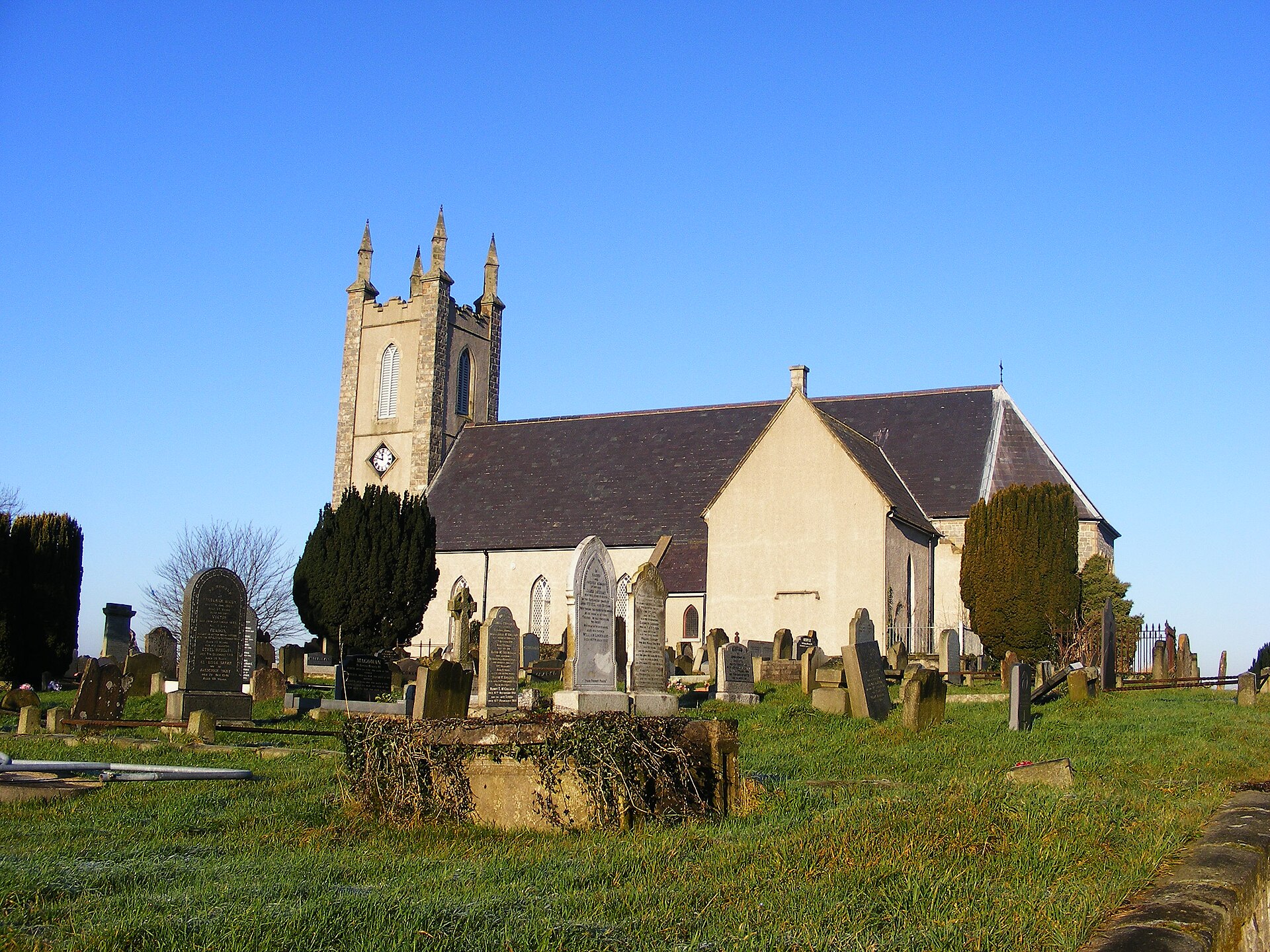
Saul Church. This is where Saint Patrick built his first stone church after returning to Ireland in 432 AD. A memorial chapel marks the site today. It is a quiet stop that means a great deal to anyone tracing Irish roots.
Frequently Asked Questions About County Down Surnames
What are the most common Irish surnames from County Down?
The most common surnames in County Down include Magennis, McCartan, Hamilton, Montgomery, Quinn, Rooney, Savage, Russell, and Ward. Hamilton and Montgomery are especially common due to the 1606 Plantation. Magennis is the most identifiably native surname in the county.
What does the Magennis name mean in Irish?
Magennis comes from the Gaelic Mac Aonghusa — “son of Aonghus.” The personal name Aonghus means “true vigour.” The Magennis family were Lords of Iveagh in County Down for centuries. Their name also gave rise to the surname Guinness.
Are Hamilton and Montgomery Irish or Scottish names?
Both names are Scottish in origin. They came to County Down during the Montgomery-Hamilton Plantation of 1606. Thousands of Scottish settlers followed. Both names are now deeply rooted in County Down and across Ulster. Many Scots-Irish with these names left for America in the 1700s.
Where can I trace my County Down ancestry?
Start with PRONI (Public Record Office of Northern Ireland) at nidirect.gov.uk/proni. For older records, use Griffith’s Valuation at askaboutireland.ie and the 1901 and 1911 census at census.nationalarchives.ie. Down County Museum in Downpatrick can help with local parish records and townland research.
Explore more of our Irish surnames series — covering Cork, Galway, Kerry, Dublin, Clare, Mayo, Donegal, Tipperary, Limerick, Waterford, Wexford, Kilkenny, Sligo, Roscommon, and Antrim. Each county holds its own story.
☘️ Join 64,000+ Ireland Lovers
Every Friday, get Ireland’s hidden gems, local secrets, and travel inspiration — the kind you won’t find in any guidebook.
Subscribe free — enter your email:
Already subscribed? Download your free Ireland guide (PDF)
Know someone who’d love this? Share on WhatsApp →
Love more? Join 43,000 Scotland lovers → · Join 30,000 Italy lovers → · Join 7,000 France lovers →
Free forever · · Unsubscribe anytime
Tours & experiences you might love


Powered by Viator. Some links are affiliate links — we may earn a small commission at no extra cost to you.
Secure Your Dream Irish Experience Before It’s Gone!
Planning a trip to Ireland? Don’t let sold-out tours or packed attractions spoil your journey. Iconic experiences like visiting the Cliffs of Moher, exploring the Rock of Cashel, or enjoying a guided walk through Ireland’s ancient past often sell out quickly—especially during peak travel seasons.

Booking in advance guarantees your place and ensures you can fully immerse yourself in the rich culture and breathtaking scenery without stress or disappointment. You’ll also free up time to explore Ireland’s hidden gems and savour those authentic moments that make your trip truly special.
Make the most of your journey—start planning today and secure those must-do experiences before they’re gone!
Subscribe Free