

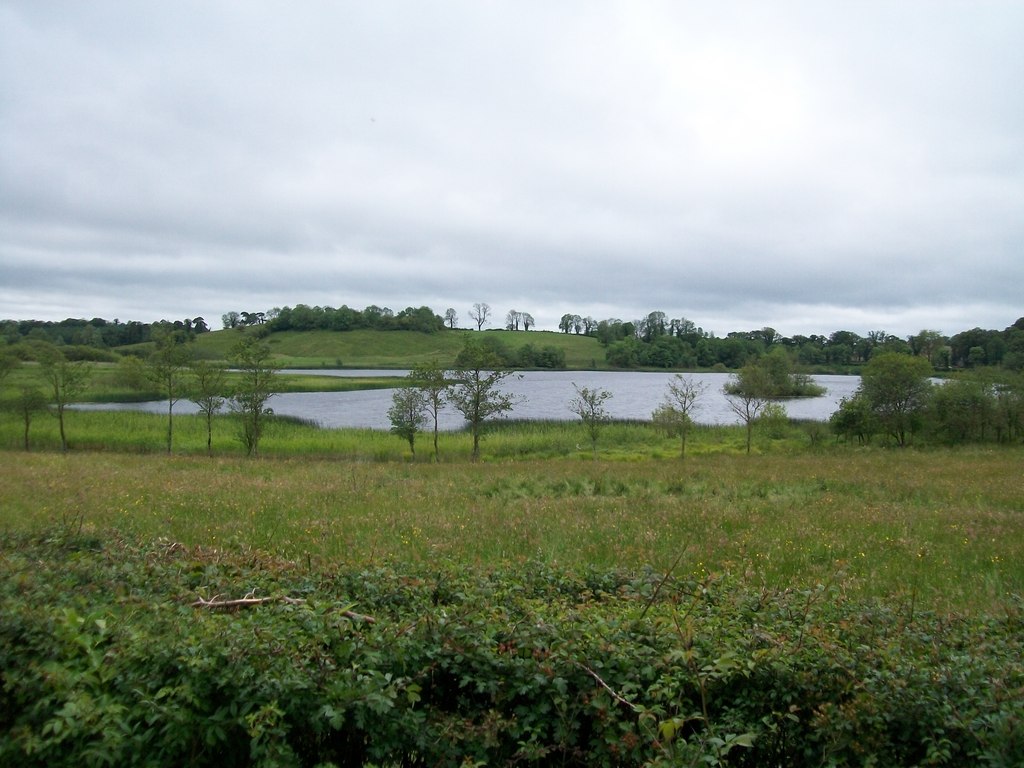
County Cavan sits at the heart of Ulster. The county is full of lakes and low hills, cut through by rivers that feed the Shannon. Irish surnames from Cavan carry the mark of a Gaelic kingdom that held out longer than most. O’Reilly, Brady, McGovern, McCabe, Sheridan — these names trace back to the lords of East Breifne, one of the last Gaelic territories to fall to English rule. If your family carries a Cavan name, you carry a piece of that story.
Free Irish ancestry tool ☘️
Have an Irish surname? Find your ancestral Irish county — we’ll trace your name to where the family originated, with a short note on its history.
Irish Surnames from Cavan: The Lake Kingdom
County Cavan was the heartland of East Breifne. The name Breifne comes from the Old Irish Bréifne, though the exact meaning is debated. Some scholars connect it to a word for hilly or rocky terrain.
The kingdom of Breifne was split into two territories. West Breifne covered most of County Leitrim and was ruled by the O’Rourkes. East Breifne covered County Cavan and was ruled by the O’Reillys.
For four hundred years, the O’Reillys controlled East Breifne. They built Cloughoughter Castle on a small island in Lough Oughter. Their territory was defended by lake systems and forest. The English found it hard to control.
The Plantation of Ulster in 1610 broke the old Gaelic order. Cavan was planted with English and Scottish settlers. The native Gaelic families lost land and status. Their surnames survived the plantation, the Famine, and the Atlantic crossing. Today those names are spread across the world.
If you are tracing your roots, our guide to tracing your Irish ancestry covers every archive and database you need.
O’Reilly – Ó Raghallaigh: Lords of East Breifne
☘️ Your Irish family has a story waiting to be found.
Discover where your Irish ancestors came from — their county, their name, their story. Our free step-by-step guide walks you through every record, DNA tool, and ancestry archive. No experience needed.
No name is more closely tied to County Cavan than O’Reilly. The Gaelic form is Ó Raghallaigh — “descendant of Raghallach.” The personal name Raghallach is old Irish. Its exact meaning is uncertain, though some scholars link it to a word meaning “strong in decision.”
The O’Reillys ruled East Breifne for centuries. They held land across most of modern County Cavan. Their seat of power was Cloughoughter Castle, built on a rocky island in Lough Oughter near Kilmore. The castle stands today as a ruin, but it remained in O’Reilly hands until the seventeenth century.
The O’Reillys were patrons of the arts. They supported bards and poets and scribes. Several key Irish manuscripts were written under O’Reilly patronage in County Cavan.
After the plantation, the O’Reillys lost their land. Many joined the Flight of the Wild Geese — the exodus of Irish Catholic soldiers to Europe after the Williamite Wars. O’Reilly officers served in the armies of France, Spain, and Austria. The name O’Reilly appears in military records across Europe in the seventeenth and eighteenth centuries.
In America, O’Reilly is one of the most common Irish-origin surnames in New York, Pennsylvania, and Illinois. If your family name is Reilly or Riley, a Cavan origin is very likely.
Brady – Mac Bradaigh: A Strong Breifne Family
Brady is one of the major surnames of County Cavan. The Gaelic form is Mac Bradaigh — “son of Bradach.” The personal name Bradach comes from the Irish word meaning “spirited.” It was a common personal name in the Gaelic tradition before surnames became fixed.
The Mac Bradaigh sept was rooted in the barony of Clankee in east County Cavan. They served as one of the principal families under the O’Reillys. In the church, the Bradys produced key figures. Matthew Brady became Bishop of Kilmore in the seventeenth century.
Brady is common across Cavan, Meath, and Louth today. In America, it spread widely through Famine-era emigration. The name appears in early Irish-American communities in Boston and New York.
McGovern – Mag Shamhráin: Lords of Tullyhaw
McGovern comes from the Gaelic Mag Shamhráin — “son of Samhrán.” The name Samhrán comes from the Irish word for summer.
The McGoverns were lords of Tullyhaw in northwest County Cavan. This territory sits near the border with County Leitrim. The McGoverns were part of the broader Breifne ruling class and served alongside the O’Reillys for generations.
The name appears in many forms. MacGovern, Governey, and Magauran are all anglicised variants. Cathal Buí Mac Giolla Ghunna, one of the most famous Gaelic poets of the eighteenth century, came from a McGovern family background in County Cavan.
Today McGovern is concentrated in Cavan, Leitrim, and Fermanagh. In America, the name is common in the Irish communities of New York and the Midwest.
☘️ Enjoying this? 64,000+ Ireland lovers get stories like this every week.
Thinking about it for retirement?
If you’ve started thinking seriously about retiring there, our complete our full Retire in Ireland guide covers the visa, healthcare, cost-of-living, and the regions worth shortlisting.
Subscribe free →
McCabe – Mac Cába: The Gallowglass Fighters
McCabe is one of the most distinctive surnames in County Cavan. The Gaelic form is Mac Cába — “son of Cába.” The name Cába likely refers to a hood or cap, possibly the helmet worn by Gaelic mercenary soldiers.
The McCabes were gallowglass. Gallowglass were heavily armed mercenary soldiers from the western Isles of Scotland. They came to Ireland from the thirteenth century to serve Gaelic lords.
The McCabes settled in County Cavan in the fourteenth century. They became the hereditary military men of both the O’Reillys of East Breifne and the O’Rourkes of West Breifne. A McCabe family led the military force of each lord. In return they held land and status in the territory.
The McCabe fighting tradition continued through the rebellions of the sixteenth and seventeenth centuries. After the plantation, many McCabe men went into exile in Europe as soldiers. The surname today is concentrated in Cavan, Monaghan, and across Ulster.
Sheridan – Ó Sirideáin: The Scholarly Family
Sheridan is one of the best-known names from County Cavan. The Gaelic form is Ó Sirideáin. The origin of the personal name Sirideán is uncertain. Some scholars suggest it may derive from an early Irish personal name.
The Sheridans were a scholarly family of Cavan origin. They produced writers, teachers, and men of letters in the eighteenth and nineteenth centuries.
The most famous bearer of this name is Richard Brinsley Sheridan, the playwright. He wrote The Rivals and The School for Scandal. Though Sheridan was born in Dublin in 1751, his family traced its roots to County Cavan. His grandfather Thomas Sheridan was a close friend of Jonathan Swift and ran a school in Cavan town.
Today Sheridan is common across Ulster, Dublin, and the Irish diaspora in America and Britain.
O’Farrelly – Ó Faircheallaigh: The Poets of Breifne
O’Farrelly is closely tied to the Cavan landscape. The Gaelic form is Ó Faircheallaigh — “descendant of Faircheallaigh.” The personal name combines words meaning “man of the church” and “valour.”
The O’Farrellys were the hereditary poets and scholars of the O’Reilly lords. In Gaelic Ireland, every major lord kept a file — a learned poet who recorded the lord’s genealogy and composed praise poetry. The O’Farrellys held that role for the O’Reillys.
Eithne O’Farrelly was one of the few female poets recorded in early modern Irish sources. She composed poetry in the Gaelic tradition as the old order collapsed around her in the seventeenth century.
The name today appears as Farrelly and O’Farrelly across County Cavan and County Meath. It remains one of the most localised surnames in Ireland.
Smith – Mac Gabhann: The Blacksmith’s Line
Smith is one of the most common surnames in Ireland, but in County Cavan it has a specific Gaelic root. The Cavan form is Mac Gabhann — “son of the smith.” Gabha means blacksmith in Irish. The profession was skilled and respected. A good smith made weapons, tools, and farm equipment.
The Mac Gabhann sept was native to County Cavan. Over time the name was anglicised to Smith. This is why County Cavan has many Smiths with a Gaelic Irish background, rather than an English settler name.
If your family name is Smith and your roots are in Cavan, you may carry the Mac Gabhann line.
McKiernan – Mac Thiarnáin: The Little Lord’s Line
McKiernan comes from the Gaelic Mac Thiarnáin — “son of little Tighearnach.” Tighearnach was a common Irish personal name meaning “lord.” The diminutive suffix gives the meaning “little lord.”
The McKiernans were a sept of Breifne. Their lands were around Lough Ramor in the middle of County Cavan. They served under the O’Reillys. The name appears in different forms across the county — Kiernan, McKiernan, and Tiernan are all related variants.
In America, Kiernan and McKiernan are found in the Irish communities of New York, Boston, and Chicago. The name came over in both the eighteenth-century Ulster emigration and the Famine emigration of the 1840s.
How Cavan Surnames Crossed the Atlantic
County Cavan sent emigrants to America in two major waves.
The first wave came in the eighteenth century. Most of these emigrants were Protestant settlers whose families had come from Scotland and England during the Plantation. They left through the ports of Newry or Derry and arrived in Philadelphia. From there they moved south and west into Virginia, the Carolinas, and Kentucky. They carried Cavan surnames with them into the American frontier.
The second wave came during the Great Famine of 1845 to 1852. Cavan was badly hit. The county lost a large share of its population to death and emigration. Catholic families — O’Reillys, Bradys, McCabes, McGoverns — left through the ports of Drogheda or Belfast. They arrived in New York, Boston, and Philadelphia. They settled in the Irish working-class communities of those cities.
Their descendants now number in the millions. Cavan is a small county. But its surnames are spread across the English-speaking world.
Our Irish heritage trip planning guide explains how to visit your ancestral county in person.
How to Trace Your Cavan Ancestry
Cavan County Archive
The Cavan County Archive in Cavan town holds estate papers, land records, and local government documents. This is a good starting point for families from the tenant farmer class.
Cavan Genealogy Centre
The Cavan Genealogy Centre at Cana House in Cavan town holds databases of local church records covering baptisms, marriages, and burials. The database is searchable through rootsireland.ie.
Griffith’s Valuation and Census Records
Griffith’s Valuation listed every landholder in County Cavan in the 1850s. You can search it free at askaboutireland.ie. The 1901 and 1911 census returns are fully searchable at census.nationalarchives.ie. These are the best starting points for Famine-era research.
For a full step-by-step guide to every archive, see our guide to tracing your Irish ancestry.
Where to Visit in Cavan to Connect with Your Heritage
Cloughoughter Castle, Lough Oughter. This is the most important heritage site in County Cavan. The castle sits on a small island in Lough Oughter near Kilmore. It was the O’Reilly seat of power for centuries. Owen Roe O’Neill, the great general of the 1641 rebellion, died here. The ruins can be reached by rowing boat in summer.
Kilmore Cathedral and the Ancient Door. Kilmore Cathedral near Cavan town contains one of the oldest doorways in Ireland. The Romanesque door dates from the twelfth century. It was brought from the monastery on Trinity Island in Lough Oughter. It is one of the finest examples of early Irish stone carving in Ulster.
The Cavan Burren. The Cavan Burren is a high limestone landscape in the northwest of the county near Blacklion. It contains court cairns, megalithic tombs, and ancient field systems. Walking here gives a sense of deep time in this land.
Cavan Town Heritage Trail. The town of Cavan grew from a Franciscan friary founded in the fourteenth century by the O’Reilly family. The trail links the key heritage sites in and around the town.
Our 7-day Irish ancestry itinerary gives a full framework for visiting heritage sites across Ireland. Our guide to Irish surnames from Fermanagh covers the neighbouring county. Our guide to Irish surnames from Tyrone explores the Cenél nEóghain heartland to the north.
Frequently Asked Questions About Cavan Surnames
What are the most common Irish surnames from County Cavan?
The most historically significant surnames from County Cavan include O’Reilly, Brady, McGovern, McCabe, Sheridan, O’Farrelly, McKiernan, and Smith (Mac Gabhann). O’Reilly is the dominant family of the county and the lords of East Breifne. Sheridan is the best-known Cavan name in the English-speaking world.
What does O’Reilly mean in Irish?
O’Reilly comes from the Gaelic Ó Raghallaigh — “descendant of Raghallach.” The personal name Raghallach is of uncertain meaning. The O’Reillys were lords of East Breifne. They ruled most of modern County Cavan from Cloughoughter Castle on Lough Oughter for four hundred years.
Is Sheridan a County Cavan surname?
Yes. The Sheridans were a scholarly family with roots in County Cavan. Richard Brinsley Sheridan, the playwright, traced his family to Cavan origins. His grandfather Thomas Sheridan ran a school in Cavan town and was a close friend of Jonathan Swift. The Gaelic form of the name is Ó Sirideáin.
What were the McCabes in County Cavan?
The McCabes were gallowglass — hereditary military men who came from Scotland in the fourteenth century and settled in County Cavan. They served as the professional soldiers of the O’Reilly lords of East Breifne and the O’Rourke lords of West Breifne. Their Gaelic name, Mac Cába, may refer to the distinctive hood or helmet they wore in battle.
Where can I trace my County Cavan ancestry?
Start with the Cavan Genealogy Centre at rootsireland.ie for church records. Use askaboutireland.ie for Griffith’s Valuation records from the 1850s. Search the 1901 and 1911 census at census.nationalarchives.ie. The Cavan County Archive in Cavan town holds estate papers and local records.
Your Cavan Roots Are Waiting
County Cavan does not draw the same visitors as Kerry or Galway. But it holds a deep and layered history. East Breifne was one of the last Gaelic kingdoms to survive the Tudor conquest. The O’Reillys held out, negotiated, fought back, and eventually fell. The names from that kingdom are still here.
If your surname is O’Reilly, Brady, McCabe, Sheridan, McGovern, or Farrelly, your family was part of that story. Row out to Cloughoughter Castle and you stand at the heart of the O’Reilly world. Walk the Cavan Burren and you walk land that has been settled for six thousand years.
That name is yours now. Follow it home.
Explore more of our Irish surnames series — covering Cork, Galway, Kerry, Dublin, Clare, Mayo, Donegal, Tipperary, Limerick, Waterford, Wexford, Kilkenny, Sligo, Roscommon, Antrim, Down, Tyrone, Derry, Armagh, Fermanagh, and more.
☘️ Join 64,000+ Ireland Lovers
Every Friday, get Ireland’s hidden gems, local secrets, and travel inspiration — the kind you won’t find in any guidebook.
Subscribe free — enter your email:
Get the free guide
Enter your email and we will send you straight to the download.
📲 Know someone who’d love this? Share on WhatsApp →
Love more? Join 43,000 Scotland lovers → · Join 30,000 Italy lovers → · Join 7,000 France lovers →
Free forever · One email per week · Unsubscribe anytime
Tours & experiences you might love


Powered by Viator. Some links are affiliate links — we may earn a small commission at no extra cost to you.
Secure Your Dream Irish Experience Before It’s Gone!
Planning a trip to Ireland? Don’t let sold-out tours or packed attractions spoil your journey. Iconic experiences like visiting the Cliffs of Moher, exploring the Rock of Cashel, or enjoying a guided walk through Ireland’s ancient past often sell out quickly—especially during peak travel seasons.

Booking in advance guarantees your place and ensures you can fully immerse yourself in the rich culture and breathtaking scenery without stress or disappointment. You’ll also free up time to explore Ireland’s hidden gems and savour those authentic moments that make your trip truly special.
Make the most of your journey—start planning today and secure those must-do experiences before they’re gone!
Subscribe Free