

The Wild Atlantic Way earns its name. Stretching for 2,500 kilometres along Ireland’s western seaboard from Malin Head in County Donegal to Kinsale in County Cork, this iconic coastal route is not about gentle sunsets and calm waters. It is about raw Atlantic power — cliffs that plunge hundreds of metres to the sea, headlands battered by winter storms, and skies that shift from silver to ink-black in minutes. If you are searching for the most dramatic Wild Atlantic Way stretches, this guide is your starting point.
Why the Wild Atlantic Way Is Unlike Any Other Coastal Drive
Most coastal routes in Europe follow the sea at a respectful distance. The Wild Atlantic Way does not. It clings to cliff edges, dips into ancient harbours, and winds through bogland that stretches to the horizon. The route is designed to bring you face to face with the Atlantic — not observe it safely from afar.
Ireland’s western coastline is where the full, unbroken fetch of the Atlantic Ocean meets land for the first time after several thousand kilometres. That means waves arrive with extraordinary force, cliffs are shaped by millennia of erosion, and the air carries salt and spray even on calm days. The landscapes here do not politely announce themselves. They arrive like the weather — sudden, overwhelming, and impossible to ignore.
The Most Dramatic Wild Atlantic Way Stretches, Ranked by Raw Impact
🇮🇪 Discover Hidden Ireland
Get our free 25 Hidden Gems of Ireland guide — the places most visitors never find — when you join 64,000 Ireland lovers.
Get My Free Hidden Gems Guide →
Free. No spam. Unsubscribe any time.
Slieve League, County Donegal — Where the Cliffs Hit the Heavens
If you had to choose one location that captures everything dramatic about Ireland’s west coast, Slieve League in County Donegal would be a strong contender. These cliffs rise to nearly 600 metres above the Atlantic — among the highest sea cliffs in Europe — and the sense of scale is genuinely overwhelming. Standing on the ridge path on a clear day, with the ocean glittering hundreds of metres below and the Donegal hills stretching behind you, is one of those experiences that stays with you for years.
Unlike the Cliffs of Moher, Slieve League remains quieter and more rugged. The One Man’s Pass — a narrow ridge walk near the summit — is not for the faint-hearted, but even the lower viewpoints offer drama on a monumental scale. Visit in winter and you will see the cliffs shrouded in mist and pounded by Atlantic swells. Visit in summer and you will understand why painters, poets, and travellers have been coming here for centuries.
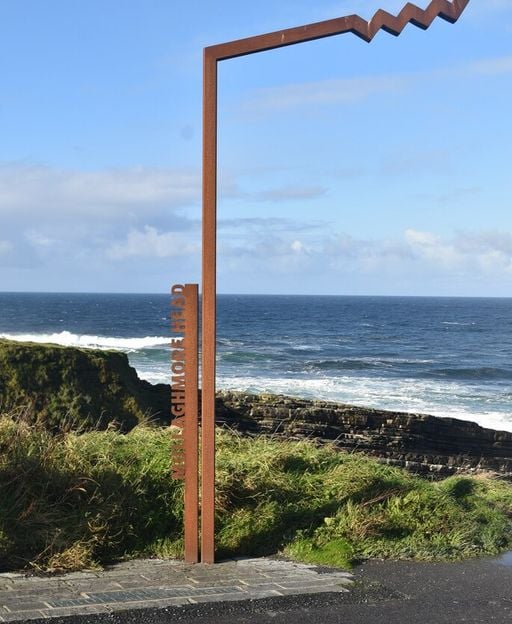
Mullaghmore Head, County Sligo — Atlantic Power at Its Rawest
Few places on the Wild Atlantic Way make you feel as small as Mullaghmore Head in County Sligo. This dramatic headland juts into the Atlantic and takes the full force of ocean swells that have built across thousands of kilometres of open water. In winter, Mullaghmore attracts professional big-wave surfers from around the world — the waves here can reach extraordinary heights, making it one of the most formidable big-wave breaks in Europe.
Even in calmer conditions, the sheer power of the ocean is on display at every turn. The fishing village of Mullaghmore sits below Classiebawn Castle — a Victorian turreted estate visible from the headland — creating a memorable contrast between the wild sea and the human-made landscape. The drive around the head is short but completely unforgettable.
Achill Island, County Mayo — Wild and Uncompromising
Connected to the mainland by a short bridge, Achill Island is Ireland’s largest island and one of the wildest stops on the entire Wild Atlantic Way. The Atlantic Drive — a 20-kilometre loop around the island’s southern coast — takes you through landscapes so elemental they almost feel prehistoric. Cliffs, moorland, sea stacks, and abandoned villages combine to create a scene of extraordinary, lonely beauty.
Keem Bay, tucked between dramatic headlands on the island’s western tip, is considered one of Ireland’s finest beaches — a sweep of white sand framed by plunging cliffs and improbably blue water. The contrast between the gentle bay and the savage cliffs on either side is the essence of Achill: Ireland at its most contradictory and magnificent. Early mornings here, when the mist still clings to the bog, are something else entirely.
The Dingle Peninsula, County Kerry — Where the Road Meets the Edge of the World
The Dingle Peninsula reaches into the Atlantic like a defiant fist. The Slea Head Drive — a loop around the western tip of the peninsula — is one of the most celebrated coastal drives anywhere in Europe, and rightfully so. The road hugs contours above the sea, passing prehistoric beehive huts, ruined churches, and drystone walls that have stood since long before the Norman invasion.
At Slea Head itself, the Blasket Islands appear offshore — a scattering of green shapes rising from the grey Atlantic. These islands were inhabited until 1953, when the last residents were evacuated to the mainland. Their abandoned village still clings to the hillside of Great Blasket, visible from the headland, and the melancholy of that history adds depth to a view that is already heartbreakingly beautiful.
The Aran Islands, County Galway — Limestone Drama in the Open Atlantic
The Aran Islands sit in the mouth of Galway Bay, taking the full Atlantic. The three islands — Inis Mór, Inis Meáin, and Inis Oírr — are made of limestone terraces worn smooth by weather and centuries of sea spray. The cliffs at Dún Aonghasa on Inis Mór drop sheer to the ocean from a height of around 100 metres. There are no barriers, no handrails, no ropes. You approach on your stomach and look over the edge into the churning water below — and the experience never leaves you.
The Aran Islands are reached by ferry from Rossaveel or Doolin, rather than by road, but they represent some of the most atmospheric landscapes in the entire Wild Atlantic Way region. The Irish language is still spoken here as a first language, and the islanders’ relationship with the sea is ancient, practical, and deeply felt.
Malin Head, County Donegal — Where the Journey Begins
Malin Head, Ireland’s most northerly point, is where the Wild Atlantic Way officially starts — or finishes, depending on your direction of travel. The views from Hell’s Hole, a natural rock chasm near the headland, and from the signal tower above the cliffs are appropriately grand. On a clear day, the Scottish coast is visible to the north-east. On a stormy day, the spray reaches the clifftop and the wind makes standing still a genuine challenge.
The journey from Malin Head south along the Inishowen Peninsula — with Lough Foyle on one side and the Atlantic on the other — sets the tone for everything that follows. The Wild Atlantic Way does not begin gently. It begins at the very edge of Ireland, with the full force of the northern ocean in your face.
How to Get the Most From the Wild Atlantic Way’s Dramatic Stretches
The dramatic stretches of the Wild Atlantic Way are best experienced with enough time to stop and genuinely linger. Resist the urge to drive the full route in three days. The headlands and clifftops deserve at least an hour each — dawn and dusk visits reveal light conditions that make even familiar views extraordinary.
Weather is part of the experience, not an obstacle to it. Atlantic storms, mist, and squalls are not inconveniences — they are the point. A grey, wind-battered day at Slieve League or Mullaghmore Head is often more memorable than a sun-drenched afternoon. Bring waterproof clothing and sturdy footwear regardless of the forecast. The Atlantic does not consult weather apps.
Stay overnight at least once near a dramatic coastal stretch. Waking to the sound of waves and stepping outside at first light to find sea fog lifting off the Atlantic is a specific pleasure that no amount of day-tripping can replicate.
Ready to Plan Your Wild Atlantic Way Journey?
Whether you are planning a two-week loop of the entire route or a long weekend focused on one dramatic region, the Wild Atlantic Way rewards proper preparation. Our complete Ireland trip planning guide covers everything from getting around to the best time of year to visit — and it will help you structure your route so you do not miss the moments that matter most.
For those drawn to Sligo’s extraordinary coastal drama, our guide to Classiebawn Castle and Benbulben is an ideal companion stop on your northward drive. And if the wild islands of the west have captured your imagination, do not miss our piece on Skellig Michael — one of Ireland’s most extraordinary places.
The Wild Atlantic Way is not a route you complete. It is a route you return to. Every stretch is different in every season, every weather condition, every quality of light. Ireland’s west coast has been shaping and breaking people’s hearts for as long as people have stood at its edge and looked out into the Atlantic. Some things do not change — and that, perhaps, is the whole point.
☘️ Love Ireland? Get Weekly Stories Free
Join 169,000+ Ireland lovers. Every weekday, we share the Ireland most visitors never find — heritage, hidden gems, and the stories behind the scenery.
Join Free — loveireland.substack.comTours & experiences you might love


Powered by Viator. Some links are affiliate links — we may earn a small commission at no extra cost to you.
Secure Your Dream Irish Experience Before It’s Gone!
Planning a trip to Ireland? Don’t let sold-out tours or packed attractions spoil your journey. Iconic experiences like visiting the Cliffs of Moher, exploring the Rock of Cashel, or enjoying a guided walk through Ireland’s ancient past often sell out quickly—especially during peak travel seasons.

Booking in advance guarantees your place and ensures you can fully immerse yourself in the rich culture and breathtaking scenery without stress or disappointment. You’ll also free up time to explore Ireland’s hidden gems and savour those authentic moments that make your trip truly special.
Make the most of your journey—start planning today and secure those must-do experiences before they’re gone!