

There is a valley in County Kerry so remote that electricity only arrived in 1976. While the rest of Ireland had been plugging in radios and electric lights for decades, the people of the Black Valley were still living by firelight and oil lamp.
They were not forgotten. They had simply been left until last — the end of a very long line.
A Valley Hidden Between Mountains
The Black Valley — An Gleann Dubh in Irish — sits at the far end of Killarney National Park, tucked behind Moll’s Gap and the MacGillycuddy’s Reeks.
To reach it, you follow a narrow road that climbs past the Upper Lake, winds through birch and oak, and drops into a bowl of mountains so enclosed that sound seems to disappear.
It is one of the most remote inhabited valleys in all of Ireland. It has always been a place apart. Visitors who stumble upon it often describe the experience as stepping into a different era — not a reconstruction of one, but the real thing.
Life Before the Pylons
Before 1976, families here lived the way Irish rural families had lived for centuries. Water came from streams. Light came from candles and paraffin lamps. Turf fires heated the homes and cooked the food.
Children walked long distances to school. The nearest town — Killarney — felt very far away, not just in miles but in character.
Older residents recalled this life not with bitterness but with a kind of clarity. Every task had its rhythm. Nothing was wasted. The valley imposed a discipline that the modern world rarely teaches.
Why Electricity Took So Long
The delay was not neglect. Running power lines into a valley this remote was genuinely expensive and complicated. The mountains made construction difficult. The population was small.
Ireland’s Rural Electrification Scheme had been running since 1946, transforming farm life across the country. But the Black Valley sat at the end of a very long list.
When the lines finally came in 1976, some families installed electric lights immediately. Others were slower to change. The habits of a lifetime do not vanish when a switch is thrown.
☘️ Enjoying this? 64,000+ Ireland lovers get stories like this every week. Subscribe free →
What the Valley Looks Like Today
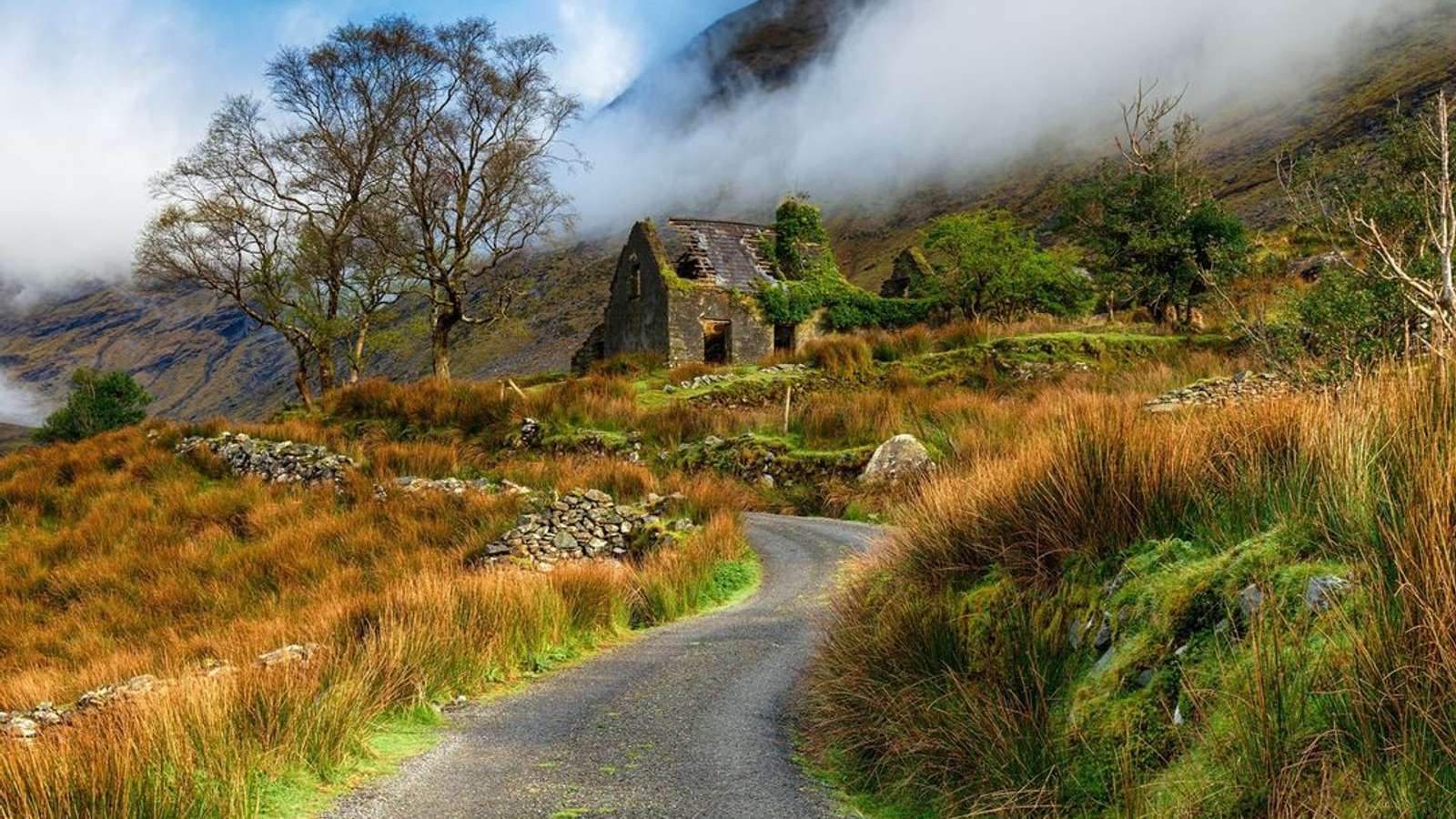
The Black Valley is still one of the quietest places in Ireland. Most of its old farmhouses are now ruins — grass-covered walls and gaping windows, slowly returning to the hillside.
There are no shops. No pub. A small hostel, a scattering of homes, and almost nothing else. Just road, mountain, water, and sky.
Walking through it, you get a sense of what Ireland felt like before the country rushed forward. The silence has a texture, a weight. Sounds carry from far away: a sheep, a stream, wind against stone.
The Ruins That Remain
Many of the stone walls in the Black Valley are not ancient ruins — they are cottages abandoned in living memory. Some date only to the mid-20th century.
There is something uncomfortable about that. These are not archaeological sites. They are houses where people ate, slept, argued, and loved. People who may still have grandchildren alive today.
Ireland has thousands of these abandoned cottages across its landscapes. Every ruined cottage in Ireland holds a story nobody will ever know — but the Black Valley simply has more of them, in a setting that makes their emptiness feel particularly visible.
Planning a Visit
The Black Valley is not signposted or promoted in the usual way. You find it by heading south from Killarney on the N71, turning off towards Moll’s Gap, and following the road past the Upper Lake.
It is single-track in places. Drive slowly, and pull into passing places when you meet other cars. People who live here use this road every day.
If you’re planning a broader trip to Kerry, the complete guide to visiting Killarney is a good starting point. And for the full picture, planning your trip to Ireland covers everything you need before you go.
The best time to visit is any morning when mist is still sitting in the mountains. That is when the valley is most itself.
The Black Valley got its electricity in 1976. But it still keeps something older than pylons and wires — a landscape that looks like it has never been in a hurry, and a silence deep enough to hear yourself think.
Some places only give themselves up slowly. This is one of them.
☘️ You Might Also Love
☘️ Join 64,000+ Ireland Lovers
Every Friday, get Ireland’s hidden gems, local secrets, and travel inspiration — the kind you won’t find in any guidebook.
Free forever · · Unsubscribe anytime
Tours & experiences you might love


Powered by Viator. Some links are affiliate links — we may earn a small commission at no extra cost to you.
Secure Your Dream Irish Experience Before It’s Gone!
Planning a trip to Ireland? Don’t let sold-out tours or packed attractions spoil your journey. Iconic experiences like visiting the Cliffs of Moher, exploring the Rock of Cashel, or enjoying a guided walk through Ireland’s ancient past often sell out quickly—especially during peak travel seasons.

Booking in advance guarantees your place and ensures you can fully immerse yourself in the rich culture and breathtaking scenery without stress or disappointment. You’ll also free up time to explore Ireland’s hidden gems and savour those authentic moments that make your trip truly special.
Make the most of your journey—start planning today and secure those must-do experiences before they’re gone!