

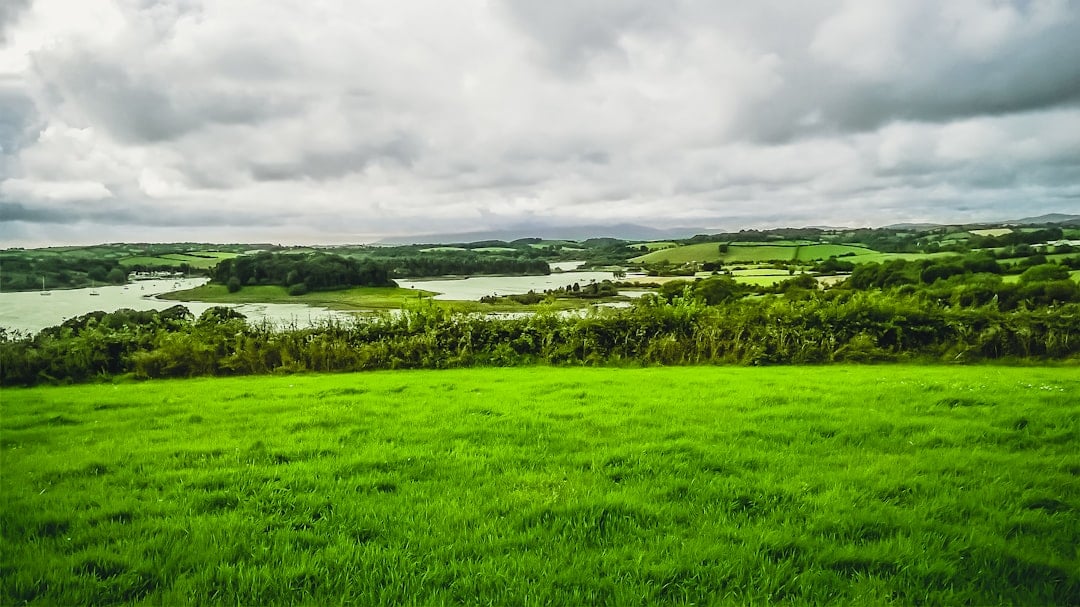
County Leitrim sits in the north-west of Ireland. It is one of the smallest counties in the country. More than a quarter of its land is water. Lakes, rivers, and Shannon tributaries cover the landscape. The O’Rourkes ruled here for centuries. Their names — and the names of the other Gaelic families of West Breifne — still echo across this lake country today.
Free Irish ancestry tool ☘️
Have an Irish surname? Find your ancestral Irish county — we’ll trace your name to where the family originated, with a short note on its history.
Irish Surnames from Leitrim: Ireland’s Lake County
The ancient kingdom of West Breifne covered most of what is now County Leitrim. The O’Rourkes ruled here for more than three centuries. They held their seat at Dromahair on the shores of Lough Gill. Their power stretched across a land of hills, forests, and lake systems that made outside control very hard.
Watch: Do You Qualify for an Irish Passport?
Tracing your Irish family? If one of your grandparents was born in Ireland, you may be able to become an Irish citizen. This 14-minute guide explains who qualifies, what it costs and how long it takes. Thinking of making the move? Get the free Moving to Ireland checklist.
The Plantation of Connacht in the 1620s broke the old Gaelic order. English and Irish landlords replaced the Gaelic lords. The native families lost their land and status. But their surnames survived the Plantation, the Famine, and the Atlantic crossing. Today those names are spread across the English-speaking world.
Leitrim sent emigrants to America in large numbers. The Famine of 1845 to 1852 hit the county very hard. Leitrim lost close to half its population to death and emigration. Whole townlands emptied in a few short years. Their descendants number in the hundreds of thousands today.
If you are tracing your roots, our guide to tracing your Irish ancestry covers every archive and database you need.
O’Rourke – Ó Ruairc: Lords of West Breifne
No name is more closely tied to County Leitrim than O’Rourke. The Gaelic form is Ó Ruairc — “descendant of Ruarc.” The personal name Ruarc is old Irish. Some scholars link it to a word meaning “of great spirit.”
The O’Rourkes ruled West Breifne for more than three hundred years. Their main seat was at Dromahair on Lough Gill. They built Creevelea Abbey in 1508. It was the last Franciscan friary founded in Ireland before the Reformation.
The most famous O’Rourke was Tiernán Mór, who ruled in the twelfth century. In 1152, his wife Dervorgilla went to Dermot MacMurrough of Leinster. Tiernán O’Rourke pursued MacMurrough for years. MacMurrough eventually asked the Normans for help. That chain of events led to the Norman invasion of Ireland in 1169. An O’Rourke family dispute helped shape the course of Irish history.
After the Plantation, many O’Rourkes went into exile in Europe. They served in the armies of France, Spain, and Austria. O’Rourke officers appear in military records across the continent in the seventeenth and eighteenth centuries.
In America, O’Rourke and Rourke are common in New York, Boston, and New England. If your family carries this name, a Leitrim origin is very likely.
Reynolds – Mac Raghnaill: Lords of Muintir Eolais
Reynolds is one of the great surnames of County Leitrim. The Gaelic form is Mac Raghnaill — “son of Raghnall.” The personal name Raghnall has Norse roots. It comes from the Norse Ragnvaldr, meaning “ruler’s counsel.” Norse names entered Gaelic Ireland through the Viking settlements of the ninth and tenth centuries. Over generations they became fully Irish.
The Mac Raghnaill sept were lords of Muintir Eolais. This territory covered south County Leitrim around Leitrim village and the Shannon basin. They were one of the most powerful families in the county alongside the O’Rourkes.
After the Plantation, Reynolds spread across Connacht. Many left during the Famine and settled in New York, Pennsylvania, and New England. If your family name is Reynolds and your roots are in Connacht, a Leitrim origin is very possible.
Clancy – Mac Fhlannchaidh: The Red Warrior’s Line
Clancy comes from the Gaelic Mac Fhlannchaidh — “son of Flannchaidh.” The personal name means “red warrior.” It combines two Irish words: flann (red or ruddy) and cath (battle). It was a warrior name in the old Gaelic tradition.
The Clancy sept had roots in County Leitrim. A separate Clancy family existed in County Clare, but the two branches are distinct. They share the same anglicised spelling but are not the same family.
Today Clancy is common across Leitrim, Connacht, and the Irish diaspora in America and Britain.
☘️ Enjoying this? 64,000+ Ireland lovers get stories like this every week.
Thinking about it seriously?
If you’ve started actually planning a move, our complete the full Move to Ireland guide walks through every step, every cost, and the paperwork that catches most people out.
Subscribe free →
O’Beirne – Ó Beirn: A Name from the Norse World
O’Beirne comes from the Gaelic Ó Beirn — “descendant of Beirn.” The personal name has Norse roots. It comes from the Norse name Bjǫrn, meaning “bear.” Norse names passed into Gaelic Ireland through the Viking age. The O’Beirnes made a foreign name fully Irish over many generations.
The O’Beirne sept had strong roots in Connacht. They were well placed along the Roscommon and Leitrim border. Today the name appears across the west of Ireland and in Irish-American communities.
Moran – Ó Móráin: A Great Connacht Name
Moran is one of the forty most common surnames in Ireland. The Gaelic form is Ó Móráin — “descendant of Mórán.” The personal name Mórán means “the great one.” It comes from the Irish word mór, meaning great.
The Moran sept had roots in County Leitrim and County Roscommon. The name spread across Connacht after the Plantation. In America, Moran is found in Irish communities in every major city. If your family name is Moran and your roots are in Connacht, a Leitrim origin is very possible.
Dolan – Ó Dubhláin: The Dark Challenger
Dolan comes from the Gaelic Ó Dubhláin — “descendant of Dubhlán.” The personal name means “dark challenger.” It combines dubh (dark) and lán (full or complete). It was a common personal name in Connacht before fixed surnames became the norm.
The Dolan sept had roots in County Leitrim and the wider Connacht region. The name is still common in Leitrim today. In America, Dolan spread through Famine emigration and is found across Irish communities in New York and the Midwest.
Mulvey – Ó Maolfabhail: A Leitrim Original
Mulvey is one of the most specifically Leitrim surnames in Ireland. The Gaelic form is Ó Maolfabhail — “descendant of Maolfabhail.” The personal name means “devotee of the rule.” It likely refers to a man who followed a monastic rule — a common naming pattern in early Christian Ireland.
The Mulvey sept was native to County Leitrim. The name is rarely found outside the county and its close neighbours. If your family carries the name Mulvey, a Leitrim origin is almost certain.
How Leitrim Surnames Crossed the Atlantic
County Leitrim sent emigrants to America in two main waves.
The first wave came during the Great Famine of 1845 to 1852. Leitrim was badly hit. The county lost nearly half its population to death and emigration. O’Rourkes, Reynolds, Dolans, and Morans left through the ports of Sligo and Ballyshannon. They arrived in New York, Boston, and Philadelphia. They settled in the Irish working-class communities of those cities. Many moved inland to Pennsylvania, Ohio, and Illinois.
A second wave followed through the late nineteenth and early twentieth centuries. Leitrim kept losing people long after the Famine ended. The county never fully recovered its pre-Famine numbers. It remains one of the least populated counties in Ireland today.
Their descendants are spread across the English-speaking world. Leitrim is a small county. But its surnames are found from Boston to Sydney.
Our Irish heritage trip planning guide explains how to visit your ancestral county in person.
How to Trace Your Leitrim Ancestry
Leitrim Genealogy Centre
The Leitrim Genealogy Centre in Ballinamore holds church records and local historical databases. It is part of the Irish Family History Foundation network. You can search their records at rootsireland.ie.
Leitrim County Library
The Leitrim County Library in Ballinamore holds local newspaper archives, estate papers, and maps. This is a good starting point for families from the tenant farmer class.
Griffith’s Valuation and Census Records
Griffith’s Valuation listed every landholder in County Leitrim in the 1850s. You can search it free at askaboutireland.ie. The 1901 and 1911 census returns are fully searchable at census.nationalarchives.ie. These are the best starting points for Famine-era research.
For a full step-by-step guide to every archive, see our guide to tracing your Irish ancestry.
Where to Visit in Leitrim to Connect with Your Heritage
Creevelea Abbey, Dromahair. The O’Rourkes founded this Franciscan friary in 1508. It was the last Franciscan friary built in Ireland before the Reformation. The ruins stand on the banks of the River Bonet near Dromahair village. Carved Franciscan figures are still visible on the cloister walls.
Breffni Castle, Dromahair. This tower house ruin stands near Dromahair. It is associated with the O’Rourke lords of West Breifne. The village of Dromahair was the heart of O’Rourke power for centuries.
Parke’s Castle, Lough Gill. This early seventeenth-century plantation castle sits on the Leitrim shore of Lough Gill. It was built on the site of an earlier O’Rourke tower house. Parke’s Castle is open to visitors and shows clearly how the Plantation changed Leitrim.
Carrick-on-Shannon. The county town sits on the Shannon. It is a good base for exploring Leitrim. The local library holds Leitrim records. The town has strong links to the Famine emigration period.
Our 7-day Irish ancestry itinerary gives a full framework for visiting heritage sites across Ireland. Our guide to Irish surnames from Cavan covers the neighbouring county to the east. Our guide to Irish surnames from Sligo covers the county to the west.
Frequently Asked Questions About Leitrim Surnames
What are the most common Irish surnames from County Leitrim?
The most historically significant surnames from County Leitrim include O’Rourke, Reynolds, Clancy, O’Beirne, Moran, Dolan, and Mulvey. O’Rourke is the dominant family of the county and the lords of West Breifne. Mulvey is one of the most specifically Leitrim surnames in all of Ireland.
What does O’Rourke mean in Irish?
O’Rourke comes from the Gaelic Ó Ruairc — “descendant of Ruarc.” The personal name Ruarc is of uncertain meaning. Some scholars link it to a word for “great spirit.” The O’Rourkes ruled West Breifne — most of modern County Leitrim — for more than three hundred years.
Is Reynolds a County Leitrim surname?
Yes. The Mac Raghnaill sept were lords of Muintir Eolais in south County Leitrim. The name has Norse roots — from the Norse Ragnvaldr, meaning “ruler’s counsel.” Reynolds is one of the most historically important surnames in the county.
What is the connection between O’Rourke and the Norman invasion?
Tiernán Mór O’Rourke, lord of West Breifne, had his wife Dervorgilla taken by Dermot MacMurrough of Leinster in 1152. O’Rourke pursued MacMurrough for years. MacMurrough asked the Normans for help. This led to the Norman invasion of Ireland in 1169. An O’Rourke family dispute changed the course of Irish history.
Where can I trace my County Leitrim ancestry?
Start with the Leitrim Genealogy Centre at rootsireland.ie for church records. Use askaboutireland.ie for Griffith’s Valuation records from the 1850s. Search the 1901 and 1911 census at census.nationalarchives.ie. The Leitrim County Library in Ballinamore holds local newspapers and estate papers.
Your Leitrim Roots Are Waiting
County Leitrim does not draw the same visitors as Kerry or Galway. But it holds a deep and layered history. West Breifne was one of the last Gaelic kingdoms to face the Plantation. The O’Rourkes held out, fought back, and eventually fell. The names from that kingdom are still here.
If your surname is O’Rourke, Reynolds, Clancy, Dolan, or Mulvey, your family was part of that story. Visit Creevelea Abbey and you stand at the heart of the O’Rourke world. Walk the shores of Lough Gill and you walk land that shaped Irish history.
That name is yours now. Follow it home.
Explore more of our Irish surnames series — covering Cork, Galway, Kerry, Dublin, Clare, Mayo, Donegal, Tipperary, Limerick, Waterford, Wexford, Kilkenny, Sligo, Roscommon, Antrim, Down, Tyrone, Derry, Armagh, Fermanagh, Cavan, Monaghan, and more.
☘️ Join 64,000+ Ireland Lovers
Every Friday, get Ireland’s hidden gems, local secrets, and travel inspiration — the kind you won’t find in any guidebook.
Subscribe free — enter your email:
📲 Know someone who’d love this? Share on WhatsApp →
Love more? Join 43,000 Scotland lovers → · Join 30,000 Italy lovers → · Join 7,000 France lovers →
Free forever · One email per week · Unsubscribe anytime
Tours & experiences you might love


Powered by Viator. Some links are affiliate links — we may earn a small commission at no extra cost to you.
Secure Your Dream Irish Experience Before It’s Gone!
Planning a trip to Ireland? Don’t let sold-out tours or packed attractions spoil your journey. Iconic experiences like visiting the Cliffs of Moher, exploring the Rock of Cashel, or enjoying a guided walk through Ireland’s ancient past often sell out quickly—especially during peak travel seasons.

Booking in advance guarantees your place and ensures you can fully immerse yourself in the rich culture and breathtaking scenery without stress or disappointment. You’ll also free up time to explore Ireland’s hidden gems and savour those authentic moments that make your trip truly special.
Make the most of your journey—start planning today and secure those must-do experiences before they’re gone!
Subscribe Free