

There is a stone figure on the Beara Peninsula in County Cork that has stood for thousands of years. Local people call her the Hag of Beara. She is, they say, a goddess — the oldest being in Ireland. And she is still here.
The Oldest Being in Ireland
The Cailleach Bhéara — the Old Woman of Beara — is one of the most ancient figures in Irish mythology. Her name means “hag” or “old woman,” but that word carried a very different weight in old Ireland. It meant power. It meant wisdom accumulated over centuries. It meant a being who had seen everything and outlasted everyone.
In Irish tradition, the Cailleach is so old she has lived through seven lifetimes of men. She watched kings rise and fall. She saw forests grow and die back. She was already ancient when Christianity arrived.
She is the personification of winter — not just the cold, but the harsh, necessary cold that shapes a landscape and strips it back to its bones.
She Built Ireland With Her Own Hands
The Cailleach did not just survive the landscape. She created it.
Old stories say she walked across Ireland carrying an apron full of rocks. When the apron string broke, the stones tumbled out and became mountains. The Loughcrew hills in County Meath — a prehistoric site older than the Egyptian pyramids — are said to have formed this way.
She also created Ireland’s lakes. One story tells of a sacred well she kept, covered with a flat stone. One evening she forgot to replace the capstone. The water rose all night and flooded the valley below. That valley became Lough Derg.
These are not just colourful stories. They are Ireland’s oldest explanation for why the land looks the way it does.
The Poem That Survived 1,200 Years
Around the year 800 AD, someone wrote down the Cailleach’s lament.
In it, she sits alone on a rock on the Beara Peninsula and reflects on what she has lost. The kings who once feasted with her are dead. The warriors who competed for her favour are gone. Her hair has turned white. Her cloak is threadbare.
“The flood-wave, and the swift ebb-tide — they have all passed me by. After a time of honour, I am old and grey.”
It is one of the oldest poems in the Irish language. And it is heartbreaking in the way only very old things can be.
☘️ Enjoying this? 64,000+ Ireland lovers get stories like this every week. Subscribe free →
Her Sacred Sites
The most famous Cailleach site in Ireland is on the Beara Peninsula itself. Near the village of Eyeries, a weathered rock known as the Hag of Beara sits on a clifftop facing the sea. She is a hunched figure, worn smooth by Atlantic storms, looking out across the water.
People still leave offerings there. Small stones. Wildflowers. Folded notes.
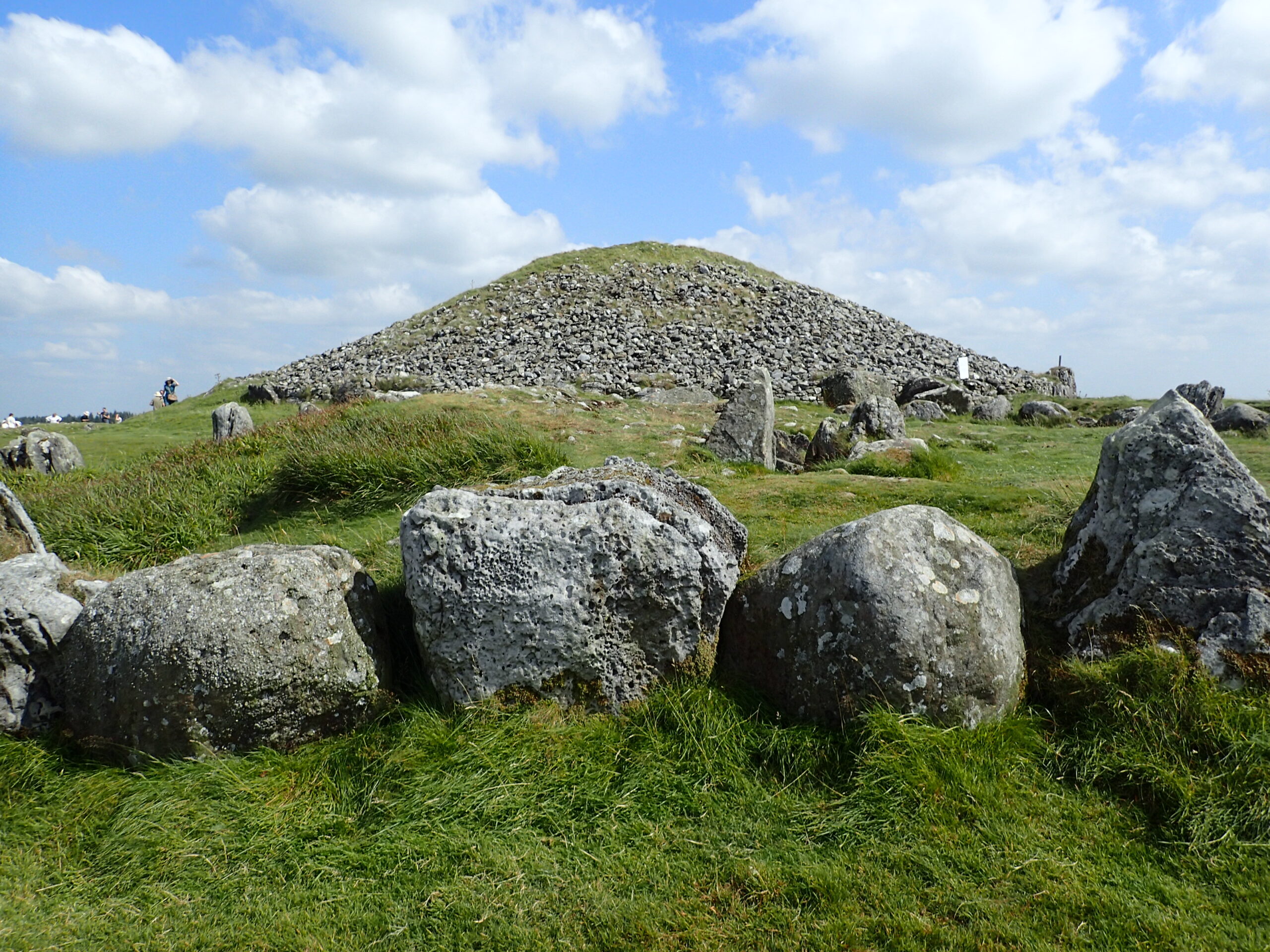
In County Meath, the Loughcrew passage tombs are sometimes called Sliabh na Caillí — the Mountain of the Hag. These stone chambers are over 5,000 years old, aligned with the sunrise at the spring and autumn equinoxes. On those mornings, light floods the central chamber and illuminates carved symbols on the walls.
The connection between the Cailleach and these ancient solar alignments is not accidental. She is a figure of seasons and cycles — not of death, but of the great turning of the year.
Why the Irish Never Quite Forgot Her
The Cailleach survived the arrival of Christianity. She was never entirely written out of the culture. Instead, she shifted — merging in some places with local fairy traditions, with holy well customs, with folklore about winter’s end.
In modern Ireland, her name still appears on hillsides and in place names. Sliabh na Caillí. Hag’s Head on the Cliffs of Moher. The Cailleach’s House in Donegal.
She is not a forgotten goddess. She is woven into the geography.
If you drive the Ring of Beara, you are driving through her territory. Every mountain, every lake, every storm-battered headland carries her story.
And if you stop at the right rock on the right clifftop, you might just feel it.
Planning a trip to Kerry or Cork? The Ireland travel planning hub has everything you need to get started.
The Irish have always understood that the land is alive. Not metaphorically — actually alive, in the way that something ancient and enduring becomes more than stone and soil. The Cailleach Bhéara is the oldest expression of that idea. She is winter, memory, and the wild edge of a coast that still does not quite belong to the modern world. If Ireland ever felt to you like a place that carries its past more heavily than most, she is one reason why.
☘️ You Might Also Love
☘️ Join 64,000+ Ireland Lovers
Every Friday, get Ireland’s hidden gems, local secrets, and travel inspiration — the kind you won’t find in any guidebook.
Free forever · · Unsubscribe anytime
Tours & experiences you might love


Powered by Viator. Some links are affiliate links — we may earn a small commission at no extra cost to you.
Secure Your Dream Irish Experience Before It’s Gone!
Planning a trip to Ireland? Don’t let sold-out tours or packed attractions spoil your journey. Iconic experiences like visiting the Cliffs of Moher, exploring the Rock of Cashel, or enjoying a guided walk through Ireland’s ancient past often sell out quickly—especially during peak travel seasons.

Booking in advance guarantees your place and ensures you can fully immerse yourself in the rich culture and breathtaking scenery without stress or disappointment. You’ll also free up time to explore Ireland’s hidden gems and savour those authentic moments that make your trip truly special.
Make the most of your journey—start planning today and secure those must-do experiences before they’re gone!