

The first time you spot a Connemara pony on an open hillside — standing still against a backdrop of grey limestone and Atlantic sky — the effect is hard to explain. It is not just a horse you are looking at. It is something that has belonged to that landscape for longer than anyone can remember.
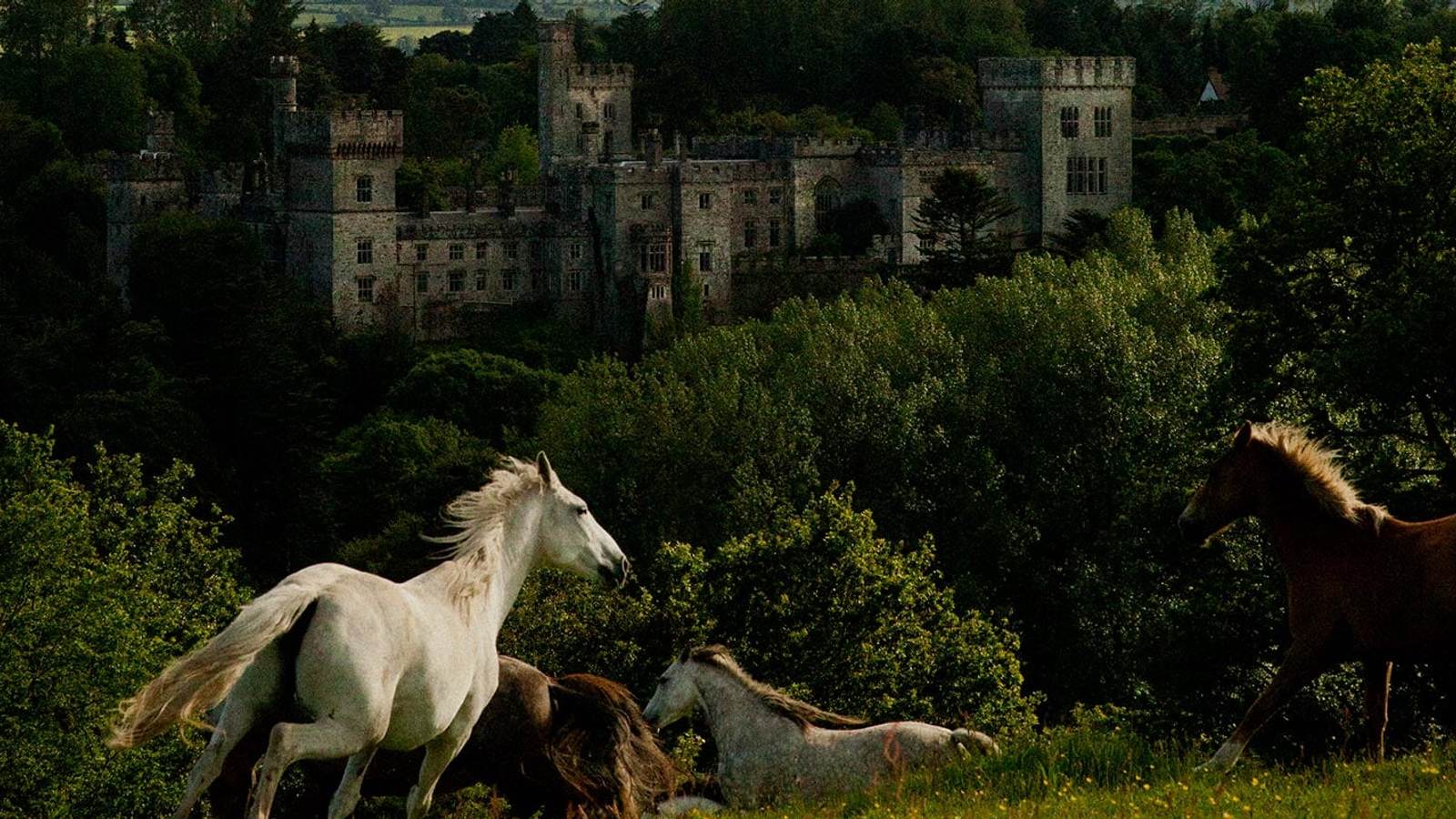
The Only Native Pony of Ireland
The Connemara pony is the only horse breed native to Ireland, and it has been shaped by its environment in ways no breeding programme could replicate. For thousands of years, these ponies lived on thin Atlantic grasses, mountain heather, and the sparse pickings of bogland edges.
They are hardy in a way that larger horses simply are not. In Connemara, hardiness was not a preference — it was survival.
Some historians believe Barb and Andalusian blood was introduced through horses that came ashore when Spanish Armada ships foundered off the Connacht coast in 1588. Whatever their distant origins, by the 17th and 18th centuries the Connemara pony was already a distinct and irreplaceable animal — built by the land that raised it.
The Backbone of Rural Life
For the farming families of County Galway, the Connemara pony was not a luxury. It was the engine of everything.
These ponies cut peat from the bog. They hauled seaweed from the shore to fertilise thin fields. They pulled ploughs across rocky ground no tractor could navigate. Children rode them to school along lanes that exist on no map.
Every townland in the west knew its ponies by name. In a place where the land was everything, the pony gave more than most — and asked for very little in return. The deep connection between a Connemara family and their animals ran as deep as the ancient names they gave to every field and hillside.
Nearly Lost — Then Saved
The Great Famine of the 1840s pushed Connemara to the edge of collapse. Families starved, emigrated, and died. Ponies — no longer cared for — were turned loose on hillsides or sold off for a few shillings.
By the late 19th century, crossbreeding with thoroughbreds and other stock had introduced useful qualities but risked diluting the pony’s distinctive character. Something had to be done before it was too late.
In 1923, a group of Connemara farmers and breeders met in Clifden and formed the Connemara Pony Breeders’ Society. They began recording bloodlines, selecting for the qualities that had always defined the breed — the sure-footedness, the endurance, the deep, uncomplicated kindness. That meeting saved the pony from disappearing entirely.
A Small Horse That Defied Every Expectation
In the decades that followed, the Connemara pony did something that surprised the equestrian world. It left the bog roads and entered the international show ring — and won.
Connemara ponies have competed at the highest levels of showjumping, consistently outperforming horses twice their size. Their athleticism, combined with a temperament that makes them exceptionally trainable, created natural competitors.
For an animal bred to haul seaweed along a Galway shoreline, it was a remarkable reinvention — and a very Irish one at that.
Clifden in August
Every August, the hillside town of Clifden holds one of Ireland’s great traditional gatherings: the Connemara Pony Show. Breeders bring their animals from across the west. Judges assess conformation, temperament, and movement. Old friends meet. Children show their ponies with a seriousness that goes well beyond their years.
It is one of those days that feels ancient even when you are standing in the middle of it. The families here are the same families who saved the breed a century ago — and they know it.
If you are planning a trip to the west of Ireland in late summer, this is the kind of experience that does not appear in most guidebooks — and stays with you long after you have left.
Still Running Free
Wild Connemara ponies can still be found grazing on the uplands above the bogs. They move through the misty hills as if they have always been there — because they have. You can see them from the road if you know where to look.
You can ride them along the coast if you want to feel the landscape the way generations of Connemara people once did. Or you can simply stop the car on a mountain pass, roll down the window, and watch them for a while. Nothing explains Connemara quite like that sight.
For anyone who wants to go deeper into the wild stories of Ireland’s Atlantic coast, the beautiful legend that explains why seals have such human eyes is another reminder that this coastline has always known how to keep its secrets.
Some things in Ireland do not need to be explained. The Connemara pony is one of them.
☘️ Want More Hidden Ireland?
Join 64,000+ subscribers who discover Ireland’s best-kept secrets every week.
Subscribe Free — Join the Community →
Free forever · Unsubscribe anytime · No spam
📥 Free Download: Ireland Travel Planning Guide
Our most popular resource — itineraries, insider tips, and the 50 places you must not miss.
Tours & experiences you might love


Powered by Viator. Some links are affiliate links — we may earn a small commission at no extra cost to you.
Secure Your Dream Irish Experience Before It’s Gone!
Planning a trip to Ireland? Don’t let sold-out tours or packed attractions spoil your journey. Iconic experiences like visiting the Cliffs of Moher, exploring the Rock of Cashel, or enjoying a guided walk through Ireland’s ancient past often sell out quickly—especially during peak travel seasons.

Booking in advance guarantees your place and ensures you can fully immerse yourself in the rich culture and breathtaking scenery without stress or disappointment. You’ll also free up time to explore Ireland’s hidden gems and savour those authentic moments that make your trip truly special.
Make the most of your journey—start planning today and secure those must-do experiences before they’re gone!