

In a field on an island off Sligo, there are stones that have not moved in over a thousand years. Not because they are too heavy. Because no one will touch them. Locals know what happens to those who do.
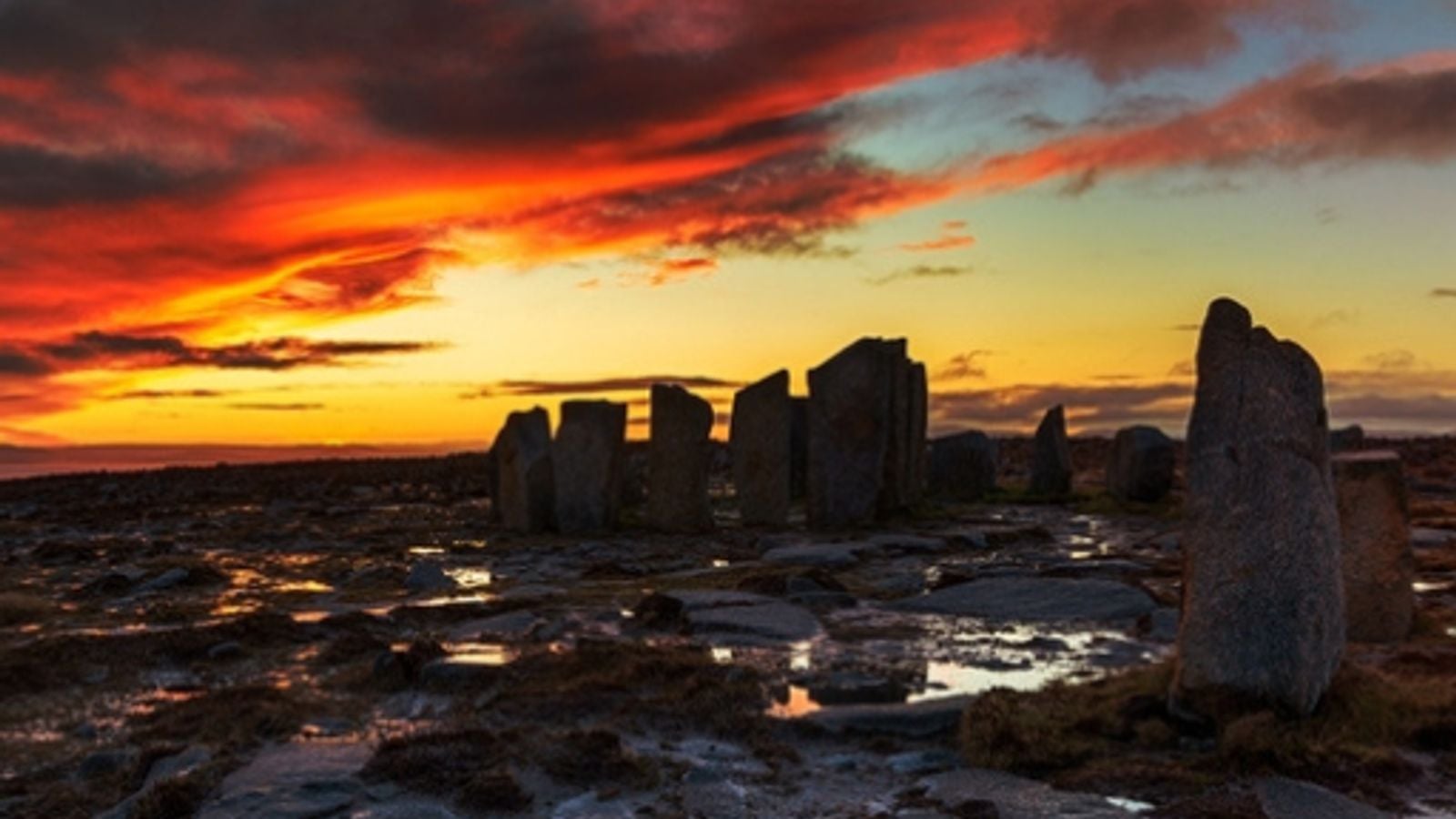
The Stones That Have No Instructions
Bullaun stones are one of Ireland’s most overlooked mysteries. They are ancient boulders — usually granite or sandstone — with one or more circular depressions carved, or worn, into the surface.
Some look like shallow bowls. Others are deep enough to hold a cupful of water after rain. They turn up at old monastic sites, beside holy wells, and in fields that once held churches nobody remembers.
Most have no plaque. Many have no name. The people who live near them simply know what they are.
What the Depression Was For
Nobody agrees on how old the oldest bullaun stones are. Some were almost certainly used before Christianity arrived in Ireland. Others date from early medieval monasteries, where monks may have used them to grind grain, mix pigments, or crush herbs.
But their ritual use is what survived. The water that collected in the hollow was considered sacred. Pilgrims would wash wounds in it, dip their fingers before prayer, or carry it home to the sick. In some traditions, it cured eye complaints. In others, it eased the pain of toothache.
The stone was the vessel. The rain was the medicine.
The Ritual That Could Ruin a Man
The cursing ceremony is the part that makes people uncomfortable. At certain sites — Inishmurray Island off the Sligo coast is the most famous — there are collections of smaller, rounded stones called clocha breaca, or speckled stones. These sit in the depression of a larger bullaun.
To call down a curse, you approached the stone at a specific time, named the person aloud, and turned the small stones anti-clockwise. Clockwise was for blessings. Anti-clockwise was for harm.
The community took this seriously. It was not done lightly. Some believed the curse would reverse and destroy the person who made it, if the accusation was false.
Inishmurray was evacuated in 1948 — the last islanders left by boat, carrying their belongings — but the cursing stones are still there. Visitors can reach the island by boat from Mullaghmore. Most walk past the stones quietly.
☘️ Enjoying this? 64,000+ Ireland lovers get stories like this every week. Subscribe free →
The Reason They Were Never Moved
Across Ireland, bullaun stones have survived because people genuinely feared moving them. Stories attached themselves to every one. A farmer who shifted one from its place became ill within the week. A road crew that moved a stone to widen a lane put it back before the day was out.
These are not distant legends. They are living warnings, passed from parent to child, repeated at dinner tables within living memory.
Even today, you will find bullaun stones left exactly as they were found, the rainwater sitting undisturbed in the hollow. Nobody drains them. Nobody fills them with soil. The unspoken rule is: leave them alone.
Where to Find Them
Bullaun stones are scattered across every county in Ireland, but some sites are particularly atmospheric. Glendalough in County Wicklow has several, set among the monastic ruins where Irish monks built one of the great early Christian settlements. Saint Gobnait’s in Ballyvourney, County Cork, has a stone that pilgrims still circle on her feast day in February.
Fore Abbey in County Westmeath has examples near the anchorite’s cell. None of them are behind glass. None have ropes. You can walk up and touch them — most people do.
But stand there long enough and you will notice something. Nobody lingers. Even people who have no idea what they are looking at tend to move on quickly. There is something in the shape of the stone, the darkened hollow, the stillness of the water, that asks you not to stay too long.
If you plan to visit any of these sites, the Ireland trip planning hub is a good place to start building your itinerary.
Memory in Stone
Ireland is full of places that carry weight without explanation. The bullaun stones are among the oldest of them. They predate the Norman castles, the round towers, and even most of the saints whose names appear on the sites where they sit.
They have survived fifteen centuries because the communities around them decided, quietly and collectively, that some things were better left undisturbed. That is not superstition. That is memory.
☘️ You Might Also Love
☘️ Join 64,000+ Ireland Lovers
Every Friday, get Ireland’s hidden gems, local secrets, and travel inspiration — the kind you won’t find in any guidebook.
Love more? Join 43,000 Scotland lovers → · Join 30,000 Italy lovers → · Join 7,000 France lovers →
Free forever · · Unsubscribe anytime
Tours & experiences you might love


Powered by Viator. Some links are affiliate links — we may earn a small commission at no extra cost to you.
Secure Your Dream Irish Experience Before It’s Gone!
Planning a trip to Ireland? Don’t let sold-out tours or packed attractions spoil your journey. Iconic experiences like visiting the Cliffs of Moher, exploring the Rock of Cashel, or enjoying a guided walk through Ireland’s ancient past often sell out quickly—especially during peak travel seasons.

Booking in advance guarantees your place and ensures you can fully immerse yourself in the rich culture and breathtaking scenery without stress or disappointment. You’ll also free up time to explore Ireland’s hidden gems and savour those authentic moments that make your trip truly special.
Make the most of your journey—start planning today and secure those must-do experiences before they’re gone!