

Every visitor to Ireland eventually sits down to a Full Irish Breakfast. The plate arrives piled high — rashers, sausages, eggs, black and white pudding, grilled tomato, mushrooms, and thick slices of soda bread. It feels ancient. It feels Irish to the bone. But most of this feast is newer than you might think.
The Breakfast That Most Irish Families Never Had
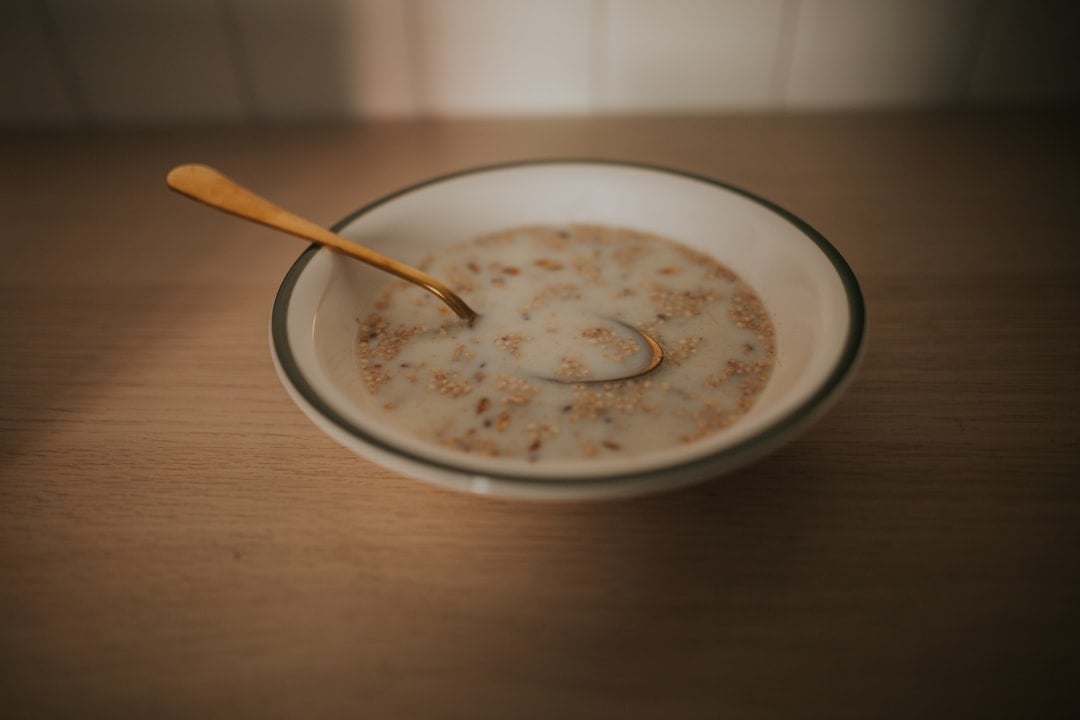
For the majority of Irish history, a farmer’s morning meal was anything but a fry-up. Oatmeal porridge was the staple — stirred overnight, served thick, sometimes with a drizzle of buttermilk.
Soda bread, made fresh each day, was broken with butter and washed down with strong tea. On a better day, there might be a cold potato left from the night before.
Meat at breakfast was a luxury. Pigs were raised in most rural households, but they were salted and preserved as a food store — not fried up on a Tuesday morning. Eggs were too valuable to eat casually. They were traded, bartered, or saved for market day.
This was not hardship for its own sake. It was simply how life worked for centuries across the Irish countryside.
Where Rashers and Sausages Came Into It
The idea of a cooked breakfast featuring bacon and eggs grew from a very different world — the country houses and grand hotels of 19th-century Ireland, where wealthy guests expected lavish morning spreads.
As Ireland’s tourism and hospitality industry grew in the early 20th century, boarding houses and small hotels began offering cooked breakfasts as a selling point. It was a signal of abundance, of welcome, of generosity made visible.
By mid-century, the full fry had spread into working-class households as prosperity slowly grew. It moved from luxury to everyday. The phrase “Full Irish” itself only hardened into common usage in recent decades — partly to distinguish it from the English version, and partly as a quiet act of cultural pride.
The Items That Make It Distinctly Irish
☘️ Love Irish Food & Culture?
Every Wednesday, we send our best Irish recipes, food stories, and kitchen traditions straight to your inbox. Join 64,000+ readers who love Ireland.
Not all fry-ups are equal. What separates the Irish version is specific, and once you know what to look for, you’ll never accept an imitation.
Back rashers — thick-cut from the loin, not the streaky American strip — are the foundation. Irish pork sausages have a higher meat content and a lighter seasoning than their English equivalents. And then there’s the pudding.
White pudding is a spiced pork sausage with no blood. Black pudding adds blood to the mix, creating a richer, earthier flavour. Both are deeply regional — Cork’s version tastes different from Cavan’s. White pudding especially is often absent in British versions of the dish, making it one of the clearest markers of an authentically Irish plate.
Soda bread completes the picture. No toast on a proper Full Irish — or at least, not instead of the soda bread. Made with buttermilk and bicarbonate of soda rather than yeast, it has a tang and density that differs entirely from a standard slice of white.
☘️ Enjoying this? 64,000+ Ireland lovers get stories like this every week. Subscribe free →
Cork Did It Differently — and Still Does
While the rest of Ireland was working out its relationship with rashers, Cork was doing something else entirely. The city developed its own breakfast tradition around drisheen — a type of sausage made with sheep’s blood — and tripe.
Both were cheap, local, and intensely flavoursome. Drisheen in particular has a texture and taste unlike anything found elsewhere in Ireland. Visitors who discover what sets Cork’s morning meal apart are rarely indifferent to the experience.
This regional variation is one of the most honest things about Irish food culture. The Full Irish is not one dish. It shifts as you move across the country, shaped by local produce, local taste, and centuries of specific tradition.
Why the B&B Made It Famous Worldwide
The Full Irish as a national icon has its roots in the Irish bed-and-breakfast tradition of the 1950s through to the 1990s. Irish farmhouses and townhouses opened their doors to visitors, and the breakfast table became a stage.
These were not hotel dining rooms with silver service. They were kitchen tables, sometimes still warm from the morning range, where a stranger was fed as well as a family member. The size of the breakfast was a statement: you are welcome here, and we will not let you leave hungry.
That tradition shaped how Ireland presented itself to the world. When you start planning your trip to Ireland, finding a family-run B&B that still does this properly is worth the effort. The experience of being sat down, handed a pot of tea, and told to help yourself is one of the most specifically Irish things you will encounter.
What the Full Irish Actually Tells You
Today, the Full Irish is on the menu everywhere from four-star hotels to roadside cafés. It has been deconstructed, reimagined, and put into burritos. It has spawned social media debates about the correct number of items and whether beans have any business being on the plate.
But at its core, it remains the same statement: Ireland is a place that feeds people well. The dish didn’t come from the ancient past. It came from a people who, once they had enough to eat, decided they would make that plenty as generous as possible.
Dublin’s working-class families found the same spirit in coddle, the humble stew that kept families fed for generations. The Full Irish came from a different pantry — but from exactly the same instinct.
The Full Irish Breakfast is not ancient. But the hospitality behind it very much is. Next time you sit down to one, you’re not eating history. You’re eating the idea that when there’s enough, it should always be shared.
☘️ You Might Also Love
☘️ Join 64,000+ Ireland Lovers
Every Friday, get Ireland’s hidden gems, local secrets, and travel inspiration — the kind you won’t find in any guidebook.
Love more? Join 43,000 Scotland lovers → · Join 30,000 Italy lovers → · Join 7,000 France lovers →
Free forever · · Unsubscribe anytime
☘️ Get More Irish Recipes & Stories
Join 64,000+ readers for weekly Irish recipes, food traditions, travel guides, and hidden gems. Free every morning.
Tours & experiences you might love


Powered by Viator. Some links are affiliate links — we may earn a small commission at no extra cost to you.
Secure Your Dream Irish Experience Before It’s Gone!
Planning a trip to Ireland? Don’t let sold-out tours or packed attractions spoil your journey. Iconic experiences like visiting the Cliffs of Moher, exploring the Rock of Cashel, or enjoying a guided walk through Ireland’s ancient past often sell out quickly—especially during peak travel seasons.

Booking in advance guarantees your place and ensures you can fully immerse yourself in the rich culture and breathtaking scenery without stress or disappointment. You’ll also free up time to explore Ireland’s hidden gems and savour those authentic moments that make your trip truly special.
Make the most of your journey—start planning today and secure those must-do experiences before they’re gone!