

In parts of western Ireland, entire lakes appear from nowhere every autumn. Farmers plant their crops knowing the fields will flood. By summer, those same fields are dry meadows full of rare wildflowers. Then the lake returns. And nobody is particularly surprised.
This is not a legend. It happens every year.
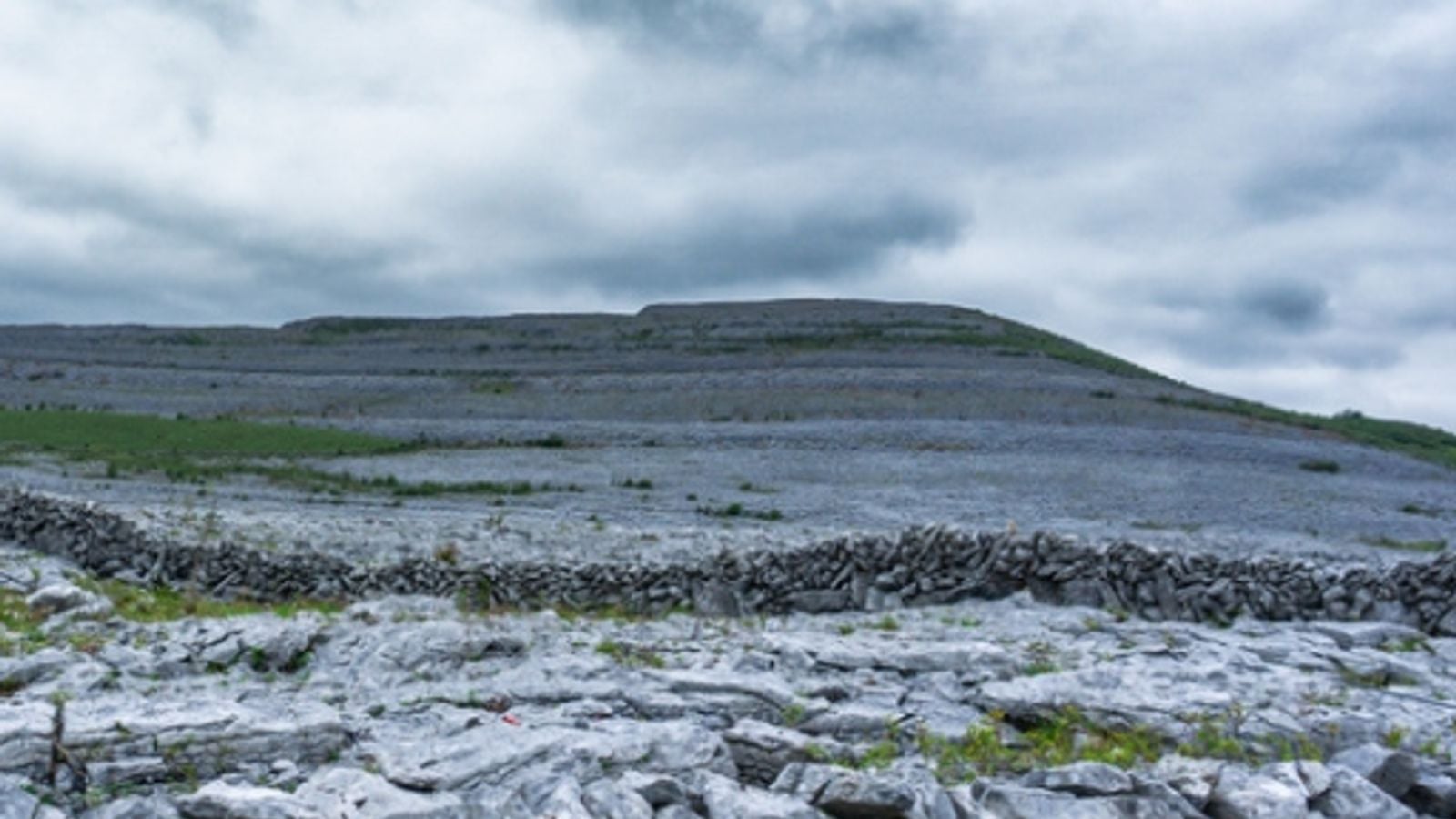
What Is a Turlough?
A turlough (from Irish tuar loch, meaning dry lake) is a seasonally flooding depression found almost exclusively in Ireland, concentrated in the limestone regions of counties Clare, Galway, and Roscommon. Unlike ordinary lakes, turloughs don’t fill from rivers running into them or rain collected on the surface.
They fill from below.
Water rises through the limestone bedrock and spills into the hollow from underground. When conditions change, it drains back down. The surface you walked across in August can be four feet underwater by November.
The Limestone World Underneath
The Burren in County Clare sits on one of Europe’s largest karst landscapes — a vast sheet of porous limestone riddled with underground rivers, caves, and channels. Rain doesn’t pool on the surface here. It disappears straight through the rock.
When winter rain saturates the system beyond capacity, the water has nowhere to go but up. It pushes through natural vents and fissures — called swallow holes — and floods the low-lying hollows above. As the water table drops through spring and summer, the lakes drain back underground.
The result is a body of water that appears and disappears entirely on its own schedule.
The Wildlife That Evolved Around the Mystery
Turloughs support ecosystems found nowhere else on earth. The plants that colonise them — shoreweed, fen violet, marsh stonewort — are adapted to both long submersion and complete drought. They remain dormant underground during the flood, then flower in the brief dry window.
The Burren’s turloughs are also critical winter habitat for wading birds. Golden plovers, lapwings, and dunlins gather in their thousands on the flooded surfaces each year. Locals say you can tell the season by what’s on the turlough — birds in winter, cattle in summer.
☘️ Enjoying this? 64,000+ Ireland lovers get stories like this every week. Subscribe free →
What the Old People Believed
Before hydrology offered any explanation, turloughs were simply part of the way the world worked — and a source of considerable unease.
In County Clare, certain turloughs were considered liminal places. Not quite land. Not quite water. Not quite this world. Some were associated with the underground realm of the Sídhe (the fairy folk), with water rising from somewhere that living people couldn’t and shouldn’t enter.
Fishermen reportedly refused to fish certain turloughs, not from practicality but from something older. The water that came up from below did not behave like ordinary water. It deserved respect.
The Biggest Turlough in Ireland
Rahasane Turlough near Craughwell in County Galway is the largest in Ireland, covering up to 400 hectares in a good flood year. In summer it is a field of grass. In winter it becomes a lake large enough to hold flocks of whooper swans migrating from Iceland.
Coole Park in County Galway — famous as the estate of Lady Gregory, the playwright and patron of W.B. Yeats — has its own turlough. Yeats visited regularly and wrote of the strange quality of the landscape there. Whether the turlough’s seasonal disappearance shaped his sense of the uncanny is not recorded. But it seems likely.
Can You Visit a Turlough?
Yes, and it’s worth planning around. The Burren National Park in County Clare has several accessible turloughs along its walking trails. The best time is late autumn through early spring, when they’re fully flooded — sometimes stretching far enough to reflect the grey limestone hills around them.
If you’re planning your trip to Ireland and including County Clare, allow a morning for the Burren’s park trails. The same limestone landscape that feeds the turloughs is also home to one of the most unexpected natural displays in Ireland — and it makes more sense once you understand what’s happening underground.
Walk across a turlough in August. Come back in January. The lake will be there — exactly where you were standing.
There is something quietly unsettling about a landscape that changes completely between visits. A lake in January. A meadow in July. Wildflowers where the water was. Cattle where the swans were. Ireland has many beautiful places. But a turlough is something rarer: a place that reminds you how much the land keeps to itself — and how little it needs you to understand it.
☘️ You Might Also Love
Frequently Asked Questions
What is the historical significance of Disappearing Lakes of Ireland That Have Baffled Visitors for Centuries?
This is one of Ireland’s fascinating historical and cultural stories — a reminder of the depth of Irish heritage that extends far beyond the better-known landmarks. These hidden histories are what make exploring Ireland so rewarding for curious visitors.
Where in Ireland can you learn more about this history?
Ireland’s network of local museums, heritage centres, and county archives hold remarkable collections of local history. The National Museum of Ireland (nationalmuseum.ie) and the National Library of Ireland also maintain extensive records of Irish cultural heritage.
Is this part of Irish culture still visible today?
Many aspects of Ireland’s ancient and folk culture are still visible if you know where to look. Local guides, heritage walks, and community festivals often reveal these hidden layers of Irish life that most tourists never see.
How does this story connect to modern Irish identity?
Irish people have a strong sense of connection to their heritage, and stories like this one are part of the cultural fabric that shapes modern Irish identity. The Irish language, traditional music, and folk customs all carry echoes of this long history.
☘️ Join 64,000+ Ireland Lovers
Every Friday, get Ireland’s hidden gems, local secrets, and travel inspiration — the kind you won’t find in any guidebook.
Subscribe free — enter your email:
Love more? Join 43,000 Scotland lovers → · Join 30,000 Italy lovers → · Join 7,000 France lovers →
Free forever · · Unsubscribe anytime
Tours & experiences you might love


Powered by Viator. Some links are affiliate links — we may earn a small commission at no extra cost to you.
Secure Your Dream Irish Experience Before It’s Gone!
Planning a trip to Ireland? Don’t let sold-out tours or packed attractions spoil your journey. Iconic experiences like visiting the Cliffs of Moher, exploring the Rock of Cashel, or enjoying a guided walk through Ireland’s ancient past often sell out quickly—especially during peak travel seasons.

Booking in advance guarantees your place and ensures you can fully immerse yourself in the rich culture and breathtaking scenery without stress or disappointment. You’ll also free up time to explore Ireland’s hidden gems and savour those authentic moments that make your trip truly special.
Make the most of your journey—start planning today and secure those must-do experiences before they’re gone!
Subscribe Free