

The ferry from Magheroarty pier pitches and rolls across fourteen kilometres of open Atlantic. When it finally docks at Tory Island, something unusual happens: the island’s king comes down to meet you. This is the only place in Ireland where that sentence is completely ordinary.
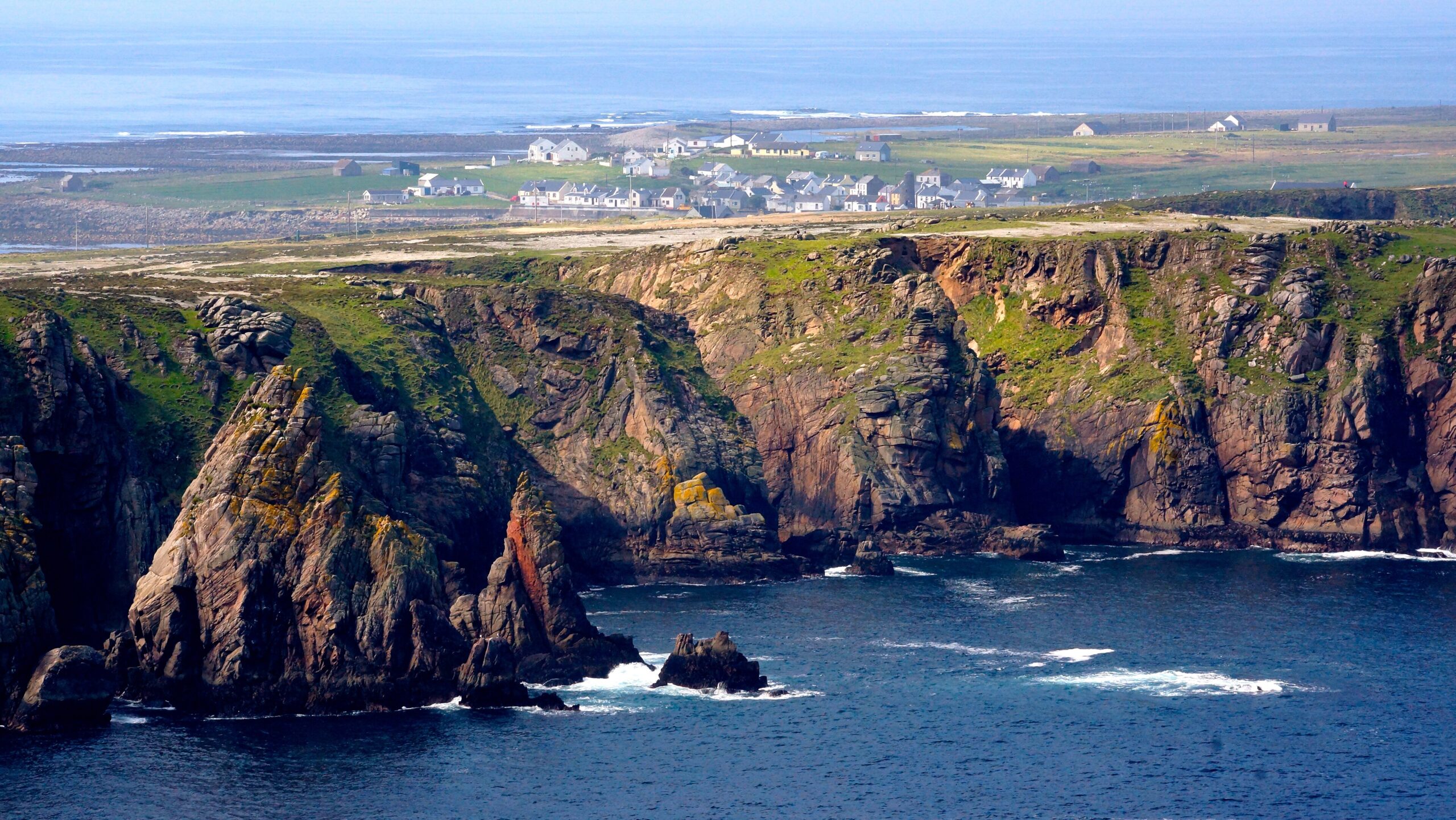
The Island at the Edge of the World
Tory Island sits off the northwestern tip of County Donegal — remote enough that for centuries it existed almost entirely on its own terms. The crossing takes around forty minutes in good weather. In bad weather, it doesn’t happen at all.
Some winters, the island is cut off from the mainland for weeks at a time. And yet the roughly 150 people who live here have never seriously considered leaving.
The island is a Gaeltacht. Irish is the first language. Children grow up speaking it before English. The landscape is all granite, bog, and silver light. There are no trees. The wind does most of the decorating.
The King of Tory
Every Irish island has its own way of doing things. Tory’s way involves a king. The rí oileáin — the island king — is an elected role, not a hereditary one. The king acts as a community spokesman, a greeter of visitors, and a keeper of the island’s spirit.
For decades, that role belonged to Patsy Dan Rodgers, who died in 2018. He was a painter, an accordion player, and a man who stood at the pier in all weathers to welcome anyone who made the crossing. He understood that the island’s survival depended partly on people knowing it existed.
The role is not decorative. It carries real responsibility: keeping the community connected, representing the island to the outside world, and making visitors feel the crossing was worth it. It always is.
The Government Said Leave. The Islanders Said No.
In the 1970s, a series of severe storms battered Tory Island. The damage was significant. The Irish government, weighing the cost of maintaining services to such a remote community, suggested relocation. The islanders could be housed on the mainland. Life would be easier.
They refused. Flatly, collectively, without much discussion. The island was theirs. It had been theirs for generations. They were not leaving.
This moment — quiet, firm, and unremarkable to the islanders themselves — has since become part of the story that defines Tory. The people who stayed are still here. Their children are still here. The school still runs. Compare this to the Great Blasket Island, which made the opposite choice, and you begin to understand what stubbornness in the face of the Atlantic can mean.
☘️ Enjoying this? 64,000+ Ireland lovers get stories like this every week. Subscribe free →
The Painters of Tory
In 1956, an English artist named Derek Hill arrived on Tory Island to paint. A local fisherman named James Dixon watched him work and reportedly declared he could do better. Hill handed him paints and canvas.
What happened next was remarkable. Dixon’s paintings — of the sea, the boats, the rocks, the light — were raw and entirely honest. Hill recognised something real in them and helped bring the work to a wider audience. Other islanders began to paint. A tradition took root.
Today, the Tory Island school of painting is recognised as a distinctive movement in Irish art: naïve, direct, and rooted entirely in the island’s own landscape and life. The works are held in galleries across Ireland. Derek Hill’s former home near Letterkenny — the Glebe House and Gallery — holds a permanent collection that traces this extraordinary story.
An Ancient Island
Long before any of this, Tory Island had already been claimed. St Colmcille — Columba — is said to have established a monastery here. Ruins of that early Christian settlement still stand. So does the Tau Cross, one of the rarest examples of early Christian carving in the whole of Ireland.
Before Christianity, the island was said to be the fortress of Balor — a mythological giant of the Fomorians, ancient enemies of the gods of Ireland. His stronghold, Dún Bhaloir, can still be walked to at the island’s eastern end. The views from the cliff edge are extraordinary. The sea stretches to nothing.
Visiting Tory Island
The ferry runs from Magheroarty pier in County Donegal. Crossings are weather-dependent, and the main tourist season runs from April to September. There are small guesthouses, a hotel, a pub, and a community that genuinely welcomes visitors.
The island is small enough to walk across in a morning, but its stories take much longer to absorb. If you are planning a trip to Ireland, Tory Island rewards the effort entirely — and the effort is part of what makes it matter.
Tory Island is not a museum. It is a living place where people fish, paint, raise children, and vote for their own king. That it still exists as it does — speaking Irish, making art, greeting visitors at the pier — is itself a kind of miracle. Some things, it turns out, are worth fourteen kilometres of open Atlantic.
☘️ You Might Also Love
☘️ Join 64,000+ Ireland Lovers
Every Friday, get Ireland’s hidden gems, local secrets, and travel inspiration — the kind you won’t find in any guidebook.
Subscribe free — enter your email:
Love more? Join 43,000 Scotland lovers → · Join 30,000 Italy lovers → · Join 7,000 France lovers →
Free forever · · Unsubscribe anytime
Tours & experiences you might love


Powered by Viator. Some links are affiliate links — we may earn a small commission at no extra cost to you.
Secure Your Dream Irish Experience Before It’s Gone!
Planning a trip to Ireland? Don’t let sold-out tours or packed attractions spoil your journey. Iconic experiences like visiting the Cliffs of Moher, exploring the Rock of Cashel, or enjoying a guided walk through Ireland’s ancient past often sell out quickly—especially during peak travel seasons.

Booking in advance guarantees your place and ensures you can fully immerse yourself in the rich culture and breathtaking scenery without stress or disappointment. You’ll also free up time to explore Ireland’s hidden gems and savour those authentic moments that make your trip truly special.
Make the most of your journey—start planning today and secure those must-do experiences before they’re gone!
Subscribe Free