

Six centuries after St. Kevin died, pilgrims were still walking barefoot across County Wicklow to reach his valley. They came looking for what he had found there — silence, sanctuary, and something that felt like the very edge of another world. They still come today.
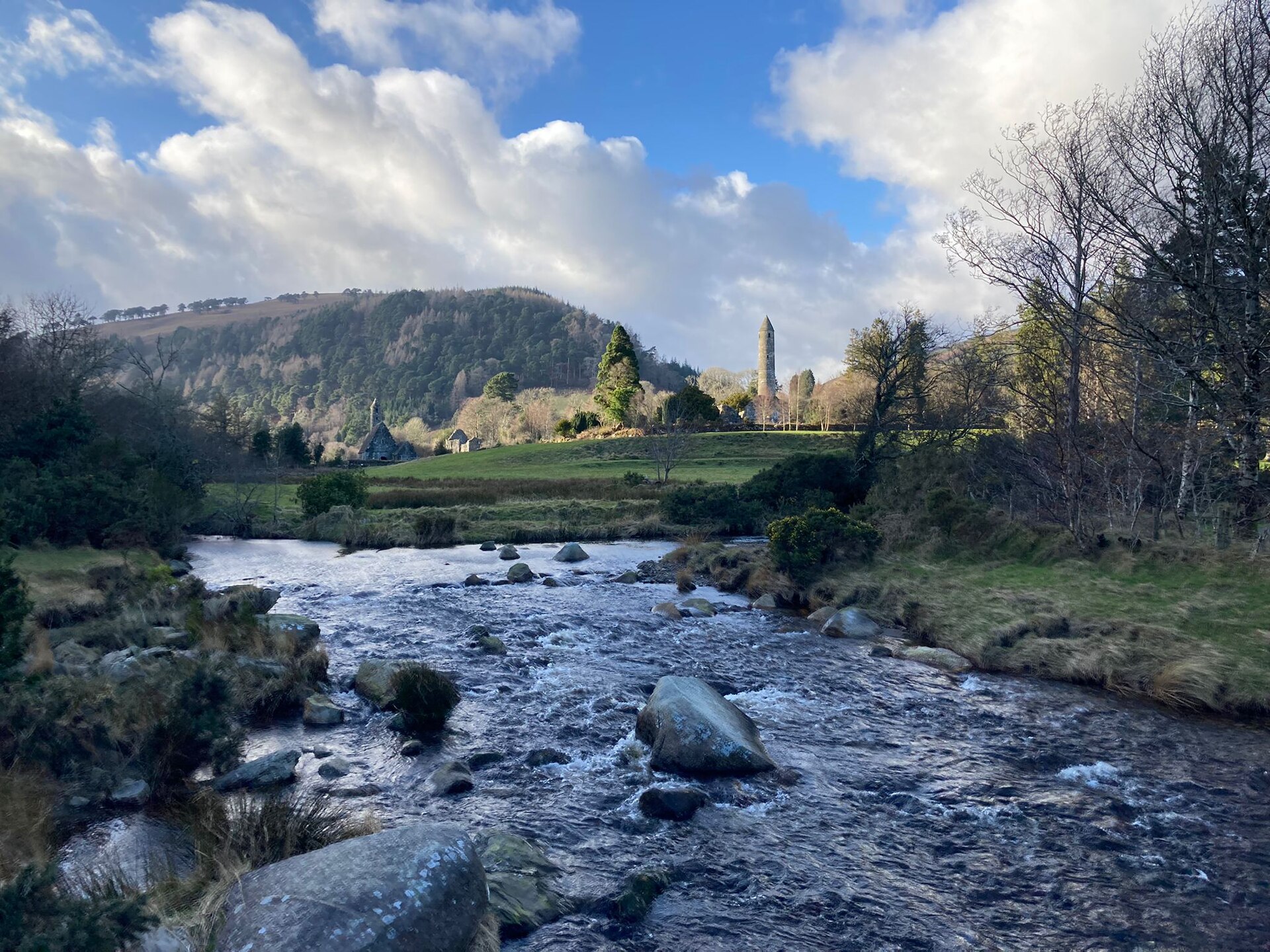
The Monk Who Chose a Cave Over Everything
Kevin of Glendalough was born in Leinster around 498 AD and educated by monks from an early age. But when the time came to join a religious community, he did the opposite. He climbed into the Wicklow Mountains and found a narrow cave on a ledge above the Upper Lake.
The cave — St. Kevin’s Bed — is still there. It’s barely wide enough to lie down in, halfway up a cliff face, reachable only by boat from the shore below. He stayed there for seven years. He ate berries and herbs. He wore animal skins.
The story goes that a blackbird once built a nest in his outstretched hand while he prayed, and he stayed motionless until the eggs hatched. He wasn’t looking to found anything. But his reputation spread faster than he could retreat from it.
When One Man’s Solitude Becomes a City
His first followers arrived before long. Then more. By the 7th century, Glendalough had grown from one man’s hiding place into one of Ireland’s foremost centres of scholarship. Monks arrived from across Ireland, Britain, and Europe to study and to copy manuscripts.
At its height, the settlement included at least seven churches, a cathedral, guesthouses for pilgrims, and a scriptorium where illuminated texts were produced. The valley became known as a place of both learning and pilgrimage — a rare combination in early medieval Ireland.
The name itself — Gleann Dá Loch — means simply “the valley of the two lakes.” Kevin had chosen the place for its remoteness. It became famous because of it.
What the Round Tower Was Really For
Glendalough’s Round Tower is one of the most complete in Ireland. It stands 33 metres tall, with its doorway set four metres above the ground. That height is the first clue to its purpose.
The round towers of Ireland still puzzle historians. At Glendalough, the tower served as a bell tower, a lookout point, and possibly a place of refuge during raids. A ladder allowed monks to climb inside and pull it up behind them.
The tower was built sometime in the 10th or 11th century, long after Kevin’s death. But it stands today as the most recognisable feature of the valley — the first thing you see as you walk through the ancient stone gateway.
☘️ Enjoying this? 64,000+ Ireland lovers get stories like this every week. Subscribe free →
The Pattern That Never Ended
The 3rd of June is St. Kevin’s feast day. For over a thousand years, pilgrims have gathered in the valley to mark it. In earlier centuries, they walked barefoot from across County Wicklow. They completed rounds at the lakeside and prayed at the cathedral ruins.
The pattern — as these pilgrimage gatherings are known in Ireland — continued even when it was officially discouraged. It has never fully stopped. People still gather in Glendalough on the 3rd of June each year, more quietly than their ancestors, but drawn by the same gravity.
What St. Kevin started was never just a monastery. It became a kind of appointment between a place and the people who needed it.
What Glendalough Feels Like Today
Glendalough receives over a million visitors a year. The car parks fill early on summer mornings. And yet, walk past the gateway arch at dusk, or arrive before the coaches, and something shifts.
The stones are 1,400 years old. The trees and the water haven’t changed. The two lakes still sit in the glacial valley exactly as Kevin found them. The scale of the Wicklow hills puts everything else in perspective.
If you’re planning a visit to County Wicklow, Glendalough is not optional. But it rewards patience more than it rewards rushing. The Ireland travel planning hub is the best place to start if you’re still putting your trip together.
Kevin came to this valley looking for silence. What he left behind was a place that still quietly insists on it. Stand in the valley long enough and you start to understand why one man thought this was worth stopping at — and why the world followed him here anyway.
☘️ You Might Also Love
☘️ Join 64,000+ Ireland Lovers
Every Friday, get Ireland’s hidden gems, local secrets, and travel inspiration — the kind you won’t find in any guidebook.
Subscribe free — enter your email:
Free forever · · Unsubscribe anytime
Tours & experiences you might love


Powered by Viator. Some links are affiliate links — we may earn a small commission at no extra cost to you.
Secure Your Dream Irish Experience Before It’s Gone!
Planning a trip to Ireland? Don’t let sold-out tours or packed attractions spoil your journey. Iconic experiences like visiting the Cliffs of Moher, exploring the Rock of Cashel, or enjoying a guided walk through Ireland’s ancient past often sell out quickly—especially during peak travel seasons.

Booking in advance guarantees your place and ensures you can fully immerse yourself in the rich culture and breathtaking scenery without stress or disappointment. You’ll also free up time to explore Ireland’s hidden gems and savour those authentic moments that make your trip truly special.
Make the most of your journey—start planning today and secure those must-do experiences before they’re gone!
Subscribe Free