

Before electricity, before central heating, and long before cooking shows, a young woman in Ulster or north Connacht had one thing to prove. She had to make boxty. Not just any boxty — good boxty. The kind that didn’t stick, the kind that held together on the griddle, the kind that told the whole townland exactly what kind of wife she would be.
What the Rhyme Actually Said
“Boxty on the griddle, boxty in the pan. If you can’t make boxty, you’ll never get a man.”
It sounds like a joke now. But in the farmhouses of Donegal, Cavan, Leitrim, and Mayo in the 18th and 19th centuries, those words carried real weight. A girl who couldn’t make boxty wasn’t just unskilled — she was, by the standards of her community, unmarriageable.
The rhyme was half warning, half test. Mothers taught it to daughters. Daughters recited it to each other at the fire. And when a young man’s mother came to size up a prospective bride, the quality of the boxty on the griddle told her everything she needed to know.
Why the Potato Was Everything
To understand boxty, you have to understand what the potato meant to the rural Irish poor. For most farming families in Ulster and north Connacht before the mid-19th century, the potato wasn’t simply a food. It was the food.
It grew in thin, rocky soil where other crops failed. It fed the whole family through the long winter months. And nothing — nothing — was wasted.
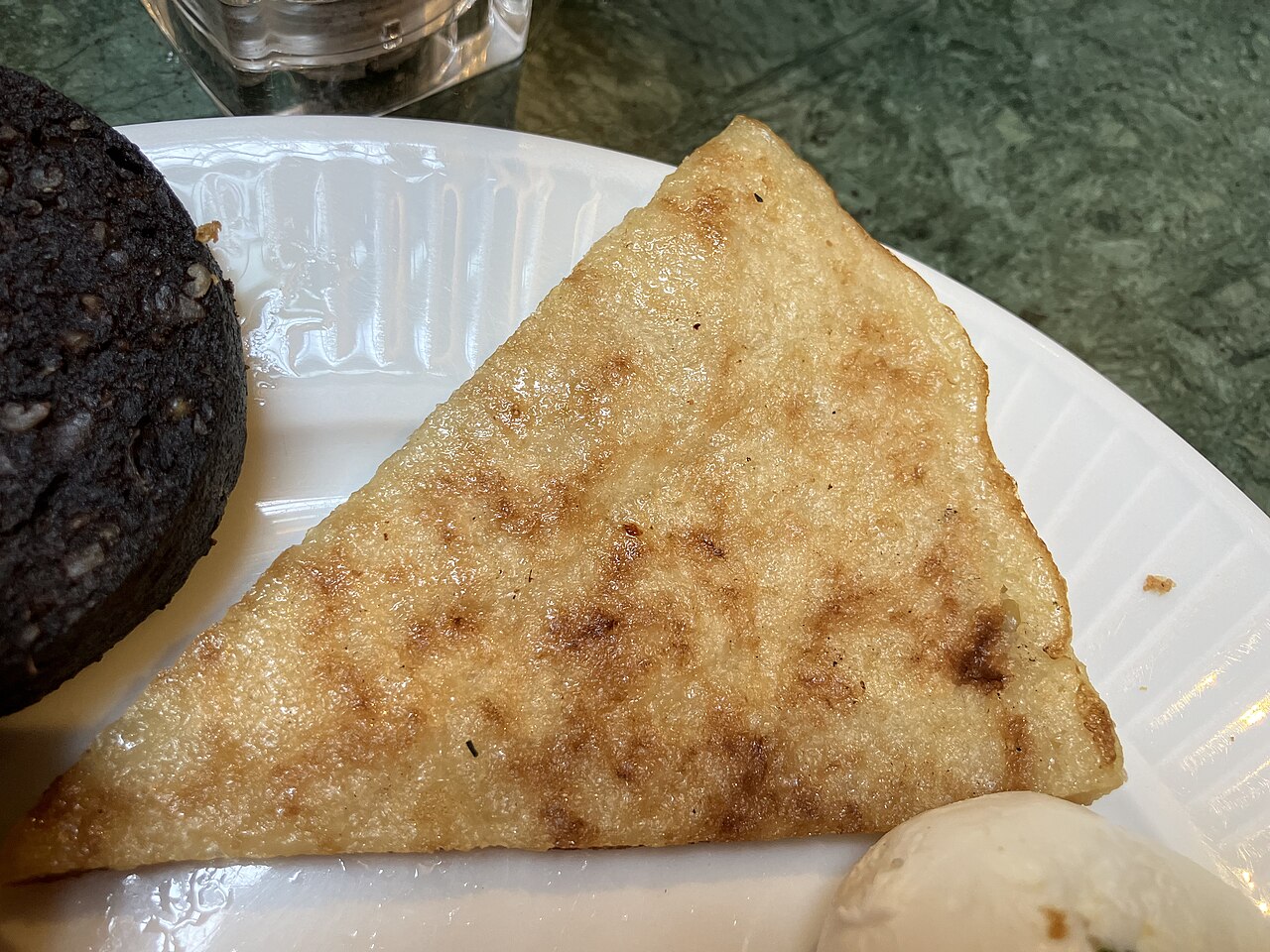
Boxty was born from that necessity. Made from a combination of raw grated potato and mashed potato, it used every part of the harvest. Nothing left over. Nothing thrown away. The skill was never in the ingredients — it was in the hands. Knowing how to draw out the moisture. Knowing the exact heat of the griddle. Knowing when to turn.
That kind of knowledge, passed from mother to daughter over generations, is what Ireland’s traditional food culture was really built on — not recipes written in books, but hard-won skill learned beside the fire.
☘️ Enjoying this? 64,000+ Ireland lovers get stories like this every week. Subscribe free →
The Geography of Boxty
Boxty is proudly northern. It belongs to the counties of Donegal, Cavan, Leitrim, Sligo, and Mayo — the rough, boggy lands of Ulster and north Connacht where the soil was thin and the winters were long.
Ask someone from Cork or Kerry about boxty and you may be met with a blank look. Ask someone whose grandparents came from Donegal or Cavan and their face changes entirely. It belongs to those counties the way champ belongs to Belfast, or coddle belongs to Dublin.
This is one of the quiet truths of Irish food culture: the island is not one culinary tradition but many, shaped by geography, soil, and the particular hardships of each region.
Boxty Night and the Harvest Tradition
Boxty wasn’t an everyday food — it was a harvest food. The autumn potato harvest was the high point of the rural year, the moment when all that hard work became visible in pits full of food that would carry the family through to spring.
Once the crop was safely stored, the griddle went on. Boxty appeared in quantity. Neighbours who had helped with the harvest were fed together — a communal gathering that was part celebration, part social occasion. Young people from different farms found themselves side by side at the table, which is how, in an era before discos or apps, many rural romances quietly began.
This was the same world that produced Ireland’s crossroads dances — a countryside that wove its social life into the rhythms of the farming year. Food and community were inseparable. The woman who fed the harvest workers well was doing something far more than cooking.
What the Skill Really Meant
When those rhyming words called out a girl who “can’t make boxty,” they weren’t really talking about bread. They were talking about judgement. About patience. About whether she understood how to manage scarce resources without wasting a single thing.
Rural Irish marriages were practical arrangements. A farmer’s wife was responsible for feeding the household through winter. She decided what to use and when, how to stretch the stores when they ran low, how to keep a family fed without making them feel the shortage.
Making good boxty was proof of all that. It said: this woman does not panic. This woman does not waste. This woman understands the value of what she has.
From Farmhouse to Restaurant Menu
Boxty nearly vanished in the 20th century. As the potato’s dominance over the Irish diet faded, and as new foods and new appliances arrived in rural kitchens, the old knowledge stopped being passed on with the same urgency.
But boxty didn’t die. In recent decades it has quietly reappeared — on menus across Dublin and Galway, at food festivals celebrating Irish culinary heritage, and in the hands of chefs who wanted to understand where Irish cooking really came from.
The Boxty House in Dublin’s Temple Bar became one of its great champions, introducing the bread to thousands of visitors who’d never heard the old rhyme. If you’re planning a trip to Ireland, seeking out boxty on a menu is one of the quieter, more meaningful ways to connect with the food culture of the north and west.
And if you order it and it’s good — really good — there’s a woman somewhere in that kitchen who knows exactly what she’s doing.
The rhyme was always right about that much.
☘️ You Might Also Love
☘️ Join 64,000+ Ireland Lovers
Every Friday, get Ireland’s hidden gems, local secrets, and travel inspiration — the kind you won’t find in any guidebook.
Subscribe free — enter your email:
Free forever · Unsubscribe anytime
Tours & experiences you might love


Powered by Viator. Some links are affiliate links — we may earn a small commission at no extra cost to you.
Secure Your Dream Irish Experience Before It’s Gone!
Planning a trip to Ireland? Don’t let sold-out tours or packed attractions spoil your journey. Iconic experiences like visiting the Cliffs of Moher, exploring the Rock of Cashel, or enjoying a guided walk through Ireland’s ancient past often sell out quickly—especially during peak travel seasons.

Booking in advance guarantees your place and ensures you can fully immerse yourself in the rich culture and breathtaking scenery without stress or disappointment. You’ll also free up time to explore Ireland’s hidden gems and savour those authentic moments that make your trip truly special.
Make the most of your journey—start planning today and secure those must-do experiences before they’re gone!
Subscribe Free