

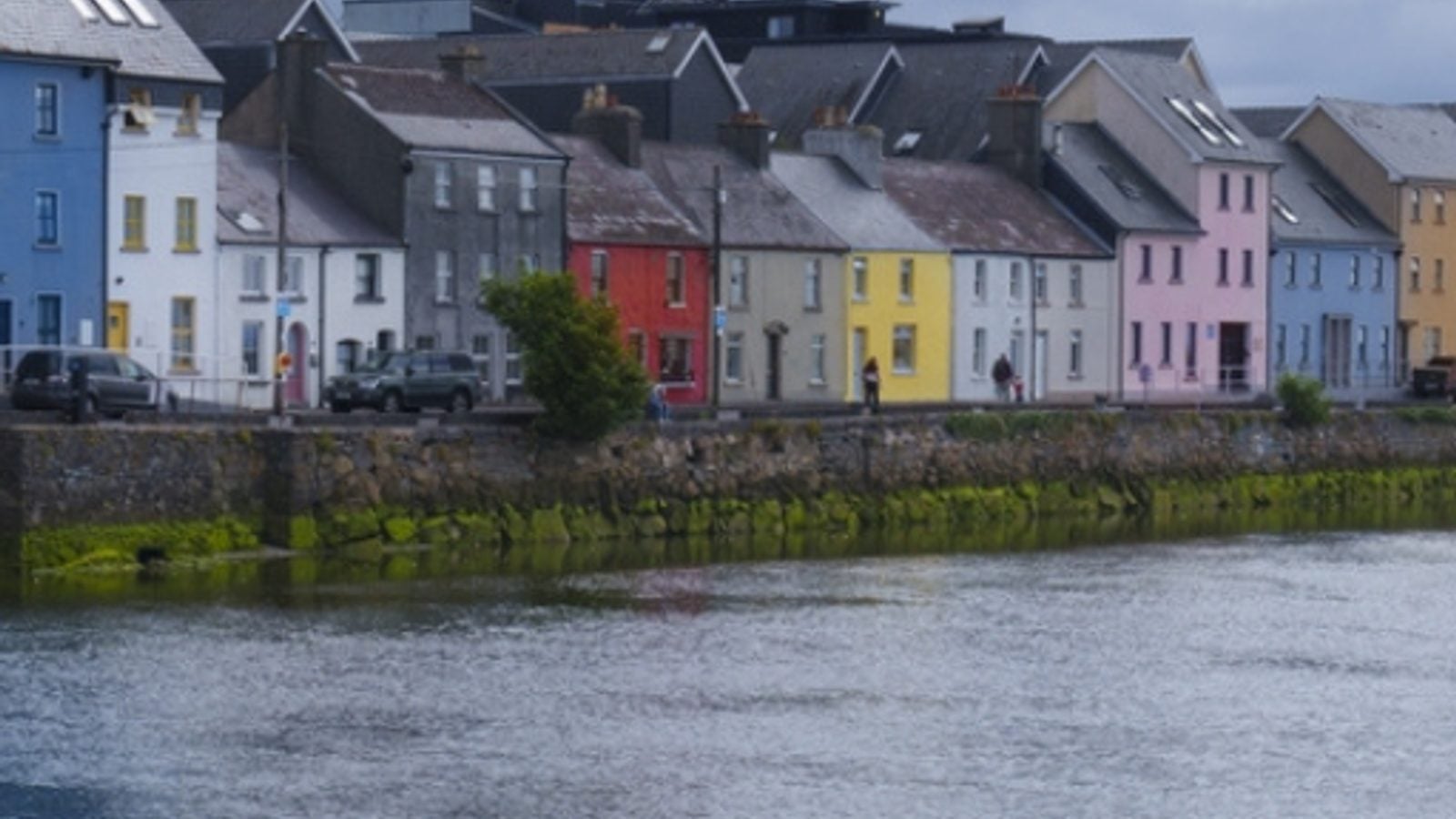
Stand on the Spanish Arch in Galway and look west across the River Corrib. You are looking at the site of one of the most extraordinary communities in Irish history. For a thousand years, a fishing village called the Claddagh occupied that ground — and almost nobody outside Galway knew it existed.
A Village Outside the Walls
The medieval city of Galway was a merchant town — walled, protected, and ruled by merchant families who spoke English and traded with Spain and Portugal. But just beyond those walls, on the western bank of the Corrib, a different society had taken root.
The Claddagh community — from the Irish An Cladach, meaning “the stony shore” — was there before the Normans ever laid their first stone in Galway. Fishermen and their families who spoke only Irish, who followed their own rules, and who had little interest in the walled city across the water.
They were not excluded. They simply had no need to go inside.
The King of the Claddagh
The Claddagh had its own elected leader — the “King of the Claddagh” — an ordinary fisherman chosen by his peers. This was not a ceremonial title. The king administered justice, settled disputes, and controlled the valuable fishing rights on Galway Bay.
He decided who could fish certain waters, what could be taken and when. He was as powerful in his domain as any magistrate in the city behind the walls.
This tradition of self-governance lasted for centuries. The last recognised King of the Claddagh, Martin Oliver, died in 1954. By then, there was little left to reign over.
The Ring That Travelled the World
From the Claddagh came one of the most recognised symbols in the Irish world. The Claddagh ring — with its hands holding a crowned heart — was made here by local goldsmiths as a token of love, friendship, and loyalty.
Fishermen leaving on long voyages gave them to wives and sweethearts. Emigrants carried them to America, to Argentina, to Australia. The ring that today fills jewellery shop windows from Dublin to Boston was born in a thatched cottage by this river.
If you’ve ever worn a Claddagh ring or wondered about its meaning, the story of what it says and how you wear it begins right here in the village that created it.
A Community That Spoke Only Irish
As Galway became an English-speaking city through the 17th and 18th centuries, the Claddagh remained steadfastly Irish-speaking. The community maintained its own dialect, its own oral traditions, its own customs passed down through generations who rarely needed to cross the river.
Children in the Claddagh grew up hearing a language that children just across the water no longer spoke in their homes. It was a remarkable act of quiet cultural survival — though the Claddagh people probably didn’t think of it that way. To them, it was simply how life had always been lived.
☘️ Enjoying this? 64,000+ Ireland lovers get stories like this every week. Subscribe free →
The Demolition That Changed Everything
In the 1930s, Galway Corporation decided the old thatched cottages of the Claddagh were unsanitary and overcrowded. They were right in a narrow sense. But in replacing them with modern council housing, they dismantled something that could not be rebuilt.
The old community structures dissolved within a generation. The Irish language faded from everyday use. The fishing traditions that had sustained the Claddagh for a millennium were broken, not by famine or emigration, but by well-meaning modernisation.
It was not the last time an Irish community would be dispersed by forces that defined progress differently from the people living through it. The abandoned village on Achill Island tells a similar, haunting story — of a place that survived centuries only to fall silent in the modern age.
A few photographs survive from the old Claddagh: thatched rooftops stretching to the water’s edge, nets drying on stone walls, women in traditional shawls returning from the market. They show a world that vanished within living memory.
What Remains Today
The word “Claddagh” endures — in the ring, in the pub name, in the neighbourhood label on every map of Galway. Stand at the Spanish Arch today and the houses you see across the water are bright and colourful, a photogenic stretch beloved by visitors.
But beneath the current streets, beneath the modern housing blocks and the tidy footpaths, the foundations of the old Claddagh lie quiet.
If you find yourself in Galway, walk along the Long Walk at dusk. Look back at the city lights reflected in the Corrib. Think about the people who fished that water every morning for a thousand years — who carried their catch to market, spoke their own language, elected their own king, and made their own rules.
And when you’re ready to explore more of what Galway and the west of Ireland have to offer, start planning your trip here — there is more to discover than any guidebook can hold.
The Claddagh is a reminder that the most extraordinary stories in Ireland are often hidden in plain sight — on the edge of the city, just outside the walls, exactly where the ordinary and the remarkable have always met.
☘️ You Might Also Love
☘️ Want More Hidden Ireland?
Join 64,000+ subscribers who discover Ireland’s best-kept secrets every week.
Subscribe Free — Join the Community →
Free forever · Unsubscribe anytime · No spam
📥 Free Download: Ireland Travel Planning Guide
Our most popular resource — itineraries, insider tips, and the 50 places you must not miss.
Tours & experiences you might love


Powered by Viator. Some links are affiliate links — we may earn a small commission at no extra cost to you.
Secure Your Dream Irish Experience Before It’s Gone!
Planning a trip to Ireland? Don’t let sold-out tours or packed attractions spoil your journey. Iconic experiences like visiting the Cliffs of Moher, exploring the Rock of Cashel, or enjoying a guided walk through Ireland’s ancient past often sell out quickly—especially during peak travel seasons.

Booking in advance guarantees your place and ensures you can fully immerse yourself in the rich culture and breathtaking scenery without stress or disappointment. You’ll also free up time to explore Ireland’s hidden gems and savour those authentic moments that make your trip truly special.
Make the most of your journey—start planning today and secure those must-do experiences before they’re gone!