

They called her the merrow, and along Ireland’s wild Atlantic coast, she was as real as the waves she swam beneath.
Long before sirens and Disney, Ireland had its own sea people — and they were far more complicated than any mermaid you have read about in a fairytale.
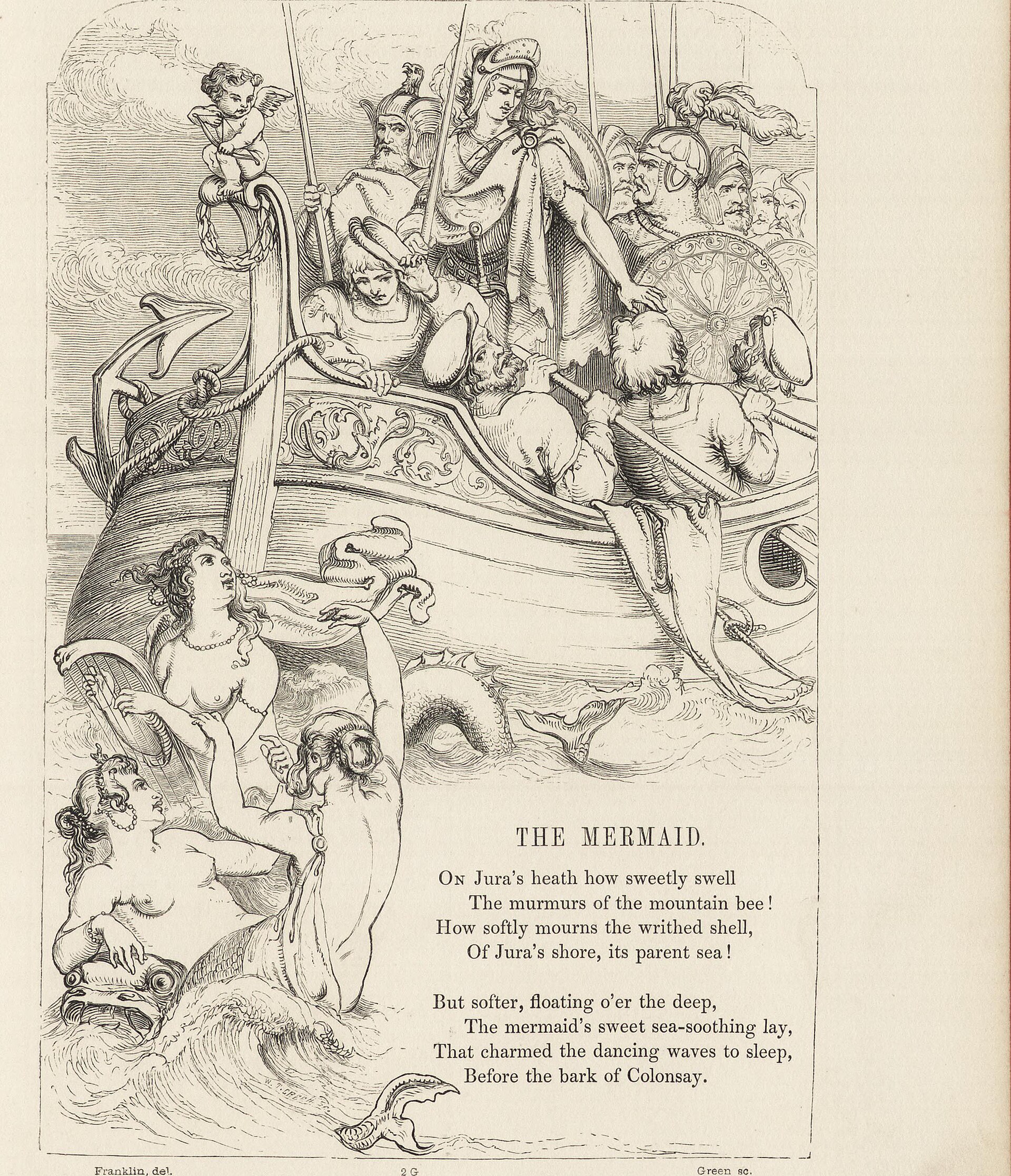
What the Merrow Actually Was
The word merrow comes from the Irish muirrúch — literally “sea rider.” She was neither monster nor goddess, but something in between: a creature with the upper body of a woman and the tail of a fish, capable of living in both worlds if she chose.
Unlike the dangerous sirens of Greek mythology, the merrow was not hunting sailors. She had a life beneath the waves — a home, a community, even a kind of family. She might surface out of curiosity, or loneliness, or because she was drawn to a particular stretch of shore she had watched for years.
She was ancient in the way Ireland itself is ancient. The earliest written accounts appear in medieval Irish manuscripts, but the oral tradition stretches back further than any scribe could reach.
The Strange Gift That Gave Her Power
Every merrow wore a cohuleen druith — a small red feathered cap that allowed her to dive beneath the ocean’s surface. Without it, she could not return to the sea.
Fishermen who found one of these caps on the shore faced a profound decision. Return it, and the merrow would vanish — taking with her any hope of good fortune. Keep it, and she could not leave. She would live with him, raise his children, seem content enough. But she was always listening for the sound of the waves.
The cap was everything. Generations of Irish fishermen knew to search their homes carefully if the fish stopped coming — because sometimes, a merrow had quietly taken back what was hers and slipped away in the night.
When Merrow Took Human Partners
The stories are scattered across the Irish coast, from Clare to Connemara, and they follow a pattern so consistent it feels like memory rather than invention.
A fisherman finds a woman on the rocks. Or loses her cap to the sea, and a woman appears on his doorstep the following morning. They marry. She is warm, kind, devoted — but she sits at the cliff’s edge on still evenings, staring at the water for hours.
Years pass. Decades, sometimes. Then one morning the man comes downstairs and finds the house quiet.
The children of these unions were said to carry something of the sea in them — a slight webbing between the fingers, an unusual calm in rough water, eyes that held the grey-green of the Atlantic. Some families along the Clare coast claimed this heritage well into the twentieth century, half-proud and half-uncertain whether to believe it themselves.
For one dramatic account of exactly how this unfolded, read the full story of one fisherman and his merrow bride.
☘️ Enjoying this? 64,000+ Ireland lovers get stories like this every week. Subscribe free →
The Clans Who Claimed Merrow Blood
Unlike many Irish legends, the merrow stories were not vague. They named families.
The O’Flahertys of Connemara. The Conneely clan — whose name is said to derive from the Irish for seal, pointing to a cousin legend further north. Families on Inis Meáin in the Aran Islands. People who fished the same waters their great-grandparents fished and told the same story their great-grandparents told.
There were male merrow too, though the stories are blunter about them — wild-eyed creatures not interested in partnership with humans. It was the female merrow who moved between worlds, who chose sometimes to stay.
The traditions that shaped the ancient fishing communities of Galway still echo in the place names and the families who have worked the water for centuries.
The Soul Cages — What Male Merrows Were Said to Keep
Male merrows were rarely the subject of romance stories — the ones who chose to walk among people, marry, and stay were almost always female. The male merrow appears in a darker, stranger tradition altogether.
The 19th-century folklorist Thomas Crofton Croker, who collected Irish tales along the Cork and Kerry coast for his Fairy Legends and Traditions of the South of Ireland (1825), recorded stories of male merrows keeping the souls of drowned sailors trapped in cages on the seabed, built to resemble the lobster pots the fishermen themselves used every day.
In the best-known version, a fisherman who befriended a merrow was invited down beneath the waves and shown a room lined with these soul cages — and, out of pity, left one open while his host was away, freeing whatever had been trapped inside. It is a rarer, grimmer story than the cap-and-marriage legends, but it belongs to the same tradition: the sea as a place with its own rules, its own keepers, and its own quiet cruelties.
Why the Stories Survived
The merrow did not survive in Irish folklore because people were credulous. She survived because she explained something true.
Life on the Atlantic coast was a negotiation. The sea gave everything — food, trade, a way of living — and it took without warning. A man might leave in the morning and not come back. A good season might be followed by three years of nothing. The ocean was a force entirely beyond human control.
The merrow was a way of making that relationship personal. To have a spirit in the water who might be curious about you, who might choose to bless your boat or your nets, who might one day simply be sitting on your rocks — that was a way of living with something uncontrollable.
She was not feared the way a storm was feared. She was tended to, respected, left offerings. Along some parts of the Clare coast, fishermen would pour a small measure of their first catch back into the sea before heading home. Not waste — tribute.
The boats that worked these waters were built by people who understood the sea on these terms — not as an obstacle, but as something with its own will and its own customs.
What to Do If You See Her
The old guidance was simple. Do not call out to her. Do not throw anything into the water. If she surfaces near your boat, hold still.
If she dives and swims beneath you three times, your season will be good. If she does not surface again, take nothing for granted on the water that day.
It is advice that made sense to generations of fishermen who worked beyond the sight of land, and who understood that the sea had its own rules — older than any law a person could write.
Standing at the shore on Ireland’s west coast, watching the light fade over the water, you do not need to believe in merrow to feel what the stories were pointing at: something old, something powerful, something that was here long before us and will be here long after.
If you are planning your journey west, start here with our Ireland travel planning guide and discover the wild coast where these legends began.
Frequently Asked Questions
What is a merrow in Irish folklore?
A merrow (Irish muirrúch, sea-person) is Ireland’s own version of the mermaid, with the upper body of a woman and a fish’s tail, said to live off the west coast of Ireland.
What is a cohuleen druith?
A small red cap that allowed a merrow to travel beneath the sea; without it she could not return to the water, which is the basis of most merrow-marries-fisherman legends.
Is a merrow the same as a mermaid?
They are similar sea-woman figures, but the merrow is a distinct Irish folklore tradition with its own mechanics (the red cap) and its own families who claimed descent from her, such as the Conneelys of Connemara.
☘️ You Might Also Love
Love Ireland? So do 65,000 of us.
Every week, our free newsletter delivers hidden gems, seasonal guides, local stories, and practical travel tips — straight to your inbox. Join the community that loves Ireland as much as you do.
☘️ Want More Hidden Ireland?
Join 64,000+ subscribers who discover Ireland’s best-kept secrets every week.
Subscribe Free — Join the Community →
Free forever · Unsubscribe anytime · No spam
📥 Free Download: Ireland Travel Planning Guide
Our most popular resource — itineraries, insider tips, and the 50 places you must not miss.
Tours & experiences you might love


Powered by Viator. Some links are affiliate links — we may earn a small commission at no extra cost to you.
Secure Your Dream Irish Experience Before It’s Gone!
Planning a trip to Ireland? Don’t let sold-out tours or packed attractions spoil your journey. Iconic experiences like visiting the Cliffs of Moher, exploring the Rock of Cashel, or enjoying a guided walk through Ireland’s ancient past often sell out quickly—especially during peak travel seasons.

Booking in advance guarantees your place and ensures you can fully immerse yourself in the rich culture and breathtaking scenery without stress or disappointment. You’ll also free up time to explore Ireland’s hidden gems and savour those authentic moments that make your trip truly special.
Make the most of your journey—start planning today and secure those must-do experiences before they’re gone!