

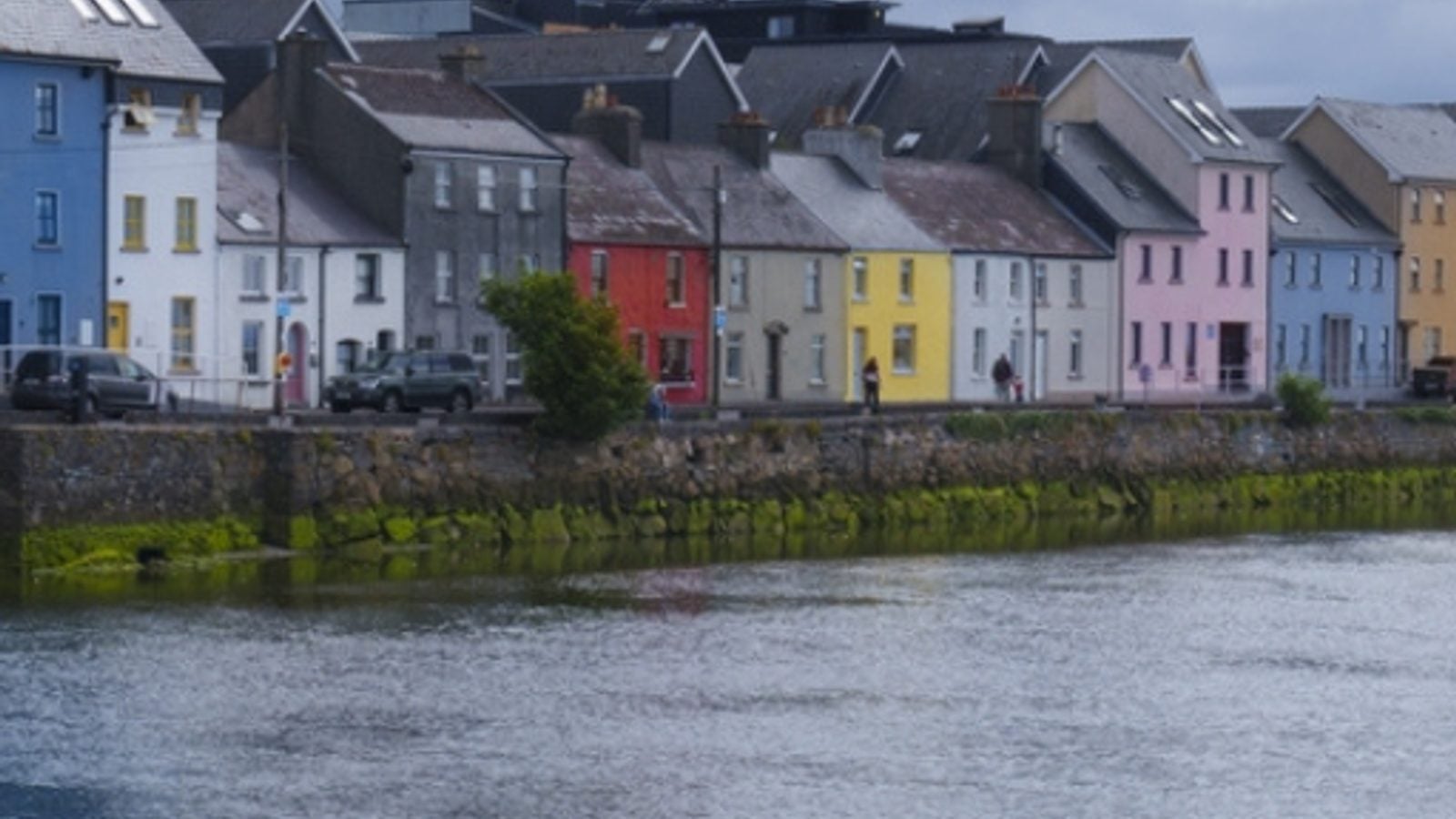
The first thing that surprises many visitors to Ireland isn’t the landscape or the friendliness. It’s the colours. Turn any corner in Galway, walk through Kinsale at dusk, or arrive in Dingle on a winter morning — and the buildings are painted in shades that have no business being this vivid. Cobalt blue beside lemon yellow beside deep crimson. Each facade a statement, each door a quiet declaration.
A Country That Refused to Be Grey
Ireland has long had a complicated relationship with colour — specifically, with the right to express it fully and loudly.
Walk the main streets of almost any Irish town and you’ll notice something: no two adjacent buildings share the same paint. A pharmacy might sit between a blazing vermillion pub and a soft sage green bookshop. The Post Office might be canary yellow.
This isn’t accident or chaos. It’s something far more interesting than either.
What Every Painted Door Quietly Says
There’s an old tradition in Irish towns that each shopkeeper or homeowner chose their colour with care and intention.
Your colour became your signature. A regular customer, asked how to find you, would say: “Ah, the yellow one, just past the blue pub.” In a country where neighbours knew each other by sight and trade, colour was identification as much as it was decoration.
But there’s more to it than practicality. To paint your premises a distinct colour was to say, quietly but clearly: this place belongs to me. I am here. In times when little else could be controlled, the facade of a building was one thing that could.
Ireland has had centuries of practice in asserting its identity with whatever tools were available.
The Towns Where Colour Comes Alive
Galway is perhaps the most famous example. Its waterfront buildings — tumbling down towards the River Corrib — have been photographed a million times, yet the image never grows stale. Galway’s Claddagh, the ancient fishing village that once stood outside the city walls, carries that same spirit of distinct identity — a community that always knew who it was.
But Galway is not alone. Cobh, on the southern coast of County Cork, has its famous row of multicoloured Victorian terraces rising steeply from the harbour — painted in candy pinks, sky blues, and soft greens against the grey stone backdrop of its cathedral.
Kinsale, in County Cork, has elevated shopfront painting to something approaching art. Its restaurants and boutiques are repainted regularly — the colour choices discussed with the seriousness of architectural decisions. Dingle town, on the far tip of the Kerry Peninsula, has shades that seem to deepen in the Atlantic light.
☘️ Enjoying this? 64,000+ Ireland lovers get stories like this every week. Subscribe free →
Colour as Quiet Persistence
There is something in Ireland’s relationship with colour that goes beyond aesthetics or tourism appeal.
On a grey November morning, when the Atlantic sky presses low and the rain comes sideways off the sea, a street full of painted buildings glows. The effect is a kind of refusal — of the weather, or perhaps of something deeper and older.
Ireland has produced some of the world’s most vivid poets, storytellers, and musicians. It is a country with a long gift for making beauty out of difficult circumstances. The painted shopfront is part of this same tradition: not merely a pretty facade, but a daily reminder that someone chose this. Someone painted this particular shade of gold or emerald or blood orange and decided it would stay.
The Unwritten Rule Nobody Breaks
Ask a shopkeeper in Galway why they chose that particular shade of gold, and they’ll often say: “Because the green next door was taken.”
This is the unwritten rule. You don’t match your neighbour. You find your own colour. No official ordinance enforces this, no committee convenes to assign shades. And yet the tradition self-regulates with remarkable consistency. Something in Irish character resists uniformity.
It’s the same quality that makes Irish pubs sound different from one another, Irish traditional music sessions never quite repeat themselves, and Irish conversation veer unexpectedly before landing somewhere completely surprising.
If you’re planning your trip to Ireland, make time to wander the small towns and villages where this tradition lives most vividly. Give yourself time to stand still on a painted street and simply look.
A Different Shade of Home
Visitors often arrive expecting green — the famous Emerald Isle of the postcards. What they find, in the towns and villages, is something richer: every other colour too.
It rains in Ireland. The sky is often white. The Atlantic is grey-green and restless. But the buildings aren’t having any of it.
Stand at the waterfront in Galway or face down the main street of Dingle, and you understand something about this country that no travel guide quite captures. Ireland decided, long ago, to be vivid. And it has never once regretted that decision.
☘️ You Might Also Love
Love Ireland? So do 65,000 of us.
Every week, our free newsletter delivers hidden gems, seasonal guides, local stories, and practical travel tips — straight to your inbox. Join the community that loves Ireland as much as you do.
☘️ Want More Hidden Ireland?
Join 64,000+ subscribers who discover Ireland’s best-kept secrets every week.
Subscribe Free — Join the Community →
Free forever · Unsubscribe anytime · No spam
📥 Free Download: Ireland Travel Planning Guide
Our most popular resource — itineraries, insider tips, and the 50 places you must not miss.
Tours & experiences you might love


Powered by Viator. Some links are affiliate links — we may earn a small commission at no extra cost to you.
Secure Your Dream Irish Experience Before It’s Gone!
Planning a trip to Ireland? Don’t let sold-out tours or packed attractions spoil your journey. Iconic experiences like visiting the Cliffs of Moher, exploring the Rock of Cashel, or enjoying a guided walk through Ireland’s ancient past often sell out quickly—especially during peak travel seasons.

Booking in advance guarantees your place and ensures you can fully immerse yourself in the rich culture and breathtaking scenery without stress or disappointment. You’ll also free up time to explore Ireland’s hidden gems and savour those authentic moments that make your trip truly special.
Make the most of your journey—start planning today and secure those must-do experiences before they’re gone!