

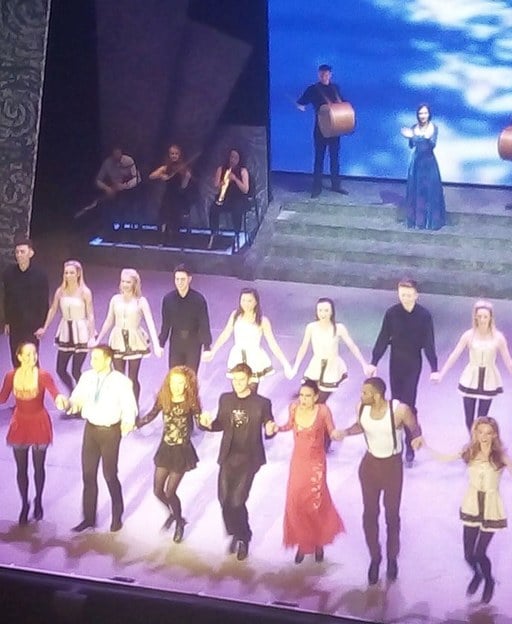
Watch any Irish dancer and the first thing you notice isn’t the flying feet. It’s the arms — pin-still at the sides, rigid as soldiers, not moving an inch even as the dancer spins, leaps, and powers through the most demanding footwork in the world. It looks striking to outsiders. But there’s a reason behind those still arms, and it has nothing to do with the explanation most people confidently repeat.
The Story Everyone Tells
Ask most people why Irish dancers keep their arms down and you’ll hear the same tale. During the Penal Laws, when the British Crown suppressed Irish culture, dancers performed near windows. Passers-by could see only the body, not the feet. With still arms and a straight upper body, they appeared to be simply standing.
It’s a vivid story. It has been repeated for generations. It is also, historians now believe, almost certainly not true.
Researchers who have studied the Penal Laws in detail point out that no specific law banning Irish dancing has ever been found. The Penal Laws targeted religion, land ownership, education, and inheritance — not reels and jigs at crossroads. The story is folk memory, not documented history.
The Dancing Masters Who Changed Everything
In the 18th century, Ireland had no dance schools or academies. Dancing was taught by travelling masters — men who moved from parish to parish, sleeping in farmhouses, teaching in kitchens, barns, and at crossroads during long summer evenings.
These were proud, competitive men. Each had his own style, his own signature steps. And one thing deliberately set their Irish dancing apart from the English country dancing spreading across the island: the arms stayed down.
English country dancing was sociable and flowing, with arms intertwined between partners. The Irish masters chose a form that was upright, individual, powerful, and controlled. You needed no partner to complete you. Your own body was the instrument. This was an act of cultural distinction — not of hiding.
The Church Had Its Say
The Catholic Church, which held enormous influence over rural Irish life, was deeply suspicious of dancing. Crossroads dancing — where young men and women gathered on summer evenings — made priests uneasy.
When dancing moved indoors to farmhouse kitchens, the dancing masters quickly understood that keeping things modest was good business. A controlled, arms-down style that left no room for physical suggestion was something the Church could quietly accept.
Still arms meant respectability. And respectability meant the dancing master could keep working. Many historians believe it is this Church influence, combined with the masters’ desire for cultural distinctiveness, that truly shaped the tradition.
How the Rules Became Written in Stone
By the early 20th century, the Irish cultural revival was gathering pace. The Gaelic League and other organisations were working to preserve and formalise traditions before they disappeared entirely.
In 1929, An Coimisiún le Rincí Gaelacha — the Commission for Irish Dancing — was founded to set formal standards. Competitive Irish dancing was regulated: costumes, footwork classifications, competition grades. And the arms? Down. Always down. Written into the rules.
What had begun as a travelling master’s signature — shaped by practicality, Catholic influence, and cultural pride — became law. It has been law ever since.
The Tension That Makes It Beautiful
At a modern feis (Irish dancing competition), judges deduct marks if a dancer’s arms drift even slightly from the body. Competitors train from childhood to maintain that stillness through extraordinary physical effort.
There is something remarkable about it. The contrast between explosive, rhythmic power in the feet and absolute stillness in the upper body creates a visual tension unlike anything else in dance. It looks almost effortless — as though the dancer is floating, while their feet are making thunder.
It is precisely this that made Riverdance stop the world in 1994 when it burst onto the Eurovision stage in Dublin. Thirty years later, people are still talking about it.
Still Arms, and Defiant
The still arms of Irish dancing are often framed as a story of suppression — something dancers once had to hide. But the stronger argument is that they tell a story of pride.
The travelling masters of 18th-century Ireland made a deliberate choice. They created something that said: this is not English dancing. This is ours. This is different, and we are not apologising for it.
Every Irish dancer who takes the stage today — arms pinned, shoulders back, feet flying — carries that same defiance forward, whether they know the history or not. The still arms are not a limitation. They are a statement.
If you are planning a trip to Ireland, catching a live céilí or a trad session where spontaneous dancing breaks out is one of the most memorable experiences the island offers. Seeing those arms held still while feet blur beneath — that is Ireland distilled into a single image.
64,000 Ireland lovers can’t be wrong.
Every week, our free newsletter delivers hidden gems, seasonal guides, local stories, and practical travel tips — straight to your inbox. Join the community that loves Ireland as much as you do.
☘️ Want More Hidden Ireland?
Join 64,000+ subscribers who discover Ireland’s best-kept secrets every week.
Subscribe Free — Join the Community →
Free forever · Unsubscribe anytime · No spam
📥 Free Download: Ireland Travel Planning Guide
Our most popular resource — itineraries, insider tips, and the 50 places you must not miss.
Tours & experiences you might love


Powered by Viator. Some links are affiliate links — we may earn a small commission at no extra cost to you.
Secure Your Dream Irish Experience Before It’s Gone!
Planning a trip to Ireland? Don’t let sold-out tours or packed attractions spoil your journey. Iconic experiences like visiting the Cliffs of Moher, exploring the Rock of Cashel, or enjoying a guided walk through Ireland’s ancient past often sell out quickly—especially during peak travel seasons.

Booking in advance guarantees your place and ensures you can fully immerse yourself in the rich culture and breathtaking scenery without stress or disappointment. You’ll also free up time to explore Ireland’s hidden gems and savour those authentic moments that make your trip truly special.
Make the most of your journey—start planning today and secure those must-do experiences before they’re gone!