

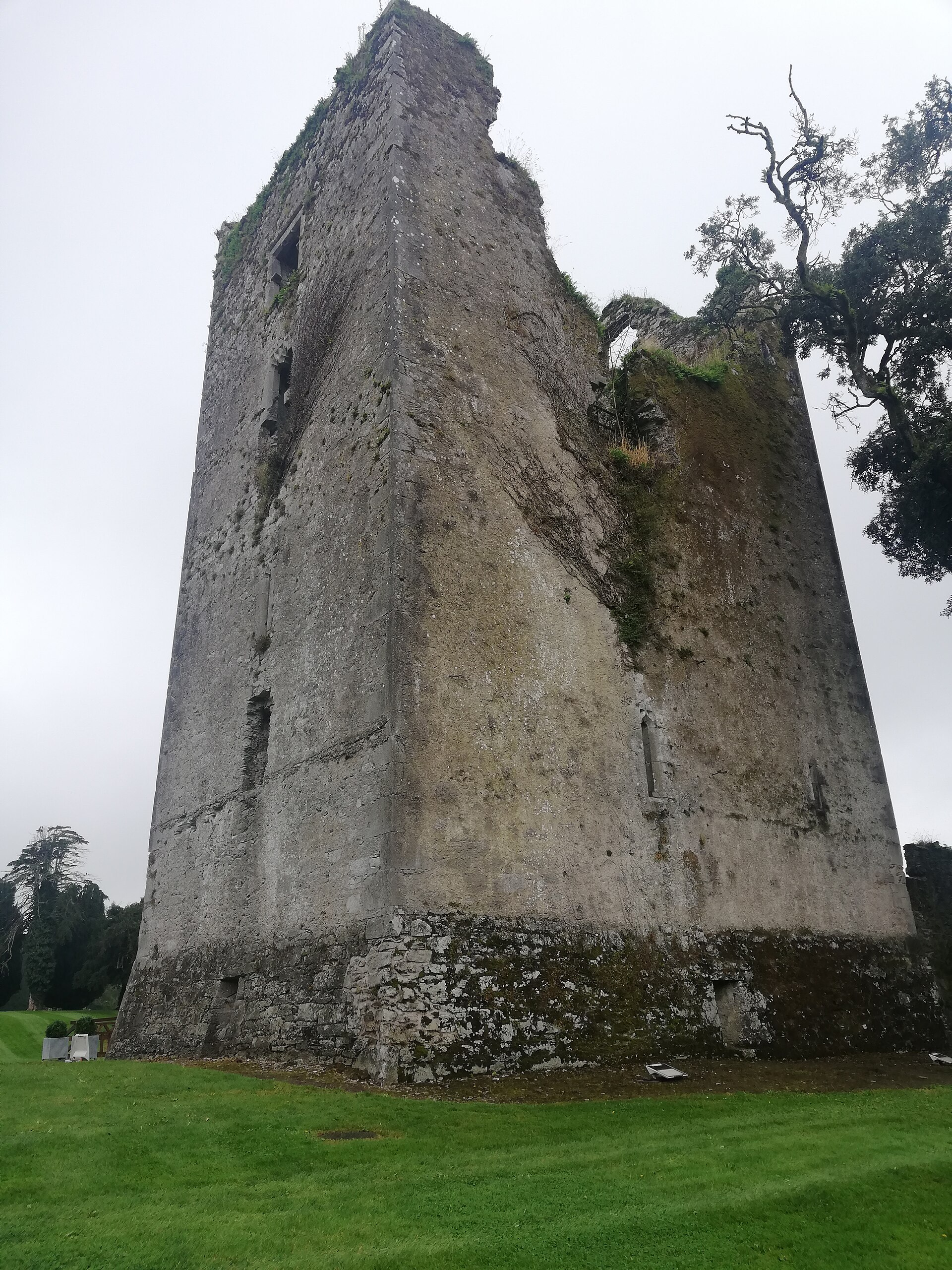
Drive through almost any Irish county and you will spot them — square stone towers rising above the treeline or standing alone in a field. Most people assume they are the ruins of something grander. They are not. These towers were built to be exactly what they are, and for centuries they were the most powerful buildings in Ireland.
Not Quite a Castle, Not Quite a Home
A tower house is smaller than a great castle and larger than a farmhouse. Most stand between 15 and 20 metres tall, built on a footprint roughly the size of a modern living room.
They were constructed from the 14th century onwards, by both Gaelic Irish clans and Anglo-Norman families who had settled the land. More than 3,000 survive in Ireland today — more than in any other country in Europe.
In 1429, an English royal decree offered a cash payment to any man who built a tower house to a defined standard in parts of Leinster. The incentive worked. Within a generation, tower houses were everywhere.
Why Every Family of Means Built One
A tower house was not just a home. It was a statement.
Owning one meant you controlled the land around it. Rents were collected there. Local disputes were settled at the door. Travellers needed your permission to cross your territory.
For Gaelic Irish lords, the tower was the heart of the tuath — their local territory. For Anglo-Norman families trying to hold their land through uncertain centuries, it was both fortress and symbol of legitimacy.
To build a tower was to declare: we are here, and we intend to stay.
What the Inside Was Actually Like
The ground floor was never a living space. It stored grain, valuables, and sometimes livestock during raids. There were no windows — only narrow arrow slits cut into walls that could be a metre thick.
The main living area began on the first floor, reached by a tight spiral staircase. That staircase was no accident. It nearly always turned clockwise, giving a right-handed defender coming down a wider sword arm than any attacker climbing up.
The great hall on the upper floors was where the lord ate, received guests, and conducted the business of the clan. The private solar above it — lit by larger windows — was reserved for the family. The higher you lived, the higher your status.
☘️ Enjoying this? 64,000+ Ireland lovers get stories like this every week. Subscribe free →
The Details That Still Surprise Visitors
Look above the entrance door of a well-preserved tower house and you will often find a murder hole — an opening through which stones or boiling liquid could be dropped on anyone forcing their way in.
At the top of the tower, look for bartizans: small round turrets projecting from the corners, designed so lookouts could watch all four sides without stepping into the open.
The walled enclosure surrounding the tower — called the bawn — was where horses, cattle, and daily life happened. The tower itself was the last resort. When the bawn fell, there was nowhere left to retreat except upwards.
When a Tower Changed Hands, Everything Changed
A tower house was only as secure as its family was strong. Sieges were common. Fire was a constant threat. Some towers changed clan hands two or three times across a single century.
Under the old Brehon law system, a clan’s physical power and its legal standing were closely tied. Lose the tower, and you lost the ability to enforce your rights over the surrounding land.
This is why so many Irish surnames are connected to specific towers and townlands. The O’Briens, the Burkes, the FitzGeralds — each controlled networks of tower houses that marked the edges of their territory as clearly as any written boundary.
Finding Them Across Ireland Today
Ross Castle in Killarney is one of the finest — a 15th-century tower house on the edge of Lough Leane, still intact enough to walk through. Dunguaire Castle on the shore of Galway Bay is one of the most photographed. Aughnanure Castle near Oughterard has a complete bawn wall and a river running beneath the tower floor.
Perhaps the most intimate is Thoor Ballylee in County Galway, where the poet W.B. Yeats lived and wrote in the 1920s. He bought it for £35 and called it simply “my tower.” He understood something about these buildings: that they hold a particular kind of stillness that nothing else in Ireland quite matches.
For the full picture of life in medieval Ireland, this look at what it was actually like to live inside an Irish castle fills in everything above and below the tower walls. And if Galway is on your itinerary, the Galway travel guide will lead you to Dunguaire and several more. If you are still building your trip, start with the Ireland planning guide.
The Quiet Power They Still Hold
These towers were built to last. And they have.
Stand at the base of one on a grey morning — stone rough under your hand, the bawn walls half-returned to the earth, silence where a whole family once lived and argued and kept watch through the night — and you feel the weight of what was once settled here.
Not a castle for kings. A home for a family who believed their ground was worth defending.
There are more than 3,000 of them still standing across Ireland. Most have no entrance fee, no visitor centre, no car park. They sit in the middle of a field or on the edge of a lake, waiting for someone to stop and look.
They are worth stopping for.
☘️ You Might Also Love
☘️ Join 64,000+ Ireland Lovers
Every Friday, get Ireland’s hidden gems, local secrets, and travel inspiration — the kind you won’t find in any guidebook.
Subscribe free — enter your email:
Free forever · · Unsubscribe anytime
Tours & experiences you might love


Powered by Viator. Some links are affiliate links — we may earn a small commission at no extra cost to you.
Secure Your Dream Irish Experience Before It’s Gone!
Planning a trip to Ireland? Don’t let sold-out tours or packed attractions spoil your journey. Iconic experiences like visiting the Cliffs of Moher, exploring the Rock of Cashel, or enjoying a guided walk through Ireland’s ancient past often sell out quickly—especially during peak travel seasons.

Booking in advance guarantees your place and ensures you can fully immerse yourself in the rich culture and breathtaking scenery without stress or disappointment. You’ll also free up time to explore Ireland’s hidden gems and savour those authentic moments that make your trip truly special.
Make the most of your journey—start planning today and secure those must-do experiences before they’re gone!
Subscribe Free