

Before television. Before radio. Before electric light reached the back roads of rural Ireland.
There was the rambling house.
Every townland had one — usually chosen without any formal announcement or committee vote. It was simply the house where people wanted to be. The door was never locked, the fire was never unlit, and the kettle was always on.
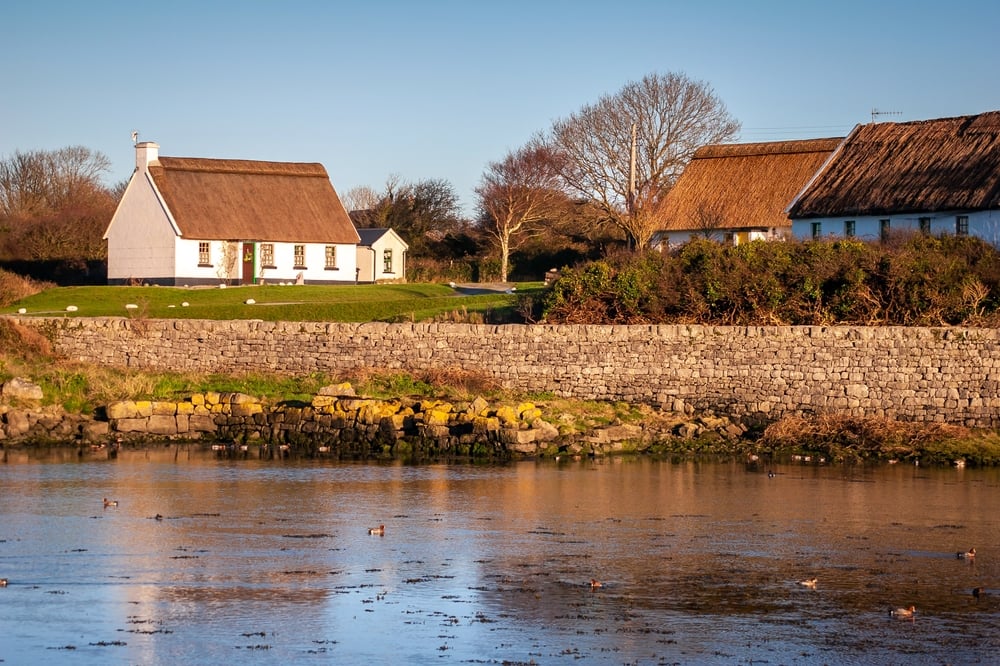
The House That Became the Centre of the World
In Irish, it was called the teach airneáin — the night-visiting house. You might also hear it called the rambling house, the ceilidh house, or simply “the house” said with a particular knowing nod that needed no further explanation.
After the evening’s work was done, neighbours would drift towards it in ones and twos. Farmers still carrying the smell of the fields. Women with mending tucked into their aprons. Children who should probably have been in bed long since.
Nobody sent an invitation. Nobody needed to.
What Happened Inside
The fire was the heart of it. People settled close to the hearth on stools and settle beds, legs stretched out, eyes half on the flames and half on each other.
The talk was everything — not gossip alone, but real talk. Stories passed down through generations. Riddles and wordplay in Irish and English both. News from a neighbour three townlands over who’d been seen at the market. Arguments about weather, land, and which family had the finest cattle in the parish.
Then, almost always, music. A fiddle produced from behind a dresser. A tin whistle pulled from a coat pocket. The rise and fall of sean-nós singing, raw and unhurried, filling the low-ceilinged room without needing a stage or an audience to validate it. Nobody performed. Everyone simply played, and everyone simply listened.
The Storytellers Who Made It Sing
The greatest currency in the rambling house was the story. Long before the tradition of the wandering seanchaí — the professional Irish storytellers who were once considered worth more than gold — the rambling house was where ordinary people kept extraordinary tales alive through the long winter nights.
Every parish had its own stock of them. Tales of shape-shifting creatures spotted on the road home. Stories of a man who’d made a bargain he regretted before morning. Accounts of the famine years, passed down without sentiment but with terrible precision, so that no generation would forget what hunger had looked like.
The children sat at the edges of the room, listening. That was understood to be part of the purpose — not formal education, but something richer. The slow, unhurried transmission of a way of seeing the world, of measuring a day, of treating a stranger who knocked at the door after dark.
Why One House and Not Another
Nobody quite agrees on what made a particular house become the rambling house of a townland. In some accounts it came down to geography — a house at a crossroads, or one with a wide kitchen and a flagstone floor that could handle a reel without complaint.
In others, it came entirely down to personality. A grandmother who knew every story and never tired of telling them. An uncle with a fiddle who only needed three bars to get everyone’s feet moving. A mother who made tea without being asked and never once glanced at the clock to signal that the evening was ending.
The rambling house had its own unspoken etiquette. You brought nothing and expected nothing, but you gave what you had — a song, a story, a piece of news from the lower townland. You didn’t overstay. You watched for the fire getting low and the host’s eyes growing heavy, and when you rose to leave, you thanked the house as much as the people in it.
When the Lights Changed Everything
The rambling house didn’t end with a single decision or a particular year. It faded slowly, house by house, townland by townland, across the decades.
The radio came first and quietly pulled people’s chairs to face a different direction. Then the television arrived, and rooms rearranged themselves permanently around a glowing screen in the corner. By the 1960s and 1970s, the nightly drift of neighbours towards one warm kitchen had become the kind of memory the older generation described with a particular, unhurried grief — not bitterness, but the soft sadness of knowing something was gone that couldn’t be named until it had already left.
Nobody chose to end it. The world simply changed around it, the way it always does.
The Ember That Survived
Something of the rambling house lives on in the Irish trad session — that weekly gathering in a pub where musicians play without a set list, without a stage, and often without much of a plan. If you’ve ever been pulled by the sound of a fiddle into the corner of a Clare or Kerry pub on a wet Tuesday night, you’ll understand exactly what I mean.
The same informality. The same generosity with music. The same quiet conviction that the best things in a room belong to everyone who happens to be in it.
And if you visit Ireland and find yourself invited into someone’s house, offered tea before you’ve even removed your coat, and kept there longer than you’d planned — you’re not simply experiencing Irish hospitality. You’re standing at the edge of something very old indeed.
If you’re planning a trip to Ireland and want to find those living, breathing corners of the country where the old ways haven’t entirely gone, the journey begins long before you board the flight. It begins with knowing what to look for.
Love Ireland? So do 65,000 of us.
Join the Love Ireland newsletter — free stories of Irish heritage, hidden gems, and the magic of the Emerald Isle delivered to your inbox.
📥 Free Download: Ireland Travel Planning Guide
Our most popular resource — itineraries, insider tips, and the 50 places you must not miss.
Tours & experiences you might love


Powered by Viator. Some links are affiliate links — we may earn a small commission at no extra cost to you.
Secure Your Dream Irish Experience Before It’s Gone!
Planning a trip to Ireland? Don’t let sold-out tours or packed attractions spoil your journey. Iconic experiences like visiting the Cliffs of Moher, exploring the Rock of Cashel, or enjoying a guided walk through Ireland’s ancient past often sell out quickly—especially during peak travel seasons.

Booking in advance guarantees your place and ensures you can fully immerse yourself in the rich culture and breathtaking scenery without stress or disappointment. You’ll also free up time to explore Ireland’s hidden gems and savour those authentic moments that make your trip truly special.
Make the most of your journey—start planning today and secure those must-do experiences before they’re gone!