

Every year, millions of Americans pull on green hats, drink green beer, and belt out songs they couldn’t name the day before. It’s loud, joyful, and brilliantly over the top. But it has very little to do with how Ireland actually marks the seventeenth of March.
It Started as a Holy Day — Pubs Were Closed by Law
For most of Ireland’s history, St Patrick’s Day was a day of religious observance, not a party. Schools and shops closed. Pubs were shut by law — a rule that stayed on the books until 1960. Families attended Mass in the morning, shared a modest meal, and perhaps visited a local holy well in the afternoon.
The idea of drinking green beer or parading under confetti cannons would have thoroughly baffled them.
The holiday only became a public celebration in the way we recognise today after Irish-American culture sent its version back across the Atlantic — and Ireland gradually embraced it, the way a quiet cousin accepts a louder one’s influence at Christmas.
The Parade Exists — But It Feels Entirely Different
Ireland does have parades, and Dublin’s has grown into one of the largest in the world. But step into a market town in County Clare or a village in Donegal on the seventeenth, and the parade looks nothing like New York or Chicago.
There are local marching bands, primary school groups, fire engines, and a dancing school or two. Children wave county flags. Grandparents stand on the kerb. The scale is intimate and community-driven, and the whole thing feels quietly moving rather than spectacular.
After the parade, people go to the pub. Not a themed St Patrick’s Day pub — just their local. The one they’ve been going to for thirty years.
St Patrick’s Real Mountain Still Draws Pilgrims
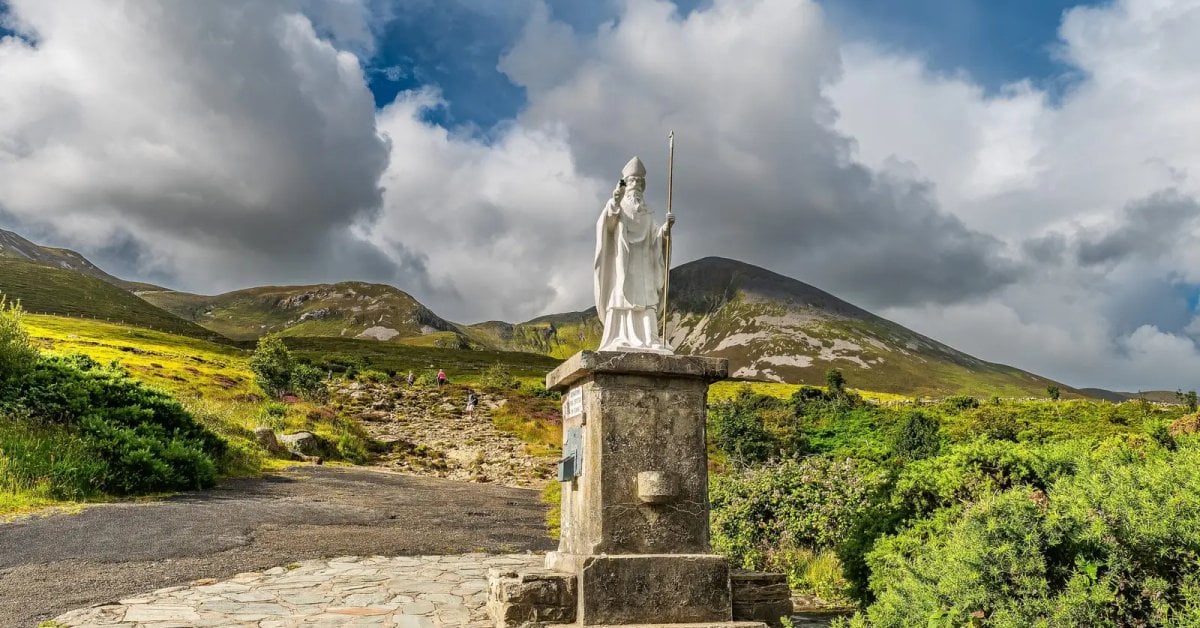
St Patrick’s connection to Ireland is rooted in real, living landscapes. Croagh Patrick in County Mayo — known locally as the Reek — is where tradition holds that Patrick fasted for 40 days. It rises sharply over the islands of Clew Bay, and on Reek Sunday each July, tens of thousands of pilgrims climb it, many in bare feet.
It’s one of the oldest pilgrimage routes in Europe, and it tells you something important about how Ireland actually remembers its patron saint — with reverence and quiet grit, not green face paint.
The full story of who Patrick was is genuinely surprising. He was Romano-British, captured by Irish pirates as a teenager, and returned to the island as a missionary decades later. You can read more about who St Patrick actually was — the history is far stranger and more compelling than the legend.
The Food Has Nothing to Do with Corned Beef
In Ireland, the day’s food is Irish stew, soda bread, or a bowl of thick vegetable soup. Colcannon — mashed potato with cabbage or kale, rich with butter — makes an appearance in many homes.
Corned beef and cabbage, the American St Patrick’s Day staple, is largely a New York invention. Irish immigrants in the 1800s borrowed it from Jewish delicatessens on the Lower East Side, where it was cheaper than the back bacon they knew from home. The dish crossed the Atlantic as an American-Irish tradition — and stayed there.
Most Irish people find this delightful and slightly baffling in equal measure.
The Craic Is Real — But It’s Not Green
Irish pubs on St Patrick’s Day are warm and easy. Trad musicians settle into corners, the singing starts early, and strangers fall into conversation without much encouragement. It’s sociable in the way that only genuinely communal places can be.
But you won’t find green beer, foam shamrock headbands, or anything that resembles a party supply shop. The atmosphere is celebratory without being theatrical. It feels like the entire country has given itself quiet permission to relax.
The Love Ireland newsletter covers these kinds of cultural details — the traditions and moments that don’t always make it into the guidebooks — if you’d like more before St Patrick’s Day arrives.
Why the Diaspora Made It Something Bigger
Between 70 and 80 million people worldwide claim Irish heritage. For many of them — particularly in the United States, Australia, and Argentina — St Patrick’s Day is the one moment each year when that identity rises to the surface. Louder than usual. Greener than usual. Openly proud.
The American version of the day isn’t wrong. It’s a different tradition — one born from immigration, hardship, and a fierce longing for home. It grew up in New York and Boston in the 1800s, among people who needed to make their presence felt in a country that often wasn’t welcoming.
Understanding both versions makes each one richer.
The St Patrick’s Day That Ireland Actually Celebrates
St Patrick’s Day in Ireland isn’t about performing Irishness for the world. It’s quieter than that, and more genuine.
It’s the sound of fiddles warming up in a pub that’s been open since half nine in the morning. The smell of soda bread cooling on a rack. A child in a GAA jersey, clutching a small paper flag, watching their very first parade through their own village.
If you’d like to experience it properly, planning a trip to Ireland for a St Patrick’s Day visit is one of the most memorable things you can do. The real version stays with you long after the green beer has faded from memory.
☘️ You Might Also Love
☘️ Want More Hidden Ireland?
Join 64,000+ subscribers who discover Ireland’s best-kept secrets every week.
Subscribe Free — Join the Community →
Free forever · Unsubscribe anytime · No spam
📥 Free Download: Ireland Travel Planning Guide
Our most popular resource — itineraries, insider tips, and the 50 places you must not miss.
Tours & experiences you might love


Powered by Viator. Some links are affiliate links — we may earn a small commission at no extra cost to you.
Secure Your Dream Irish Experience Before It’s Gone!
Planning a trip to Ireland? Don’t let sold-out tours or packed attractions spoil your journey. Iconic experiences like visiting the Cliffs of Moher, exploring the Rock of Cashel, or enjoying a guided walk through Ireland’s ancient past often sell out quickly—especially during peak travel seasons.

Booking in advance guarantees your place and ensures you can fully immerse yourself in the rich culture and breathtaking scenery without stress or disappointment. You’ll also free up time to explore Ireland’s hidden gems and savour those authentic moments that make your trip truly special.
Make the most of your journey—start planning today and secure those must-do experiences before they’re gone!