

You hear it before you understand it. That low, aching sound — somewhere between a cry and a lullaby — that seems to rise from the floorboards of old Irish pubs and drift through the night air. It is the uilleann pipes, one of Ireland’s most distinctive traditional instruments, and nothing in the world sounds quite like them. Once you have heard them played well, you never forget it.
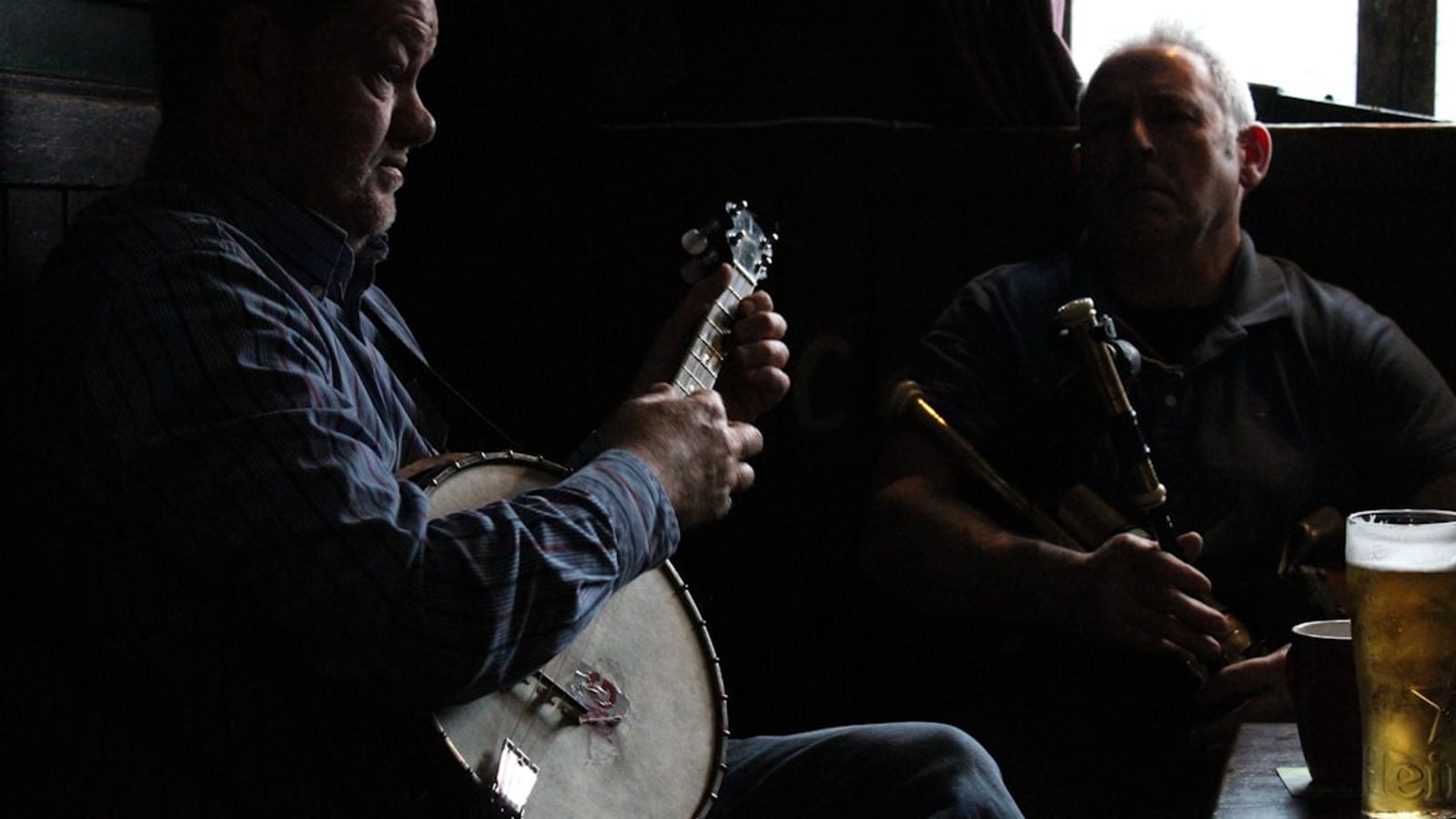
What Are Uilleann Pipes?
Uilleann pipes (pronounced ILL-in) are Ireland’s traditional bellows-blown bagpipes, played seated with the bag squeezed by an elbow-operated bellows.
Most people hear the word “pipes” and picture a kilted Scottish piper on a hillside — this is something else entirely.
Most people hear the word “pipes” and picture a kilted Scottish piper on a hillside, bellowing into a bag, cheeks crimson with effort. The uilleann pipes are something else entirely.
Uilleann — from the Irish word for “elbow” — are played seated, indoors, with the bag inflated by a small bellows strapped under the upper arm. The piper pumps the bellows with the right elbow, leaving both hands free for the chanter (the melody pipe) and the regulators, which provide chords and bass notes.
The sound is quieter, more intimate, and more heartbreaking than any other bagpipe on earth. Where Scottish pipes stride boldly into battle, uilleann pipes lean in and whisper. They span two full octaves — a range wider than most other bagpipes — and in skilled hands, they can move from a piercing reel to a lament so gentle it barely seems possible the same instrument is playing.
How Uilleann Pipes Are Made
For a deeper look at the instrument itself, see the history and mechanics of the uilleann pipes. They reached their current form during the 18th century, refined by Irish instrument makers who wanted something better suited to indoor music-making than the outdoor power of Highland pipes.
They were first associated with the drawing rooms of the Anglo-Irish gentry. But within a generation, they had found their natural home among the working people of Ireland — played at crossroads dances, wakes, and céilís from Connacht to Ulster.
Building a full set is one of the most demanding crafts in Irish music. A complete set — chanter, drones, bellows, bag, and three regulator pipes — takes a skilled maker several months to complete and can cost several thousand euro. Each component must be calibrated precisely to the others, tuned by hand, and tested over hours of playing. There are only a handful of master pipe makers in Ireland today, and their waiting lists stretch for years.
How Uilleann Piping Was Saved from Extinction
By the middle of the 20th century, uilleann piping had come dangerously close to extinction. Emigration, urbanisation, and decades of cultural neglect had reduced the number of active pipers to a handful of ageing players in scattered counties.
In 1968, a small group of musicians, scholars, and music lovers formed Na Píobairí Uilleann — the Society of Uilleann Pipers — and set about saving what remained. They tracked down master pipers willing to teach. They recorded older players before their knowledge was lost. They established a pipe school in Dublin and began publishing the first proper instruction materials for the instrument.
It worked. In 2017, UNESCO added uilleann piping to its list of Intangible Cultural Heritage of Humanity. From near-extinction to global recognition in under fifty years. It is one of the most remarkable cultural recoveries in modern Irish history.
☘️ Enjoying this? 64,000+ Ireland lovers get stories like this every week. Subscribe free →
How Long Does It Take to Learn the Uilleann Pipes?
There is an old saying about uilleann pipes: it takes seven years to learn to play them, seven years to learn to play them well, and seven more to truly master them. Most pipers who have spent a lifetime at it will tell you that is about right.
The technical demands are extraordinary. A beginner must first simply learn to maintain consistent bellows pressure — something that can take months before a single clean note is possible. The chanter demands a fingering technique unlike any other instrument. The ornaments — cuts, rolls, crans — that give Irish piping its distinctive voice take years to develop properly.
The regulators are a further level again. These three additional pipes allow a skilled piper to play chords beneath the melody, turning the instrument into something close to a one-person band. Most players spend the better part of a decade developing that ability. The very best make it look effortless. It is anything but.
Where to Hear Uilleann Pipes in Ireland
If you want to hear uilleann pipes played live, Ireland remains the best place in the world to do it.
The Fleadh Cheoil — Ireland’s great annual music festival — draws pipers from across the country every summer, and competition piping at the highest level is something worth travelling a long way to witness.
Any genuine traditional trad session may have a piper in the corner, bellows working quietly beneath the hum of conversation, chanter moving through a reel while the room goes still without quite knowing why it has.
That stillness is the gift of the uilleann pipes. They ask you to stop. To really listen.
Ireland gave the world its stories, its saints, its scattered millions. Near the top of that list sits an instrument that almost no one builds, that takes a lifetime to master, and that sounds like it comes from somewhere beyond ordinary music. If you have never heard the uilleann pipes played live, put it on your list. It will change you.
☘️ You Might Also Love
☘️ Join 64,000+ Ireland Lovers
Every Friday, get Ireland’s hidden gems, local secrets, and travel inspiration — the kind you won’t find in any guidebook.
Love more? Join 43,000 Scotland lovers → · Join 30,000 Italy lovers → · Join 7,000 France lovers →
Free forever · Unsubscribe anytime
Tours & experiences you might love


Powered by Viator. Some links are affiliate links — we may earn a small commission at no extra cost to you.
Secure Your Dream Irish Experience Before It’s Gone!
Planning a trip to Ireland? Don’t let sold-out tours or packed attractions spoil your journey. Iconic experiences like visiting the Cliffs of Moher, exploring the Rock of Cashel, or enjoying a guided walk through Ireland’s ancient past often sell out quickly—especially during peak travel seasons.

Booking in advance guarantees your place and ensures you can fully immerse yourself in the rich culture and breathtaking scenery without stress or disappointment. You’ll also free up time to explore Ireland’s hidden gems and savour those authentic moments that make your trip truly special.
Make the most of your journey—start planning today and secure those must-do experiences before they’re gone!