

It started as a simple question on social media: If you could take anyone in the world on a trip — living or historical — who would it be? The responses kept coming. Names from history, family members long gone, celebrities, ancestors, childhood heroes. And again and again, people said their dream destination was Ireland.
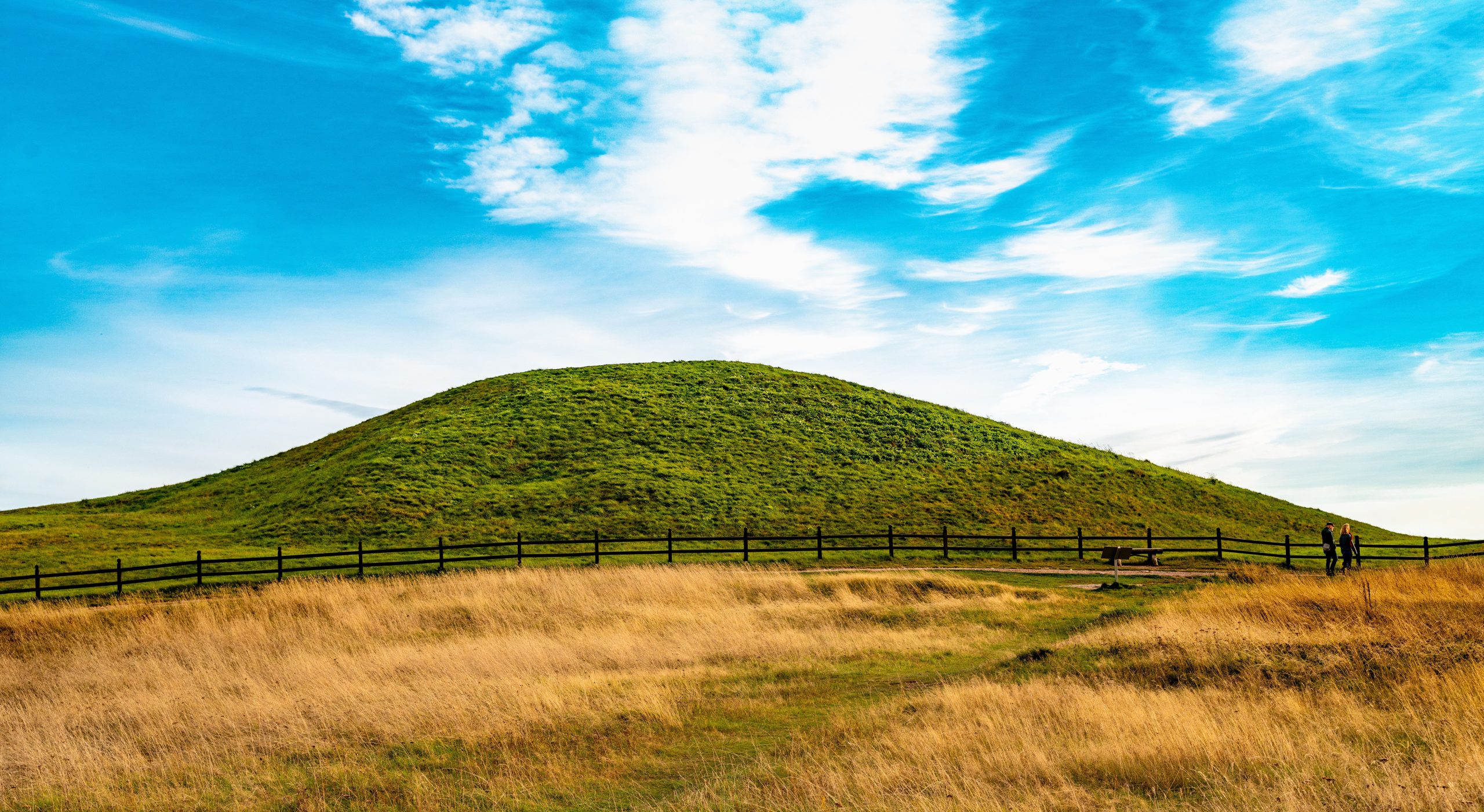
There is something about Ireland that makes you want to share it. The light changes every twenty minutes. You turn a corner and find a ruined abbey that nobody warned you about. A stranger in a pub tells you a story that stays with you for years. Ireland does not feel like a place you consume — it feels like a place you experience, and experiences are better with the right person beside you.
So let us take the question seriously. Who would you take on a trip to Ireland, and where would you take them?
Want stories, tips and hidden gems from across Ireland every week? Subscribe to our free newsletter and join thousands of Ireland lovers around the world.
Why Ireland Suits a Dream Trip Better Than Most Places
Before we get to the companion, it is worth thinking about why Ireland comes up so often in answers to this kind of question. It is not just the scenery — though the Cliffs of Moher, the Antrim Coast and the Burren are genuinely hard to match anywhere in the world. It is the pace.
Ireland slows you down. Journeys take longer than expected because you stop. You stop for the view. You stop because a dog wandered into the road. You stop because the man at the petrol station asked where you were headed and now it is forty minutes later and you have a list of places to visit that you had never heard of. That unplanned quality means a trip to Ireland gives you something to talk about — and good conversation is the whole point when you are with someone you have chosen carefully.
The country is also compact enough to cover a great deal in a short time without feeling rushed. You can stand at the Hill of Tara in the morning, once the ceremonial seat of Irish High Kings, walk Kilkenny’s medieval streets in the afternoon, and watch the sun go down over the Shannon that evening. If your dream companion has a short window, Ireland rewards it.
Historical Figures Worth Walking Ireland’s Roads With
If you lean towards history, Ireland hands you an embarrassing number of options.
Grace O’Malley, the sixteenth-century chieftain known as the Pirate Queen of Connacht, would be an extraordinary guide to the west coast. Her strongholds — Rockfleet Castle, Clare Island, Carrickkildavnet — still stand along the Mayo coast. O’Malley commanded a fleet, negotiated directly with Queen Elizabeth I, and kept her position in a world that gave women almost no formal power. Walking those shores with her beside you, listening to how she read the tides and the politics, would reframe everything you thought you knew about the Atlantic coast of Ireland.
James Joyce is another obvious choice if your tastes run literary. Dublin as Joyce knew it — Davy Byrne’s pub off Grafton Street, the booksellers on the quays, the Martello tower at Sandycove — is still largely there. You could walk Bloomsday (the 16th of June, the date on which Ulysses is set) and have Joyce himself explain what he was doing, which would save a great many readers considerable confusion.
Éamon de Valera, love him or hate him, was at the centre of modern Ireland’s formation. The debates he carried in his head — about the Treaty, about partition, about what kind of country Ireland should become — are still alive in Irish political life today. A walk past Boland’s Mill by Grand Canal Dock, where he commanded a garrison during the 1916 Rising, or along the streets of Ennis in County Clare, where he won the East Clare by-election in 1917, would be a history lesson no textbook could replicate.
Or perhaps your choice is less famous. A scholar, a monk from the early Christian monasteries at Clonmacnoise or Glendalough, who spent their life illuminating manuscripts by candlelight. Someone who could explain, in plain terms, what the world looked like before the Normans arrived.
The Ancestor You Never Got to Meet
Many people who answered that original question gave a name from their own family tree. A great-great-grandmother who left Cork during the Famine. A grandfather who emigrated to Chicago in the 1920s and never came back. Someone who appears in a census record and a parish register and then disappears into a life you can only imagine.
This is perhaps the most compelling answer of all, because it is the most personal. Ireland is a country defined by departure. According to the Irish government, roughly 70 million people worldwide claim Irish ancestry, compared to about seven million who live on the island of Ireland today. The mathematics of that tells you something: for most people with Irish roots, there is a moment in their family history when someone left, and everything that followed came from that decision.
To bring that ancestor back — to show them the townland they came from, the church where they were baptised, the fields their parents worked — would close a loop that emigration left open. Ireland has the records to make this concrete. Griffith’s Valuation, published between 1847 and 1864, lists landholders and householders across the country. The 1901 and 1911 censuses are fully searchable online. Many county archives hold baptism and marriage records going back centuries. The country makes it possible to trace those roots with real precision, and our step-by-step guide to finding your Irish ancestors shows where to begin.
We write about Irish heritage, history and travel every week. Join our newsletter — it’s free and you can unsubscribe any time.
Living People Who Would Finally Understand
Sometimes the dream companion is not a historical figure at all. It is a friend who has never quite understood why you talk about Ireland the way you do. Or a parent who has always wanted to go but never made it happen. Or a child who is old enough now to appreciate it.
There is a particular satisfaction in taking someone who has only heard you describe a place and watching the moment it lands for them. The first sight of the Cliffs of Moher from the viewing platform. The smell of a turf fire in a pub on a wet evening. The sound of a session starting up — fiddle, uilleann pipes, bodhrán — in a corner of a village pub on a Tuesday night with no announcement and no admission charge.
These things cannot be described adequately. They can only be shared. Which is, in the end, what travel is for.
Where in Ireland Would You Take Them?
The answer depends on who you are bringing. Here are a few ideas to match a companion to a place.
- For the history lover: The Boyne Valley in County Meath. Newgrange is older than the Egyptian pyramids and the Hill of Tara sits within easy reach. This stretch of countryside holds more ancient history per square mile than almost anywhere in Europe.
- For the literature lover: Dublin, specifically the route from Trinity College (home to the Book of Kells) down through Temple Bar, along the Liffey to the old Georgian squares. Follow it up with a day in Sligo, Yeats country, where the poet’s grave is marked simply: Cast a cold eye on life, on death. Horseman, pass by.
- For the food and drink lover: Kinsale in County Cork has long been billed as the gourmet capital of Ireland, with an unusually dense cluster of restaurants for a small harbour town. Pair it with a visit to the English Market in Cork city — a covered food market that has been running since 1788.
- For the ancestor seeker: Wherever the records point. But if you need a starting place, the Irish Genealogy website (irishgenealogy.ie) and the National Library of Ireland’s reading room in Dublin are where the trail usually begins.
- For the nature lover: Connemara, the Burren, or the Dingle Peninsula. Each is different: Connemara bleak and open, the Burren strange and botanical, Dingle intimate and dramatic in equal measure.
How to Make the Dream Trip Actually Happen
The obvious part: most of the companions on your list are imaginary, and the trip is, for now, a thought experiment. But the real companions in your life — the ones you have been meaning to invite — are not.
Ireland is manageable. Return flights from the United States are direct from Boston, New York, Chicago, and several other cities. From Britain, you are looking at roughly an hour to ninety minutes by air, or a few hours by ferry. Accommodation ranges from budget hostels and self-catering cottages to country house hotels and castle stays. The infrastructure for touring by car is good, though the roads occasionally narrow to something that requires patience.
The best time to go depends on your priorities, and our season-by-season guide goes into more detail. Summer (June to August) gives you long days and the best chance of dry weather, but also the most visitors. May and September are quieter, still mild, and often beautiful. Winter has its own character — the pubs are warmer, the locals more present, and the landscape more honest.
Whoever you would take on a trip to Ireland — real or imagined, living or historical — the country would give them something worth having. That is the answer the question is really pointing at. Ireland is the kind of place that means something. And the people we would bring there are the ones who matter to us most.
If Ireland is on your list — for yourself or someone you love — we can help you plan it. Subscribe to our free weekly newsletter for guides, tips and inspiration from across the island.
Tours & experiences you might love


Powered by Viator. Some links are affiliate links — we may earn a small commission at no extra cost to you.
Secure Your Dream Irish Experience Before It’s Gone!
Planning a trip to Ireland? Don’t let sold-out tours or packed attractions spoil your journey. Iconic experiences like visiting the Cliffs of Moher, exploring the Rock of Cashel, or enjoying a guided walk through Ireland’s ancient past often sell out quickly—especially during peak travel seasons.

Booking in advance guarantees your place and ensures you can fully immerse yourself in the rich culture and breathtaking scenery without stress or disappointment. You’ll also free up time to explore Ireland’s hidden gems and savour those authentic moments that make your trip truly special.
Make the most of your journey—start planning today and secure those must-do experiences before they’re gone!