

Carrot cake has a long and proud history in Irish and British home baking — a cake that turns humble root vegetables into something extraordinary. Whether you call it a teatime treat, a weekend bake, or a celebration centrepiece, a well-made carrot cake never fails to impress. Chris from The Irish Baker Abroad grew up watching traditional bakes like this come out of bakery ovens across Ireland, and his version of this classic has everything you want: a deeply moist, warmly spiced crumb and a cloud of silky cream cheese frosting on top. If you’ve been searching for the perfect carrot cake recipe, this is the one to save.
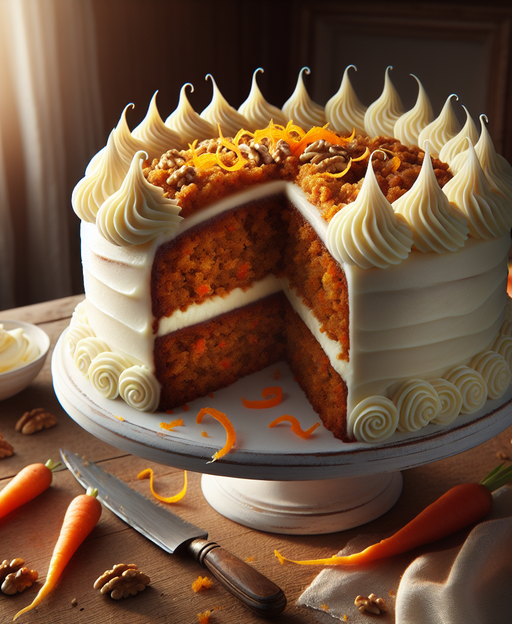
What makes carrot cake so special is the way carrots work double duty in the batter — adding natural sweetness, moisture, and body all at once. The result is a cake that stays beautifully tender for days after baking, making it ideal for making ahead of time. Chris’s approach is straightforward and approachable, designed for home bakers at every level. You don’t need unusual ingredients or specialist equipment — just a stand mixer (or electric hand whisk), a good grater, and a 22cm round tin.
What Makes This Carrot Cake Recipe Stand Out
The first thing Chris does differently is whisk the eggs and dark brown sugar together at full speed for a full five minutes. This step builds an incredible amount of air into the batter before a single spoonful of flour goes in, and it’s what gives the finished cake its exceptionally light, springy texture. Dark brown sugar — rather than caster sugar — also brings a subtle treacle richness to the crumb that pairs beautifully with the natural earthiness of carrot.
The oil is then added gradually with the mixer still running, creating a smooth, emulsified batter. Oil-based cakes are always moister than butter-based ones because oil stays liquid at room temperature; a butter cake hardens and dries as it cools, but an oil-based carrot cake remains tender and yielding for days. It also makes this recipe wonderfully forgiving — difficult to overbake and impossible to produce a dry result if you follow the method.
The two-temperature baking approach — starting hot at 200°C and then reducing to 170°C — allows the cake to rise fully before the lower heat gently sets the crumb without drying it out. It’s a bakery trick that makes all the difference to the final texture. Chris learned this working in professional kitchens, and it translates perfectly to a home oven.
The Cream Cheese Frosting
The frosting is where carrot cake really becomes something special. Chris uses full-fat Philadelphia cream cheese for the best flavour and stability, starting by beating the butter until it’s pale and fluffy before adding the cream cheese. This order matters — if you add cold cream cheese to unbeaten butter, you risk a lumpy frosting. Taking the time to beat the butter first means a silky-smooth result every single time.
The icing sugar is added gradually with the mixer on medium speed, preventing the familiar cloud of white dust that happens when you tip it all in at once. A touch of vanilla sugar finishes it off. If your kitchen is warm and the frosting feels a little soft after mixing, simply pop it in the fridge for ten minutes — it will firm up beautifully and pipe perfectly.
One of Chris’s cleverest tips is to turn the cooled cake upside down before frosting it. The perfectly flat base of the cake becomes the top, giving you an ideal surface for spreading and piping. It’s one of those small professional touches that makes your home-baked cake look like it came from a proper bakery. Use a palette knife to spread the frosting in a rustic, generous swoop, then pipe rosettes around the edge for a finishing touch that looks far more impressive than the effort it takes.
Easy Moist Carrot Cake with Cream Cheese Frosting — Full Recipe
Ingredients
For the Carrot Cake
- 3 large eggs
- 200g dark brown soft sugar
- 150ml vegetable oil
- 250g self-raising flour
- 1 tsp baking powder
- ½ tsp bicarbonate of soda
- 1 tsp vanilla sugar (or 1 tsp vanilla extract)
- 300g carrots, peeled and finely grated (about 3 medium carrots)
For the Cream Cheese Frosting
- 100g unsalted butter, at room temperature
- 200g full-fat cream cheese (e.g. Philadelphia), at room temperature
- 300g icing sugar, sifted
- 1 tsp vanilla sugar (or ½ tsp vanilla extract)
For Decoration
- 50g walnuts, roughly chopped, plus walnut halves to finish
- Zest of 1 orange
Method
Step 1: Preheat the Oven
Preheat your oven to 200°C (180°C fan / Gas 6). Grease and line a 22cm round cake tin with baking paper, making sure the sides are covered too.
Step 2: Whisk Eggs and Sugar
Add the eggs and dark brown soft sugar to the bowl of a stand mixer fitted with the whisk attachment. Whisk on full speed for a full 5 minutes. The mixture should turn from dark brown to a lighter colour, becoming thick, fluffy, and noticeably increased in volume. Don’t rush this step — it’s the foundation of a light-textured cake.
Step 3: Add the Oil
With the mixer running on medium speed, slowly pour in the vegetable oil in a thin, steady stream. Continue whisking for about one more minute until the oil is fully emulsified into the egg mixture.
Step 4: Add the Dry Ingredients
In a separate bowl, mix together the self-raising flour, baking powder, bicarbonate of soda, and vanilla sugar. Add this mixture to the stand mixer bowl and whisk on medium speed for about one minute until just combined. The batter will be thick. Don’t overmix at this stage.
Step 5: Fold in the Carrots
Remove the bowl from the mixer. Add all the finely grated carrot and fold gently with a wooden spoon, turning the mixture over rather than stirring, until the carrot is evenly distributed. Make sure to scrape any dry bits of flour from the bottom edges of the bowl.
Step 6: Bake
Pour the batter into the prepared tin and level the surface with a spatula. Bake at 200°C for 25 minutes. Without opening the oven door, reduce the temperature to 170°C and bake for a further 15 minutes. Insert a skewer or cocktail stick into the centre — if it comes out clean, the cake is done. Leave to cool completely in the tin before turning out onto a wire rack.
Step 7: Make the Cream Cheese Frosting
Add the room-temperature butter to a clean stand mixer bowl and whisk on full speed for 2 minutes until pale and fluffy. Add the cream cheese and whisk for a further 1–2 minutes until smooth and well combined. Scrape down the sides of the bowl. With the mixer running on medium speed, gradually add the sifted icing sugar, a few spoonfuls at a time. Add the vanilla sugar and whisk until the frosting is smooth, creamy, and light. If it feels too soft to hold its shape, refrigerate for 10 minutes before using.
Step 8: Frost and Decorate
Place the cooled cake upside down on a cake stand or serving plate — the flat base creates a perfectly even surface for frosting. Spoon the cream cheese frosting into the centre and spread generously outwards with a palette knife or offset spatula, using a rustic swirling motion. Fill a piping bag fitted with a French star tip with the remaining frosting and pipe rosettes around the top edge of the cake. Place whole walnut halves on the rosettes, scatter roughly chopped walnuts across the centre, and finish with a generous grating of fresh orange zest for colour and aroma.
Tips, Tricks, and Variations
- Room-temperature ingredients matter: Make sure both the butter and cream cheese for the frosting are at room temperature before you begin — cold ingredients won’t emulsify properly and will produce a lumpy frosting.
- Grate the carrots finely: Finely grated carrot disappears into the batter, creating moisture and texture without large visible chunks. Use the fine side of your box grater.
- Don’t skip the wooden spoon: After adding the grated carrot, switch from the stand mixer to a wooden spoon for gentle folding. Over-mixing at this stage can develop too much gluten and toughen the cake.
- Cooling is non-negotiable: The cake must be completely cool before frosting. Even slightly warm cake will melt the cream cheese frosting and cause it to run.
- Make it a layer cake: Double the recipe and bake in two tins for an impressive two-layer version. Sandwich the layers together with frosting in the middle as well as on top.
- Add spice: Chris’s version is a clean, pure carrot flavour, but you can add 1 tsp of ground cinnamon and ½ tsp of ground ginger to the dry ingredients for a more warming, spiced carrot cake.
- Storage: Because of the cream cheese frosting, this cake should be stored in the fridge once iced. It will keep for up to 3 days and actually improves overnight as the flavours meld.
Watch Chris Make This Recipe
If you’d like to see every step in action, watch the full video from The Irish Baker Abroad below. Watching Chris handle the batter, demonstrate the frosting technique, and finish the decoration is invaluable for getting the right feel for each step.
☘️ You Might Also Love
☘️ Join 64,000+ Ireland Lovers
Every Friday, get Ireland’s hidden gems, local secrets, and travel inspiration — the kind you won’t find in any guidebook.
Love more? Join 43,000 Scotland lovers → · Join 30,000 Italy lovers → · Join 7,000 France lovers →
Free forever · · Unsubscribe anytime
Frequently Asked Questions
Can I make carrot cake ahead of time?
Yes — and it actually benefits from it. The cake can be baked up to two days in advance and stored unfrosted, wrapped tightly in cling film at room temperature. The cream cheese frosting can be made the day before and kept covered in the fridge. Assemble and decorate on the day you plan to serve it. Once frosted, the whole cake should be kept in the fridge and eaten within 3 days.
Can I use plain flour instead of self-raising flour?
Yes. If you only have plain flour, use 250g plain flour plus 2½ tsp baking powder and ½ tsp bicarbonate of soda (omitting the additional baking powder and bicarb listed in the ingredients). The result will be very similar — just make sure you don’t skip the raising agents entirely, or your cake will be dense rather than light and fluffy.
What can I use instead of walnuts?
Pecans are an excellent substitute and are slightly sweeter than walnuts, giving a different but equally delicious result. You could also leave the nuts out entirely if you’re baking for someone with a nut allergy — the cake is just as beautiful decorated with extra orange zest, or with a few dried apricots cut into slivers for colour.
Why does my cream cheese frosting turn runny?
The most common cause is overbeating the cream cheese. Once you add the cream cheese to the butter, mix until just smooth and combined — if you continue beating vigorously after this point, the cream cheese breaks down and the frosting loses structure. If it does turn runny, refrigerate the frosting for 15–20 minutes and it will firm up considerably. For best results, always use full-fat cream cheese rather than reduced-fat, which has a higher water content and will always be softer.
More Delicious Irish Baking Recipes
If you enjoyed this recipe, you’ll love these other bakes from The Irish Baker Abroad:
- How to Make a Classic Lemon Drizzle Cake — The Double-Drizzle Method
- How to Make a Rhubarb and Almond Frangipane Tart with Homemade Pastry
- The Perfect Traditional Irish Scones — Light, Fluffy, and Ready in 30 Minutes
- How to Make a Traditional Irish Coffee Slice — Layers of Puff Pastry and Coffee Cream
- The Secret to Perfectly Fluffy Homemade Buttermilk Waffles
Carrot cake belongs in every home baker’s repertoire. It’s one of those recipes that looks impressive, tastes extraordinary, and is genuinely forgiving to make — a combination that makes it perfect for bakers at every level. Whether you’re baking for a Sunday tea, a birthday, or simply because you want something beautiful to slice into on a quiet afternoon, this is the recipe that will become a firm family favourite. Give it a go, and if you do, we’d love to see your results — share a photo in the comments below or tag us on social media. Happy baking! ☘️
Tours & experiences you might love


Powered by Viator. Some links are affiliate links — we may earn a small commission at no extra cost to you.
Secure Your Dream Irish Experience Before It’s Gone!
Planning a trip to Ireland? Don’t let sold-out tours or packed attractions spoil your journey. Iconic experiences like visiting the Cliffs of Moher, exploring the Rock of Cashel, or enjoying a guided walk through Ireland’s ancient past often sell out quickly—especially during peak travel seasons.

Booking in advance guarantees your place and ensures you can fully immerse yourself in the rich culture and breathtaking scenery without stress or disappointment. You’ll also free up time to explore Ireland’s hidden gems and savour those authentic moments that make your trip truly special.
Make the most of your journey—start planning today and secure those must-do experiences before they’re gone!