

Ireland’s oldest city sits where the River Suir meets the sea, and it has been there longer than most people realise. County Waterford was founded by Vikings in 914 AD — more than a century before the Normans arrived, and six hundred years before the Mayflower sailed. This is not a county that trades on quaintness or tourist-ready charm. It earned its place in Irish history through sheer endurance. From the medieval streets of the Viking Triangle to the glittering legacy of Waterford Crystal, from the wild geology of the Copper Coast to the quiet fishing harbours of the south-east, this is a county that rewards those who look beyond the guidebook.
This is the eighth article in our 32 Counties of Ireland series, following Kerry, Cork, Galway, Clare, Donegal, Wicklow, and Wexford. Each guide takes you deep into a single county — its landscapes, its stories, and the places most visitors never find.
Why County Waterford?
Waterford is Ireland’s Déise Country — named for the ancient tribe that settled these lands long before the Vikings arrived. The county stretches from the Comeragh Mountains in the north to the Celtic Sea in the south, with some of the most underrated coastline in Ireland running between Dunmore East and Ardmore. Waterford City itself is compact, walkable, and layered with nine centuries of visible history. Yet most visitors to Ireland skip it entirely, heading west to Kerry or north to Galway. Their loss.
The county is also home to Ireland’s most famous export after Guinness. Waterford Crystal has been crafted here since 1783, and the factory tour in the city centre remains one of the finest industrial heritage experiences in Europe. But crystal is just the beginning. This is a county of ancient round towers, UNESCO-listed geology, a 46-kilometre greenway that rivals any in Europe, and a bread roll so beloved it has legal protection.
Waterford City — Ireland’s Oldest
Waterford was founded as a Viking settlement called Vadrarfjordr in 914 AD. The original city walls still stand in places, and Reginald’s Tower — built by the Normans on a Viking foundation — is the oldest civic building in Ireland still in daily use. Inside, a small but excellent museum traces the city from its Scandinavian origins through the Norman conquest and beyond.
The Viking Triangle is the medieval heart of the city, a pedestrianised quarter bounded by three museums: Reginald’s Tower, the Medieval Museum, and the Bishop’s Palace. Together they form the Waterford Treasures collection, which includes the only surviving piece of clothing from medieval Ireland — a 15th-century cloth-of-gold vestment that was hidden in a city wall for centuries. The Medieval Museum itself is built over the ruins of a 13th-century Franciscan friary, with the original vaulted chambers preserved beneath glass floors.
Waterford Crystal — A Living Legacy
The House of Waterford Crystal on the Mall is not a museum in the traditional sense. It is a working factory where master craftsmen still cut, blow, and engrave crystal by hand using techniques largely unchanged since the 18th century. The tour takes you through every stage of production, from furnace to finishing room, and watching a cutter transform a blank piece of crystal into a precision-cut bowl is genuinely mesmerising. The Times Square New Year’s Eve ball, the FIFA World Cup trophy case, and chandeliers in Westminster Abbey have all been made here.
☘️ Enjoying this? 64,000+ Ireland lovers get stories like this every week. Subscribe free →
How many of Ireland’s 32 counties can you name? ☘️
Counties of Ireland — the geography-quiz tool. Place all 32 on the map and see if you can beat the average.
The Copper Coast — A UNESCO Story Written in Rock
Between Tramore and Dungarvan, the coastline erupts into something extraordinary. The Copper Coast is a UNESCO Global Geopark — one of only three in Ireland — where 460 million years of geological history are exposed in sea stacks, cliff faces, and coves. The name comes from the 19th-century copper mines that once operated along this stretch, and you can still explore their ruins above the beaches. The coastal road between Bunmahon and Stradbally is one of the most dramatic drives in Ireland, though almost nobody outside Waterford knows it exists.
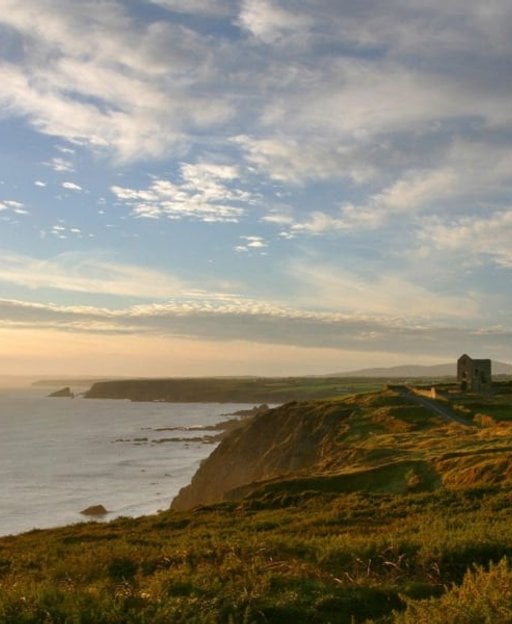
At Tankardstown, the old mine engine house stands on the cliff edge like a ruined watchtower. Below it, a natural sea arch frames views of the ocean. On a clear day, the Comeragh Mountains are visible to the north. This is the Ireland that tourism boards rarely photograph — raw, industrial, and beautiful precisely because it has not been polished for visitors.
☘️ Never miss a county in this series
Join over 64,000 subscribers who get our free weekly Ireland newsletter — stories, places, and traditions you won’t find in any guidebook.
Subscribe free to Love Ireland →
The Waterford Greenway
The Waterford Greenway is a 46-kilometre off-road cycling and walking trail that runs from Waterford City to Dungarvan along a disused railway line. It passes through farmland, woodland, and eleven bridges, including the spectacular Kilmacthomas Viaduct — a 48-metre-high Victorian railway bridge that offers views across the Comeragh foothills. The trail is flat, well-surfaced, and suitable for all abilities. Bike hire is available at both ends and at several points along the route.
What makes the Greenway special is not the engineering but the landscape it passes through. The Suir Valley section between Waterford and Kilmeaden runs alongside the river through ancient oak woodland. The Dungarvan end opens into coastal views and the scent of salt marsh. On a summer evening, the stretch through the Ballyvoile tunnel — a 400-metre-long railway tunnel now lit for cyclists — feels almost otherworldly.
Dunmore East and the Fishing Villages
Dunmore East is a working fishing village on the Hook Peninsula side of Waterford Harbour, with brightly painted cottages stacked above a small harbour. The village has several sheltered coves and a cliff walk that connects them, and the Strand Inn sits directly above the beach with one of the best pub views in the south-east. This is where Waterford people go on summer weekends — not tourists, but locals who know every path and swimming spot.
Further west, Ardmore is one of Ireland’s earliest Christian settlements. St Declan is said to have arrived here before St Patrick, and the 12th-century round tower and cathedral ruins on the clifftop are among the finest in the country. The cliff walk from the village to Ram Head passes a holy well, a medieval church ruin, and views across the Celtic Sea to the Welsh coast on clear days.
The Hidden Gems Most Tourists Miss
Mount Congreve Gardens
Hidden in the Suir Valley between Waterford and Kilmeaden, Mount Congreve is one of the great private gardens of Europe — 70 acres of woodland, walled gardens, and formal borders containing over 3,000 different trees and shrubs. The rhododendron collection alone runs to 600 varieties. The gardens were created over six decades by Ambrose Congreve and are now managed by the State. In May, when the azaleas and magnolias are in full bloom, it rivals Kew.
The Blaa — Waterford’s Protected Bread
The Blaa is a soft, floury bread roll unique to County Waterford. It has Protected Geographical Indication status under EU law — the only bread in Ireland with that distinction. The name likely derives from the French word blanc, brought to Waterford by Huguenot refugees in the 17th century. A proper Blaa is soft inside, dusted with flour, and best eaten the morning it is baked. In Waterford, people queue at bakeries before dawn for them. Walsh’s Bakehouse on the Quay has been making them since 1909.
Curraghmore House
The seat of the Marquess of Waterford is the largest private demesne in Ireland — 2,500 acres of parkland, forest, and formal gardens. The Shell Grotto, decorated entirely with seashells by the Countess of Tyrone in the 1750s, is one of the most remarkable follies in the country. The estate opens for guided tours on selected days and is well worth planning ahead for.
Best Time to Visit
Waterford is at its finest from May to September. The Greenway is best cycled in late spring or early autumn when the light is soft and the trail is quiet. The Waterford Festival of Light (Winterval) runs through December and is one of Ireland’s best Christmas festivals, turning the Viking Triangle into a winter market with a medieval atmosphere. Summer brings the Spraoi street arts festival in August — three days of acrobatics, pyrotechnics, and theatre that take over the city centre. The Copper Coast is dramatic in any weather, but the cliff walks are safest and most rewarding in dry conditions.
Next in the Series
County Waterford is the eighth stop on our journey through all 32 counties of Ireland. So far we have explored Kerry and its wild Atlantic peninsulas, Cork and its rebel heritage, Galway and its Connemara heartland, Clare and its Burren moonscape, Donegal and its wild north-west coast, Wicklow and its Garden County beauty, and Wexford and its Model County history. Next, we head to County Limerick — treaty city, literary heritage, and the gateway to the Shannon.
☘️ Never miss a county in this series
Subscribe to Love Ireland — our free weekly newsletter with stories from every corner of the island. Join over 64,000 readers who love Ireland as much as you do.
Subscribe free to Love Ireland →
☘️ You Might Also Love
☘️ Want More Hidden Ireland?
Join 64,000+ subscribers who discover Ireland’s best-kept secrets every week.
Subscribe Free — Join the Community →
Free forever · Unsubscribe anytime · No spam
📥 Free Download: Ireland Travel Planning Guide
Our most popular resource — itineraries, insider tips, and the 50 places you must not miss.
Tours & experiences you might love


Powered by Viator. Some links are affiliate links — we may earn a small commission at no extra cost to you.
Secure Your Dream Irish Experience Before It’s Gone!
Planning a trip to Ireland? Don’t let sold-out tours or packed attractions spoil your journey. Iconic experiences like visiting the Cliffs of Moher, exploring the Rock of Cashel, or enjoying a guided walk through Ireland’s ancient past often sell out quickly—especially during peak travel seasons.

Booking in advance guarantees your place and ensures you can fully immerse yourself in the rich culture and breathtaking scenery without stress or disappointment. You’ll also free up time to explore Ireland’s hidden gems and savour those authentic moments that make your trip truly special.
Make the most of your journey—start planning today and secure those must-do experiences before they’re gone!