

There is a smell that older Dubliners and Corkonians remember from Saturday nights in the 1970s. It drifted from a bucket kept warm behind the bar, or was carried by a vendor who made the rounds between the pubs with a cloth-covered basket. Salty, rich, faintly sweet. It was the smell of crubeens — boiled pig’s trotters — and for generations they were as much a part of Irish pub life as a pint of Guinness and a pound note on the counter.
What Exactly Is a Crubeen?
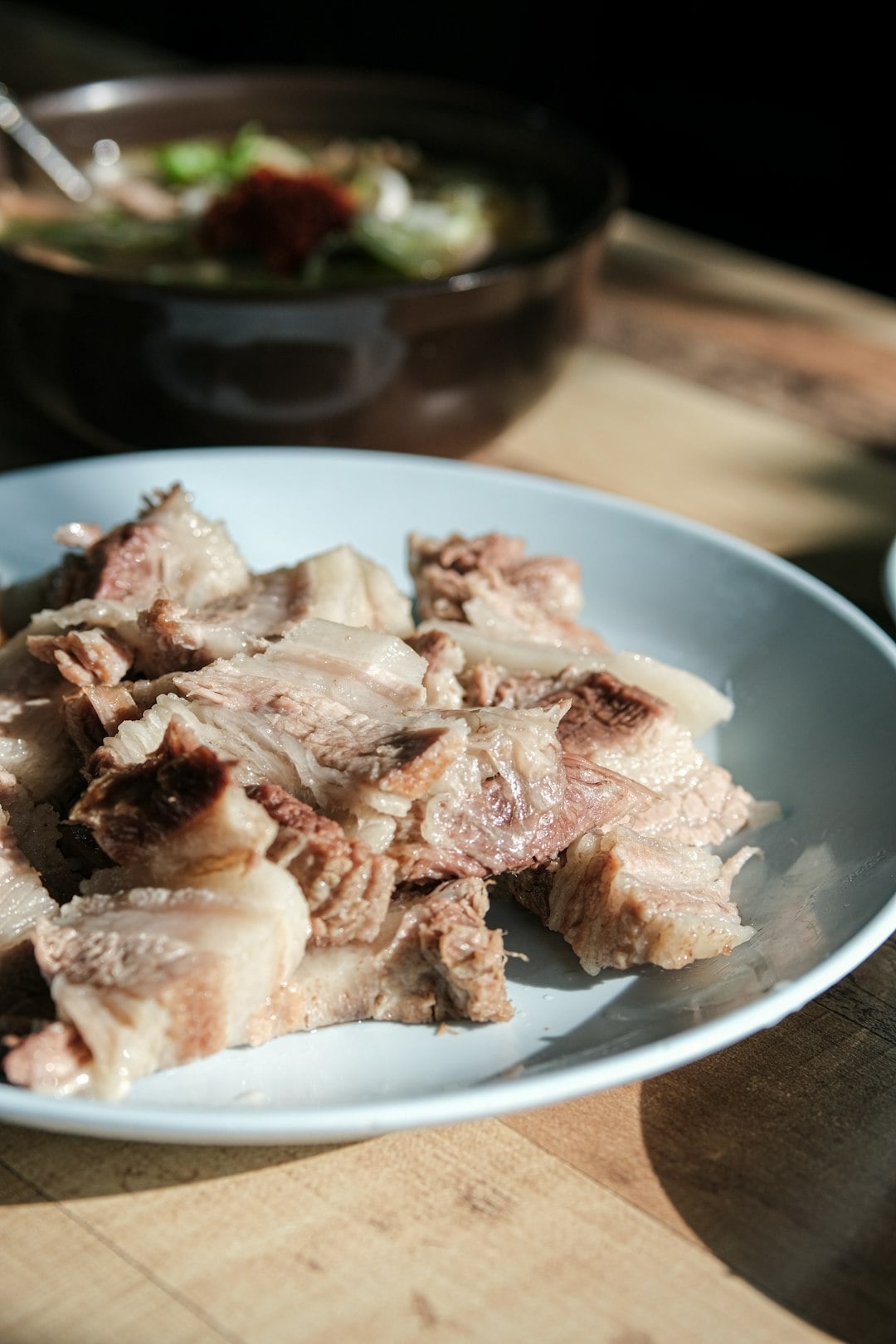
The word crubeen comes from the Irish crúibín, meaning a small hoof or claw. In practise, it meant a pig’s foot — specifically, the lower trotter — salted, boiled until tender, and sometimes lightly smoked.
They were cheap. Deeply flavourful. And utterly unpretentious.
You ate them with your hands, pulling the soft, gelatinous meat from the bone and letting the fat run down your fingers. A few slices of soda bread on the side. Nothing else was needed, and nothing else was offered.
The Saturday Night Ritual
In Cork, Dublin, and Limerick — and in dozens of rural towns besides — Saturday night in the pub had a rhythm to it. Men finished the week’s work. They cleaned up. They came in for a pint or two, maybe three.
And at some point in the evening, the crubeens would appear.
Some pubs kept a pot going quietly in the back. Others bought them in from a butcher who prepared them in bulk. In the cities, street vendors — often women who had been doing this work for years — would arrive at the door with a basket, selling them wrapped in newspaper for a few pence. The vendor was as familiar a figure as the barman himself.
It was not fine dining. It was not meant to be. It was sustenance at the end of a hard week, shared between friends, eaten without ceremony.
A Food Born of Necessity
☘️ Love Irish Food & Culture?
Every Wednesday, we send our best Irish recipes, food stories, and kitchen traditions straight to your inbox. Join 64,000+ readers who love Ireland.
Crubeens belong to a long tradition of Irish nose-to-tail eating. In a country where poverty was a recurring reality, nothing from a pig was wasted. The hocks, the snout, the ears, the trotters — all of it went into the pot.
Pigs were kept by families across rural Ireland, fed on scraps and slaughtered in autumn. The salted trotter was a way of preserving and stretching every last bit of value from an animal that had given a great deal already.
What began as survival became, over generations, something people genuinely loved. Taste and memory wound themselves together, and the crubeen became comfort food — the kind you associate with a particular place, a particular person, a particular version of Ireland that felt solid and whole.
If you enjoy exploring the deeper layers of Irish food culture, Dublin’s coddle carries a similar story — a dish born of thrift that became a city’s signature.
Why They Disappeared
The decline of the crubeen was quiet and swift. Through the 1980s and into the 1990s, Ireland changed. The economy shifted. Food culture shifted with it.
Pub snacks became crisps. Vendors stopped making the rounds. The younger generation, raised on different expectations, had little appetite for eating a pig’s foot in a bar.
EU food hygiene regulations played a role too. The informal economy of the pub vendor — warm trotters carried in a basket from door to door — did not fit easily into new frameworks of food safety certification. One by one, the baskets disappeared.
Nobody held a farewell. Nobody wrote a eulogy. The crubeen simply slipped away, and by the time people noticed, it was already mostly gone.
The Quiet Revival
Today, a small number of craft butchers and heritage food producers in Ireland still prepare crubeens. A few adventurous restaurant chefs have put them on menus, reimagined with fancier accompaniments — a piccalilli here, a sourdough crouton there.
It is not quite the same. But it is something.
Food writers and culinary historians have begun to document what was lost, arguing that crubeens deserve the same respectful revival as colcannon, champ, and drisheen. They are part of the honest record of how Irish people ate, what they valued, and what a Saturday night once felt like.
If you are planning a trip to Ireland and want to experience food with real roots, the Love Ireland planning guide can point you toward the kind of authentic local experiences that go well beyond the tourist trail.
The crubeen may never fully come back. But the story it tells — of a people who made something warm and communal out of very little — is as Irish as it gets.
Some things you only miss properly once they are gone. Ask anyone who remembers the Saturday night vendor, the newspaper wrapping, the smell of salt and steam drifting through an open pub door. Their eyes go somewhere distant. And then they smile.
☘️ You Might Also Love
64,000 Ireland lovers can’t be wrong.
Every week, our free newsletter delivers hidden gems, seasonal guides, local stories, and practical travel tips — straight to your inbox. Join the community that loves Ireland as much as you do.
☘️ Get More Irish Recipes & Stories
Join 64,000+ readers for weekly Irish recipes, food traditions, travel guides, and hidden gems. Free every morning.
📥 Free Download: Ireland Travel Planning Guide
Our most popular resource — itineraries, insider tips, and the 50 places you must not miss.
Tours & experiences you might love


Powered by Viator. Some links are affiliate links — we may earn a small commission at no extra cost to you.
Secure Your Dream Irish Experience Before It’s Gone!
Planning a trip to Ireland? Don’t let sold-out tours or packed attractions spoil your journey. Iconic experiences like visiting the Cliffs of Moher, exploring the Rock of Cashel, or enjoying a guided walk through Ireland’s ancient past often sell out quickly—especially during peak travel seasons.

Booking in advance guarantees your place and ensures you can fully immerse yourself in the rich culture and breathtaking scenery without stress or disappointment. You’ll also free up time to explore Ireland’s hidden gems and savour those authentic moments that make your trip truly special.
Make the most of your journey—start planning today and secure those must-do experiences before they’re gone!