

Picture a February morning on a Connacht hillside. Wind cutting off the Atlantic. Rain driving sideways through the heather. A priest kneels behind a boulder, sets a chalice on a flat stone, and begins the words that could see him hanged.
The congregation — perhaps forty farmers, women, and children — kneels in the wet grass. Someone has posted a lookout on the ridge above. This is how Mass was celebrated in Ireland for more than a century.
When Faith Became a Crime
In the late seventeenth century, the British Crown enacted the Penal Laws — a sweeping set of restrictions designed to suppress Catholic life in Ireland. Catholics could not own land above a certain value. They could not vote, practise law, or send their children to school.
They could not, legally, celebrate Mass.
A bounty was placed on the heads of Catholic priests — five pounds, the same price as a wolf. Priests who were caught faced transportation, imprisonment, or execution. The institutional church was, for all practical purposes, outlawed.
Yet the Mass continued. Week after week, in places where soldiers rarely thought to look.
What Was a Mass Rock?
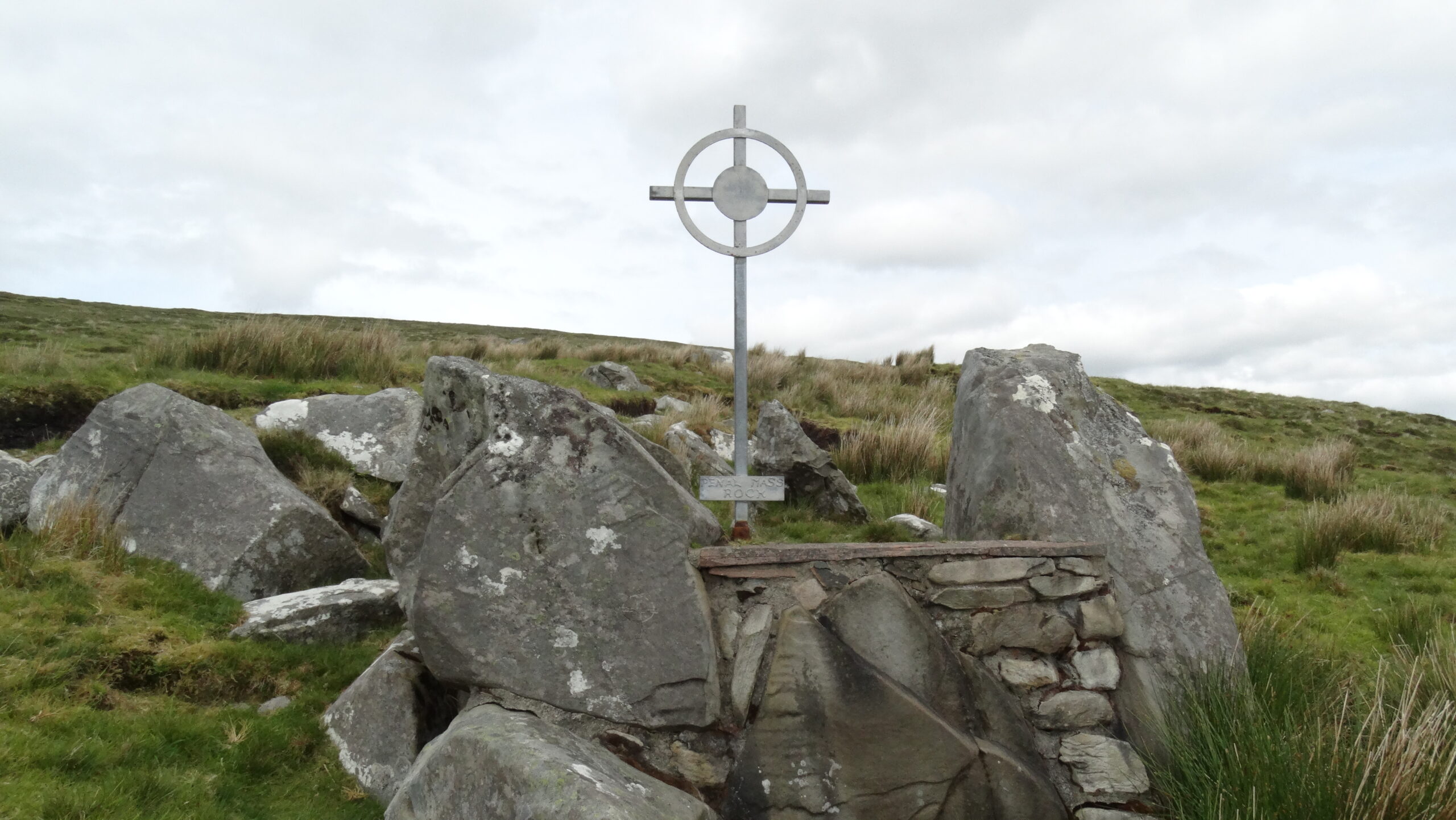
A Mass rock was a flat, naturally occurring stone pressed into service as an outdoor altar. Congregations gathered on remote hillsides, in hidden glens, behind dry-stone walls, and at the edges of bogs — anywhere the landscape offered cover and a clear view of approaching danger.
A linen cloth was laid over the stone. A chalice placed on top. A congregation knelt in the mud and the heather.
In bad weather — and in Ireland, there is always bad weather — they knelt anyway. The prayers were spoken quietly. Everyone kept one eye on the ridge.
The Lookout System
Nothing was left to chance. Word of an outdoor Mass was passed discreetly between trusted neighbours — never written down, never announced openly in the hearing of strangers.
Before the congregation gathered, a lookout would take position on high ground, watching the roads. At the first sight of soldiers or informers, a signal was given. The crowd scattered. The priest disappeared into the congregation — suddenly just another farmer with muddy boots.
Some Mass rocks were used dozens of times over several decades. Their locations were held as closely as any family secret, passed from generation to generation, known only to those who needed to know.
This quiet, stubborn determination to preserve faith under impossible conditions was the same impulse that kept the hedge schools alive in the same era. The story of the secret schools hidden in Irish hedgerows that kept a civilisation alive runs almost exactly parallel — the same communities, the same defiance, the same hillsides.
The Rocks That Survive Today
Hundreds of Mass rocks survive across Ireland. You’ll find them on mountain trails in Kerry and Mayo, tucked into hillsides in Wicklow, and hidden behind hedgerows in Connacht. Croagh Patrick in County Mayo — Ireland’s sacred pilgrimage mountain — has a particular association with this era of hidden worship.
Most Mass rocks are unmarked. Some carry a simple plaque. All carry a particular weight.
Walk Ireland’s back roads and you may come across a flat, weathered stone that a local treats with quiet reverence. Ask an older person about it and they’ll often say simply: “That’s a Mass rock.” Nothing more is needed. The place speaks for itself.
Ireland’s landscape holds many such places of hidden devotion — the ancient sacred wells that Irish people still visit when they need a miracle carry the same quality of faith worn into stone over centuries.
Why People Still Come
Catholic Emancipation in 1829 ended the Penal Laws and made open worship legal again. But the Mass rocks outlasted the laws that made them necessary.
Some communities continued to gather at their local rock even after proper churches were built — out of habit, perhaps, or out of something harder to name. A feeling that the place had earned its holiness through suffering, not through ceremony.
Outdoor Masses are still occasionally celebrated at historical Mass rock sites today, particularly on feast days and pattern days. People travel considerable distances to attend. There is something about standing where your ancestors once knelt, in the same wind and the same rain, that no church interior can replicate.
If you want to seek out this layer of Irish history on your visit, start planning your trip to Ireland here — many county heritage centres and walking trail guides can point you towards local Mass rock sites that rarely appear in tourist literature.
Finding a Mass Rock
The west of Ireland has the highest concentration of surviving Mass rocks — County Mayo, County Kerry, and County Galway in particular. Local heritage offices in most counties hold records, and community history groups often organise guided walks to nearby sites.
No coach party will stop there. No tour guide will flag it. But for visitors who want the Ireland that doesn’t appear in the brochures, a Mass rock on a rain-soaked hillside may be the most honest thing you ever encounter on this island.
These stones were never consecrated, never inscribed with anything to mark what they were. They were just rocks — until ordinary people made them holy through sheer refusal to give up what they believed. Stand at one on a grey Mayo morning, and you’ll understand exactly what Ireland is made of.
☘️ You Might Also Love
☘️ Want More Hidden Ireland?
Join 64,000+ subscribers who discover Ireland’s best-kept secrets every week.
Subscribe Free — Join the Community →
Free forever · Unsubscribe anytime · No spam
📥 Free Download: Ireland Travel Planning Guide
Our most popular resource — itineraries, insider tips, and the 50 places you must not miss.
Tours & experiences you might love


Powered by Viator. Some links are affiliate links — we may earn a small commission at no extra cost to you.
Secure Your Dream Irish Experience Before It’s Gone!
Planning a trip to Ireland? Don’t let sold-out tours or packed attractions spoil your journey. Iconic experiences like visiting the Cliffs of Moher, exploring the Rock of Cashel, or enjoying a guided walk through Ireland’s ancient past often sell out quickly—especially during peak travel seasons.

Booking in advance guarantees your place and ensures you can fully immerse yourself in the rich culture and breathtaking scenery without stress or disappointment. You’ll also free up time to explore Ireland’s hidden gems and savour those authentic moments that make your trip truly special.
Make the most of your journey—start planning today and secure those must-do experiences before they’re gone!