

The first time you walk into an Irish pub during a trad session, something shifts. It’s not just the music — it’s the feeling that everyone in the room is in on something you’ve never been told. No guidebook explains it. No sign on the door. But the rules are very much there, and the locals know every one of them.
Nobody Announces the Session
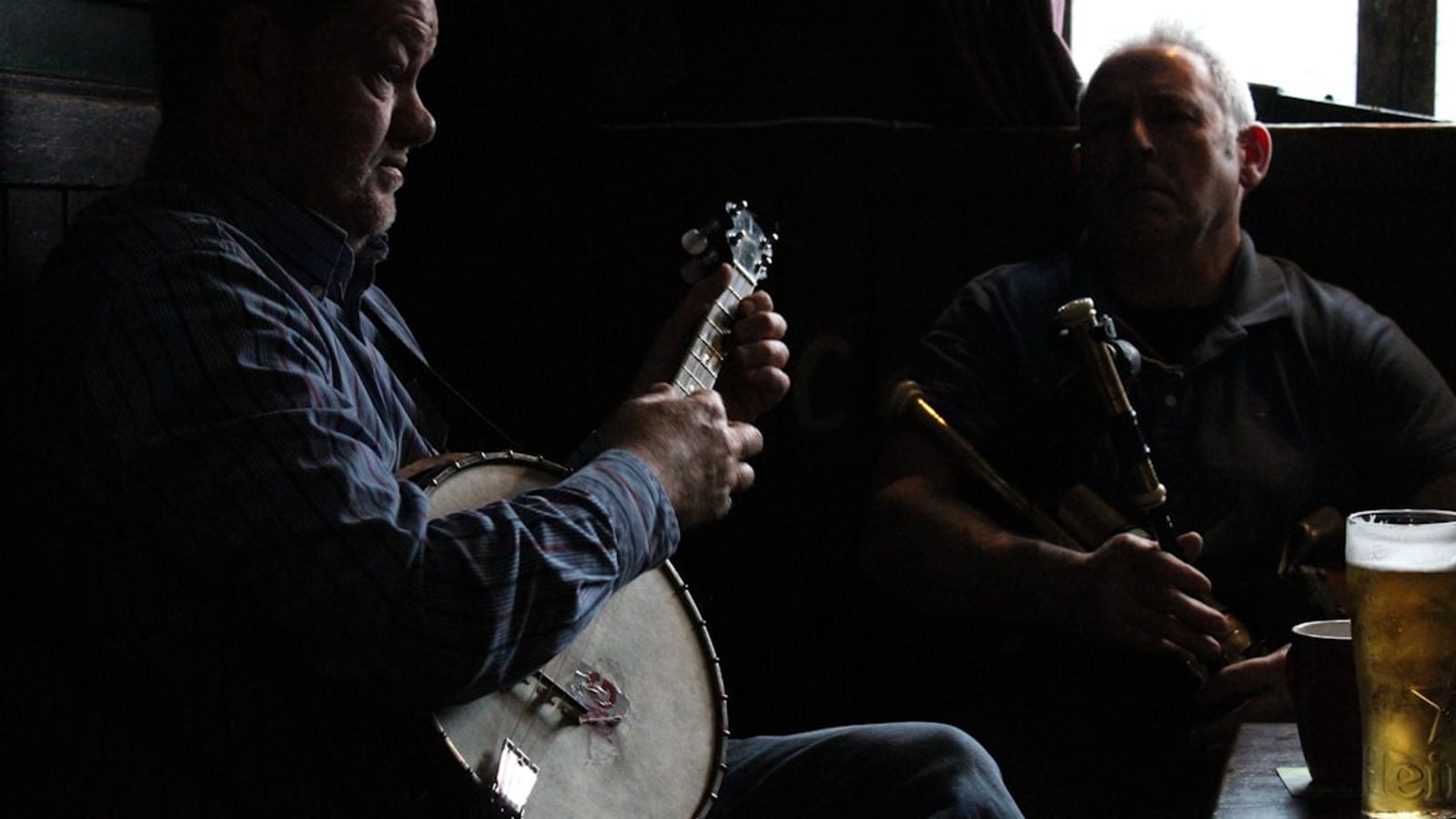
Walk into a pub in Doolin, Galway, or Killarney on a Thursday evening and you’ll find a cluster of musicians in a corner. There’s no stage. No microphone. No spotlight. Just a rough circle of chairs near the bar and a collection of instruments resting on laps.
Nobody announces the session. Nobody takes a bow. It begins when one player starts a reel and the others fall in. This is entirely deliberate. Trad sessions aren’t performances. They’re gatherings.
If you applaud after every tune, you’ll mark yourself out as a visitor immediately. The done thing is a quiet “well done” to the nearest musician, or simply buying them a pint. Enthusiastic clapping between every set belongs at a concert — not here.
Sessions like these can be found across Ireland, especially in the west. Doolin in County Clare is one of the most famous session villages in the country — a place so small you could walk its entire main street in five minutes, yet its music culture is known around the world.
There Is No Setlist
Sessions run entirely on instinct and memory. No one calls out a tune title. No one agrees on what’s next. A player starts something and the others follow — or they don’t.
This is called “the lead.” Whoever starts a tune sets the key, the tempo, and the version. If your version of The Morning Dew is slightly different from the one being played, you adapt. There are no rehearsals and no second takes. If you lose the thread, you stop playing and wait for the next tune.
Tunes are passed down by ear, not sheet music. Many traditional musicians can’t read a note — and some take pride in that. The music lives in the memory and the hands, not on a page. That’s how it has been for centuries, and it’s how the culture survives.
You’ll notice too that the same tune is rarely played twice in an evening. Sessions flow through sets — groups of two or three related tunes in the same key — before shifting to something new. The transitions are seamless to the trained ear. To a newcomer, it can feel like one long continuous river of sound.
Singing Is Its Own World
Singing and instrumental music operate under entirely different rules. At a pure music session, singing is not welcome unless the session is mixed — meaning it includes songs as well as tunes. Get this wrong and you’ll feel the room cool faster than a Clare winter.
When a singer is given the floor at a mixed session, every sound in the room drops. No whispering at the bar. No clinking glasses. The singer finishes, the room applauds warmly, and conversation resumes. This moment — the sudden hush — is one of the most startling and beautiful things about Irish music culture if you’ve never witnessed it before.
Sean-nós singing commands even more silence. This ancient, unaccompanied style survives in the Irish-speaking Gaeltacht regions of Connemara, Kerry, and Donegal. A sean-nós singer might close their eyes or turn slightly inward. The room follows. To interrupt a sean-nós singer is considered deeply disrespectful.
☘️ Enjoying this? 64,000+ Ireland lovers get stories like this every week. Subscribe free →
The Bodhrán Debate
Ask any Irish musician about the bodhrán and watch their expression change. The goatskin drum is the most controversial instrument in Irish traditional music — loved by some, quietly dreaded by others.
At a good session, a skilled bodhrán player locks into the rhythm of the room, holding the beat without ever drowning the melody. At a bad one, an enthusiastic beginner hammers away without reading the room, and the music slowly suffocates. Experienced players have been known to stop playing entirely until the message gets through.
There’s an old joke — almost certainly invented — that the bodhrán sounds best when it isn’t playing. Most session musicians don’t fully mean it. But it tells you something important about trad culture: everyone has strong opinions, and the unspoken social rules exist to protect the music above all else.
The banjo — another instrument with a complicated history in Ireland — is treated with similar care. If you’re curious about how the banjo became a part of Irish music, it’s a fascinating story in its own right.
The Geography of the Session Circle
Where you sit in the room matters more than you might think. The inner circle — the chairs closest to the musicians — is for players. The outer ring is for listeners. If you don’t play, you sit outside the circle. You don’t push through it for a better look.
If you do play an instrument, the invitation works like this: take it out. Sit near the circle. Listen for a while. When the moment feels right, join in quietly. No one will formally say you can or can’t — you’ll simply feel when the time is right.
That moment — when a newcomer finds the groove and the regular musicians give a small nod or glance of acknowledgement — is one of the most quietly moving things in Irish musical culture. You don’t need to speak Irish or have an Irish grandmother. You just need to listen before you play.
Where to Find the Real Sessions
The pubs that advertise trad sessions with neon signs and seat musicians on a platform near the front door are generally catering to visitors. The music is still real. There’s nothing wrong with enjoying it.
But the sessions with the most life are usually in places that don’t advertise at all. A back room in a Clare town. A small pub in Connemara where the owner is also the fiddle player. A city pub that looks like it hasn’t been painted since 1974. The musicians show up because they want to. There’s no pay. Just music and the understanding that this is something worth showing up for.
Before you go, it’s worth knowing which pubs are known for sessions in the area you’re visiting. The history behind Irish pub names can also tell you a lot about the character of a place before you ever walk through the door. And if you’re planning a broader trip, the Ireland planning guide is a good place to start.
A trad session, done properly, is one of the most genuinely Irish experiences a visitor can have. Not because it performs Irishness — but because it ignores the audience entirely and simply gets on with being itself. That, more than anything, is what makes it real.
☘️ You Might Also Love
☘️ Join 64,000+ Ireland Lovers
Every Friday, get Ireland’s hidden gems, local secrets, and travel inspiration — the kind you won’t find in any guidebook.
Free forever · · Unsubscribe anytime
☘️ Want More Hidden Ireland?
Join 64,000+ subscribers who discover Ireland’s best-kept secrets every week.
Subscribe Free — Join the Community →
Free forever · Unsubscribe anytime · No spam
📥 Free Download: Ireland Travel Planning Guide
Our most popular resource — itineraries, insider tips, and the 50 places you must not miss.
Tours & experiences you might love


Powered by Viator. Some links are affiliate links — we may earn a small commission at no extra cost to you.
Secure Your Dream Irish Experience Before It’s Gone!
Planning a trip to Ireland? Don’t let sold-out tours or packed attractions spoil your journey. Iconic experiences like visiting the Cliffs of Moher, exploring the Rock of Cashel, or enjoying a guided walk through Ireland’s ancient past often sell out quickly—especially during peak travel seasons.

Booking in advance guarantees your place and ensures you can fully immerse yourself in the rich culture and breathtaking scenery without stress or disappointment. You’ll also free up time to explore Ireland’s hidden gems and savour those authentic moments that make your trip truly special.
Make the most of your journey—start planning today and secure those must-do experiences before they’re gone!