

On winter nights in rural Ireland, before electricity reached the farms and before television changed the evenings, something remarkable happened. The kettle went on, a chair was pulled to the fire, and one by one, the neighbours arrived. Nobody sent a message. Nobody needed to. Everyone already knew where to go.
The House That Everyone Came To
Not every house in a townland hosted gatherings. One family — usually chosen by tradition or the simple warmth of their welcome — became what locals called the céilí house, or teach an airneáin in Irish. Roughly translated, it means the house for evening visiting.
This was not a formal event. No invitations were sent. Neighbours simply appeared after the day’s work was done, usually well after dark, and stayed until it was time to go home.
The same house would draw visitors night after night, week after week, all winter long. Some families held this role for generations. It was considered an honour, and a responsibility.
What Actually Happened Around the Fire
The hearth was the centre of everything. Turf burned slowly, throwing warmth across the flagstone floor. People sat on whatever was available — stools, upturned creels, the edge of the settle bed.
Conversation came first. News from the parish, disputes about land, word of people who had emigrated years before. Then, almost naturally, the storytelling began.
The best storyteller in any townland could hold a room in silence for an hour. These were not short tales. They were long and looping, full of detours and moral turns. A single story might carry an entire evening.
Music followed when the mood called for it. A fiddle, a tin whistle, sometimes just a voice singing unaccompanied. No stage, no performance — just sound filling a low-ceilinged room, while rain tapped against the small window.
☘️ Enjoying this? 64,000+ Ireland lovers get stories like this every week. Subscribe free →
The Storytellers at the Heart of It
The most valued presence in any céilí house was the seanchaí — the keeper of stories. Some had memories stretching back generations, holding accounts of local battles, fairy encounters, and old land disputes entirely in their heads.
The wandering Irish storytellers who preserved history for centuries passed their knowledge through exactly these kinds of gatherings. Without a willing audience sitting around a fire, that knowledge had nowhere to go.
Children often stayed up past their usual bedtime on céilí evenings. They heard things that would stay with them for the rest of their lives — not as lessons handed down, but as stories absorbed in the half-dark beside the fire.
The activities in céilí houses varied by county and generation. Riddles were common. Card games appeared later in the evening. Occasionally, a space was cleared and someone danced — not a performance, just a few steps because the music demanded it.
Why It Ended
The céilí house tradition began to fade in the early twentieth century. Schools brought standardised education. Radio arrived in the 1920s and 1930s. By the time television reached rural Ireland in the 1960s, people had somewhere else to look.
Electrification changed the evening completely. Suddenly every house had its own light, warmth, and entertainment. There was no longer a compelling reason to walk across dark fields to sit in someone else’s kitchen.
Emigration and rural depopulation emptied many townlands of the young. When the regular visitors stopped coming, the tradition quietly ended — in most places, before anyone thought to record it.
What Still Survives
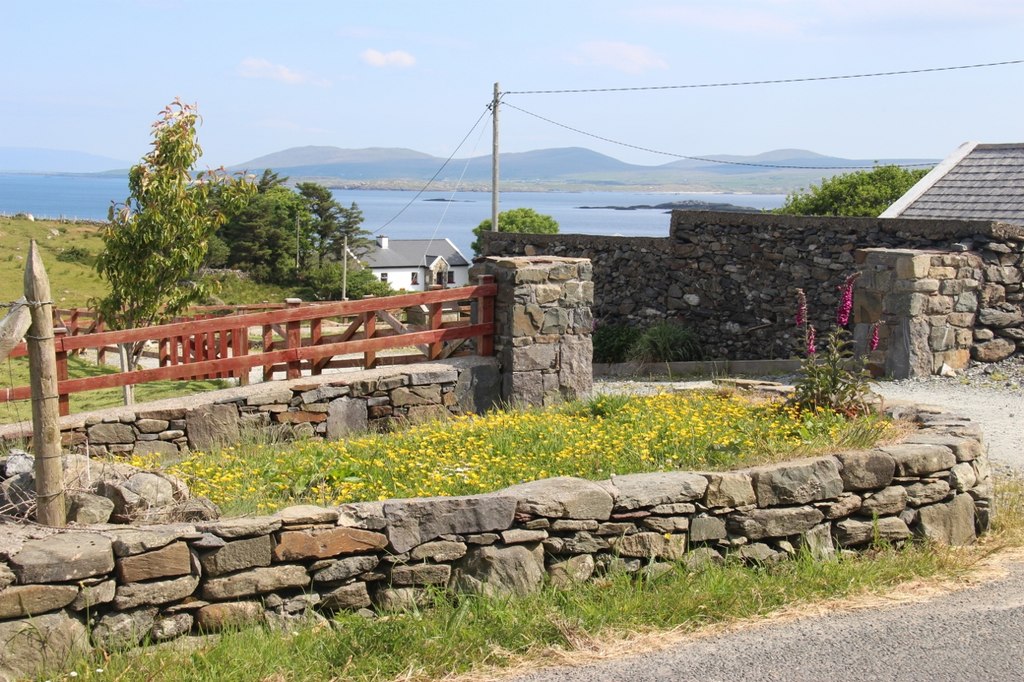
In the Gaeltacht communities along Ireland’s western seaboard, traces of this tradition survived longest. The wild Atlantic villages where the Irish language never surrendered maintained a version of the céilí house well into the late twentieth century.
Today, the trad session in an Irish pub carries echoes of those cottage kitchens. The principle is the same — music and conversation in a shared space, with no script and no stage.
But the intimacy of the original is difficult to replicate. Those winter gatherings were not entertainment. They were community, built night by night through the simple act of showing up at the right door.
If you visit rural Ireland today, you might pass a farmhouse with its lights on and wonder what stories those walls still hold. The céilí house tradition may be mostly gone — but the Irish instinct for gathering, for sitting together and talking through the night, never fully disappeared. It just moved somewhere more public, and lost a little of its magic in the process.
Planning a trip to discover Ireland’s living traditions? Start here with our Ireland planning guide.
☘️ You Might Also Love
Tours & experiences you might love


Powered by Viator. Some links are affiliate links — we may earn a small commission at no extra cost to you.
Secure Your Dream Irish Experience Before It’s Gone!
Planning a trip to Ireland? Don’t let sold-out tours or packed attractions spoil your journey. Iconic experiences like visiting the Cliffs of Moher, exploring the Rock of Cashel, or enjoying a guided walk through Ireland’s ancient past often sell out quickly—especially during peak travel seasons.

Booking in advance guarantees your place and ensures you can fully immerse yourself in the rich culture and breathtaking scenery without stress or disappointment. You’ll also free up time to explore Ireland’s hidden gems and savour those authentic moments that make your trip truly special.
Make the most of your journey—start planning today and secure those must-do experiences before they’re gone!