

Ireland has more castles per square kilometre than almost anywhere else on earth. Over 3,000 still stand today — from crumbling clifftop ruins to working luxury hotels. Whether you want to walk the battlements of a 12th-century Norman fortress or sleep in a four-poster bed inside a medieval tower, Ireland has a castle for you. This guide covers the lot.
Love Irish history and travel? Get our free weekly newsletter — stories, heritage guides, and hidden corners of Ireland delivered to your inbox. Subscribe free here →
Why Does Ireland Have So Many Castles?
The short answer is centuries of conflict. After the Norman invasion in the 12th century, Anglo-Norman lords built tower houses and fortresses to hold territory against Gaelic chieftains, rival clans, and later English forces. By the 15th and 16th centuries, tower houses — squat, stone-built family strongholds — were being put up all over the island at a rate of several per year.
Unlike much of continental Europe, where many medieval structures were demolished and built over, Ireland’s relative lack of heavy industrialisation in the 18th and 19th centuries meant ruins simply stayed where they fell. That is why you can find a crumbling castle in the middle of a sheep field, or a perfectly preserved tower house guarding the bend of a river, with barely a signpost to mark it.
Today, the Office of Public Works maintains many of the best-preserved examples among its roughly 780 heritage sites nationwide. Thousands more are in private hands, incorporated into farms, or left to the elements.
Cliffside and Coastal Castles
Ireland’s coastline produced some of the most dramatic castle locations in Europe. These are the ones worth driving out of your way for.
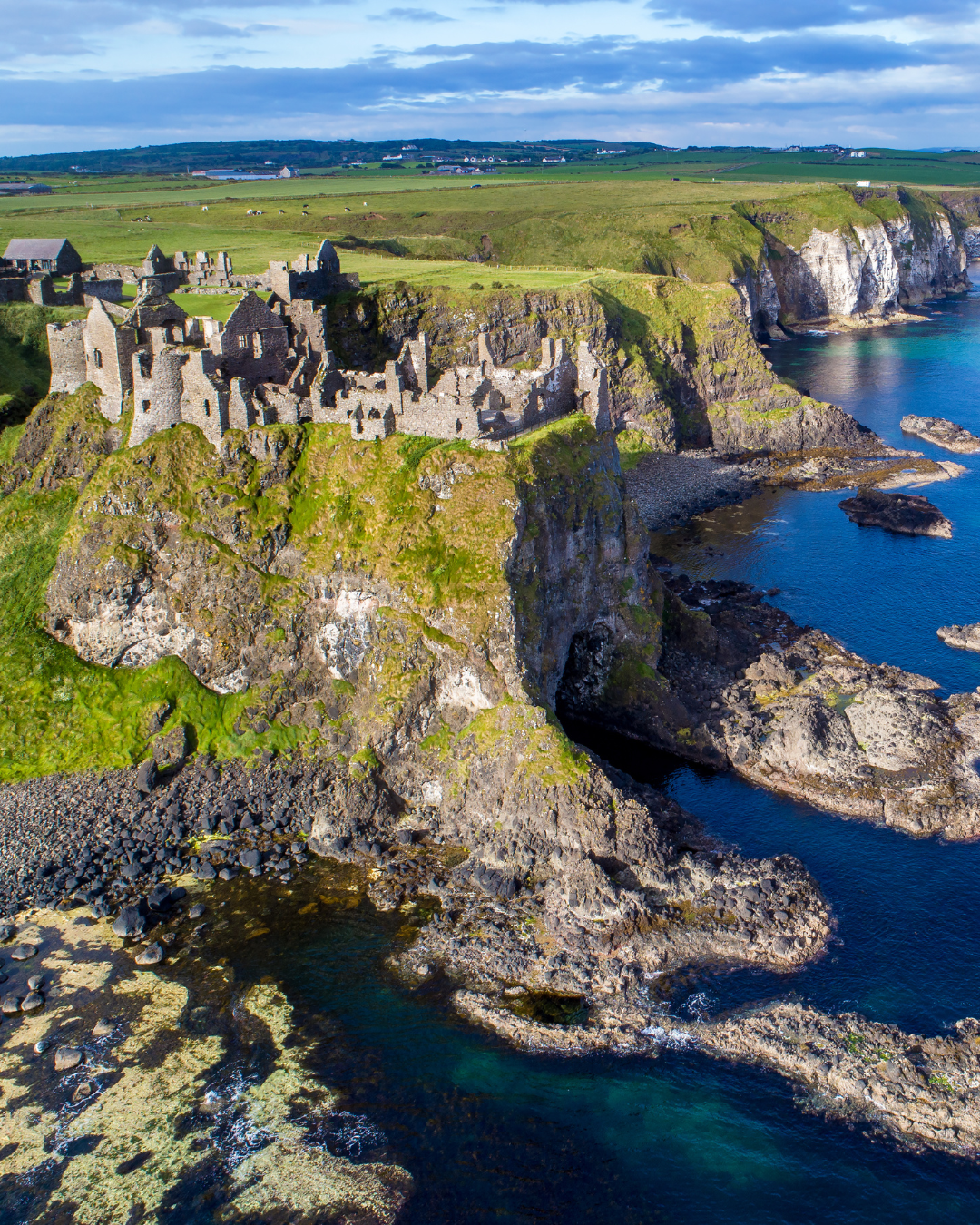
Dunluce Castle, Co. Antrim — Perched on a basalt headland on the Antrim coast, Dunluce is arguably the most photographed ruin in Ireland. The castle was built around 1500 by the MacQuillan family and later became the seat of the MacDonnell clan, who seized it in the 1550s. A section of the kitchens fell into the sea during a storm in 1639, reportedly mid-dinner. Entry is around £6. It sits a short drive from the Giant’s Causeway, so combine both in one day.
Dunlough Castle, Co. Cork — Far less visited than Dunluce and more remote for it. Dunlough stands at the tip of the Mizen Peninsula, perched on 100-metre cliffs above the Atlantic. There is no car park or tearoom — just a walk across the headland and one of the most striking views in the country. Free to visit.
Ross Castle, Co. Kerry — On the shores of Lough Leane in Killarney National Park, Ross Castle is one of the best-preserved tower houses in Ireland. Built by the O’Donoghue Mór clan in the late 15th century, it was one of the last Irish strongholds to fall, surrendering to Cromwellian forces in 1652. Guided tours run daily in season. Entry around €5. You can also hire a rowing boat and reach it by water.
Dunguaire Castle, Co. Galway — A 16th-century tower house sitting on the shores of Galway Bay near Kinvara. Compact and well-preserved, it makes for a short but rewarding stop on the Wild Atlantic Way. Medieval banquets are held here in summer if that is your thing.
Castles You Can Actually Sleep In
A handful of Ireland’s great houses and castles have been converted into hotels. Some are genuinely extraordinary places to stay.
Ashford Castle, Co. Mayo — Built in 1228 and expanded over the centuries, Ashford is now a five-star hotel on the shores of Lough Corrib. It has been visited by everyone from John Wayne to King George V. Rooms start at around €550 a night. Activities include falconry, clay shooting, and boat trips on the lough. Even if you are not staying, the grounds are open to day visitors for a fee.
Dromoland Castle, Co. Clare — Another five-star, this one a 16th-century castle hotel set in 450 acres near Newmarket-on-Fergus. The O’Brien clan — descendants of High King Brian Boru — built the original structure. Today it has a championship golf course, spa, and fine dining. Rates from around €450 per night (considerably more in high season).
Castle Leslie, Co. Monaghan — A Victorian castle on the shores of Glaslough Lake. Less famous than Ashford or Dromoland, but popular for a reason: it is more accessible in price (rooms from around €150), genuinely atmospheric, and sits in quiet, overlooked Monaghan countryside. Sir Paul McCartney married Heather Mills here in 2002.
Ballynahinch Castle, Co. Galway — Set in Connemara on the banks of the Owenmore river, Ballynahinch is a 450-acre estate with a fishing hotel at its centre. Past guests include Maharaja Ranjitsinhji, who owned the estate in the early 20th century. Rates from around €200 per night. Fishing permits are available if salmon is your ambition.
Planning an Irish castle trip? Our newsletter covers the best heritage sites, seasonal guides, and practical travel tips for Ireland — all free. Join thousands of readers here →
The Best Castles for History
Trim Castle, Co. Meath — The largest Norman castle in Ireland, Trim was built by Hugh de Lacy from 1176 onwards. The massive square keep dominates the town. It was used as a location for Braveheart in 1994. Entry to the keep (guided tour only) is around €5; general grounds access is around €4. Meath itself is castle country — combine Trim with the nearby Hill of Tara and Bective Abbey for a full day.
Rock of Cashel, Co. Tipperary — Technically a rock fortress rather than a classic castle, but no list of Irish strongholds is complete without it. The Rock has been a seat of power since at least the 5th century. It includes a round tower, Romanesque chapel, cathedral, and the Hall of the Vicars Choral. Sit on a hillside café terrace and look across to it at sunset. Entry around €8.
Kilkenny Castle — In the centre of Kilkenny city, this 12th-century castle was the seat of the Butler dynasty for almost 600 years. It is now managed by the OPW and open year-round. The restored Long Gallery and the Butler Gallery inside are both worth your time. Entry to the castle is around €8 (children under 12 and Heritage Card holders go free); the formal gardens are free to enter. A practical base: Kilkenny has excellent food and accommodation.
Cahir Castle, Co. Tipperary — One of the largest and best-preserved castles in Ireland, sitting on a rocky island in the River Suir in the town of Cahir. It was built by the Butler family in the 15th century and has appeared in several films. Entry around €5. The audio guide is actually good — worth picking up.
Lesser-Known Castles Worth Seeking Out
Glenveagh Castle, Co. Donegal — A 19th-century Scottish baronial castle in the heart of Glenveagh National Park. The interior is beautifully preserved, full of art and antiques collected by its last private owner, Henry McIlhenny of Tabasco sauce fortune. You reach it by shuttle bus from the visitor centre. Entry around €10 for the self-guided castle tour, including the gardens.
Leap Castle, Co. Offaly — Private and largely in ruin, Leap is reputed to be one of the most haunted places in Ireland. The oubliette — a hidden pit used to dispose of prisoners — was discovered in the early 1900s and allegedly contained the remains of dozens of people. Tours run by the owners. Not for everyone, but memorable.
Bunratty Castle, Co. Clare — Just ten minutes from Shannon Airport, Bunratty is the most visited castle in Ireland and a logical first or last stop on a trip. The 15th-century tower house is fully furnished to period standard. The surrounding folk park recreates 19th-century Irish village life. Medieval banquets run in the evenings. Entry around €15 for the full castle and folk park experience.
Practical Tips for Visiting Irish Castles
Heritage Card — If you plan to visit more than four or five OPW-managed sites, the Heritage Card pays for itself. It costs around €40 for adults and covers unlimited entry to all OPW properties, including Kilkenny Castle, Cahir, Rock of Cashel, and many more. Buy it at any OPW site or online.
Opening hours — Many castles close or reduce hours from October to March. Always check the OPW website before making a special journey. Some private castles (like Leap) operate tours by appointment only.
Getting around — A hire car is the most practical option for castle-hopping. Public transport reaches the major towns (Kilkenny, Cashel, Trim) but not most rural sites. The Wild Atlantic Way route passes dozens of coastal castles and is well signposted.
Photography — Late afternoon light is best for most of the dramatic coastal ruins. Dunluce faces west across the Atlantic and catches extraordinary evening light in summer. Arrive at least an hour before closing if you want the castle with fewer people in frame.
Respect the sites — Ruins can be genuinely dangerous. Stick to marked paths at unstable structures like Dunlough. Do not attempt to climb walls or access areas that are fenced off.
Where to Start
If you only have a few days and want a varied route, this works well: fly into Dublin, head west via Trim Castle (Co. Meath), continue to Athlone Castle (midlands), drop south to Cahir and Rock of Cashel (Tipperary), across to Bunratty and Dunguaire (Clare and Galway), then north along the Wild Atlantic Way to Connemara and on to Donegal. Coming back east, the Antrim coast and Dunluce Castle make a logical finish before Belfast.
That is a ten-day route and barely scratches the surface. Most people who start visiting Irish castles find they cannot stop. There is always another ruin around the next headland, another tower house in the next field, another door that leads somewhere unexpected.
Get more Ireland in your inbox. Our free newsletter covers castle guides, heritage travel, and the stories behind the places — every week. Subscribe for free →
Tours & experiences you might love


Powered by Viator. Some links are affiliate links — we may earn a small commission at no extra cost to you.
Secure Your Dream Irish Experience Before It’s Gone!
Planning a trip to Ireland? Don’t let sold-out tours or packed attractions spoil your journey. Iconic experiences like visiting the Cliffs of Moher, exploring the Rock of Cashel, or enjoying a guided walk through Ireland’s ancient past often sell out quickly—especially during peak travel seasons.

Booking in advance guarantees your place and ensures you can fully immerse yourself in the rich culture and breathtaking scenery without stress or disappointment. You’ll also free up time to explore Ireland’s hidden gems and savour those authentic moments that make your trip truly special.
Make the most of your journey—start planning today and secure those must-do experiences before they’re gone!