

Listen to a traditional Irish session in any pub from Cork to Donegal and you’ll hear it — that bright, cutting ring that somehow anchors everything around it. It sounds like it was born here. It wasn’t.
The banjo is one of the most recognisable sounds in Irish traditional music. Yet its journey to Ireland is a story that winds through West Africa, American slavery, immigrant communities, and the smoky back rooms of music halls that no longer exist. Understanding where the banjo came from changes how you hear it when it rings out on a Tuesday night in Ennis.
An Instrument Born in West Africa
The banjo’s most distant ancestors were African gourd-bodied lutes — instruments like the akonting from Senegal and the ngoni from Mali. These were built from hollowed gourds with skin stretched across the body, and strings made from whatever materials were available.
When enslaved Africans were brought across the Atlantic, they carried their musical traditions with them. In the Caribbean and the American South, they built new versions of their instruments from plantation materials. Early European accounts from Virginia and Barbados, written in the 1600s and 1700s, describe these instruments with a mixture of curiosity and wonder.
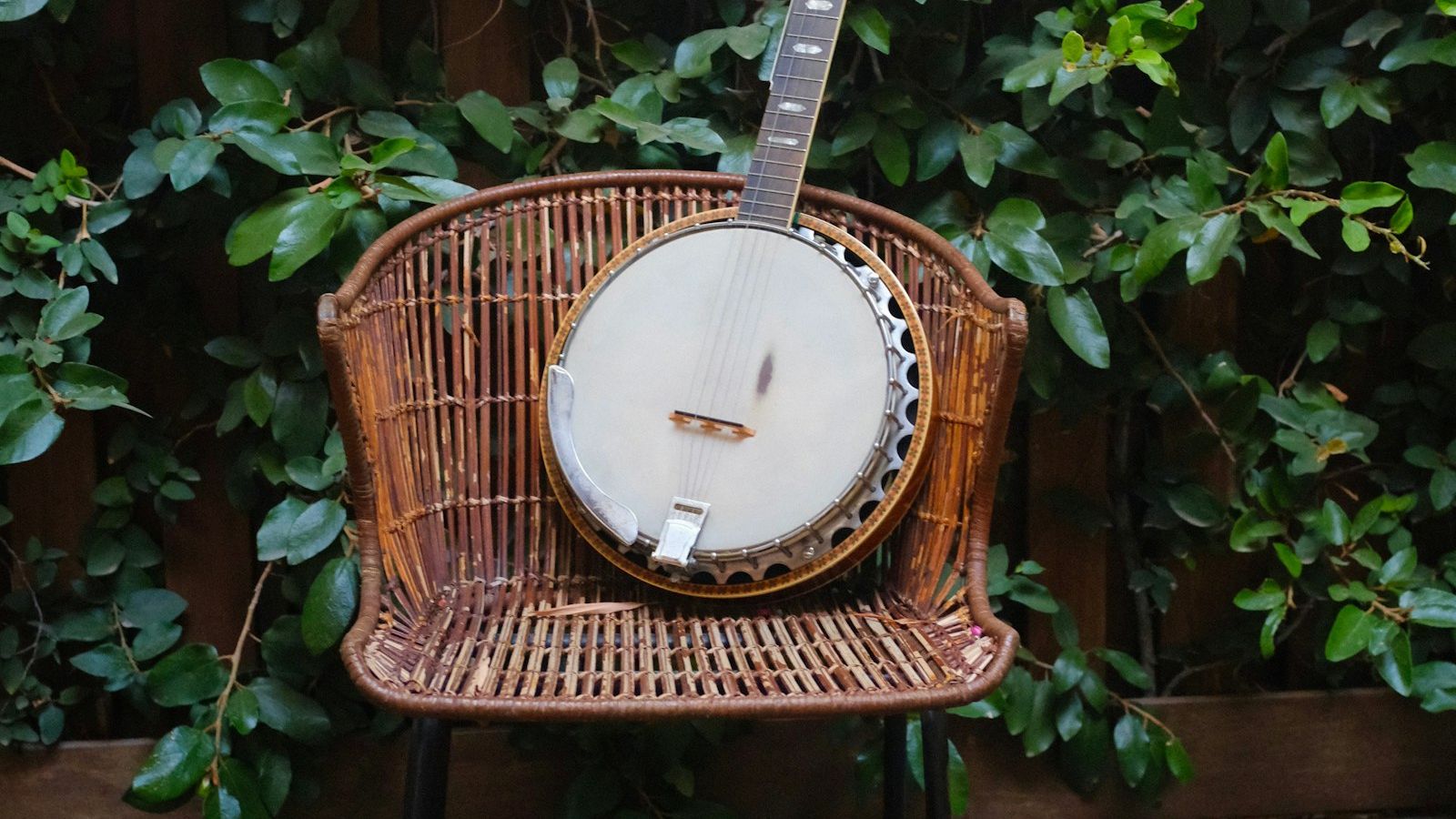
By the 18th and early 19th century, what we now call the banjo — round drum body, parchment head, long neck, four or five strings — was being played throughout the American South. It was African-American in origin, in character, and in spirit. That needs to be said plainly, because the instrument’s story gets complicated quickly.
The Famine Road Led Through American Cities
When the Great Famine of the 1840s forced millions of Irish people onto emigrant ships, many landed in the same cities as large Black American communities. In New York’s Five Points district, in the docklands of New Orleans, in the mill towns of Massachusetts, Irish and African-American communities lived side by side — not always easily, but in close enough proximity to create real cultural exchange.
The minstrel shows of the mid-19th century — exploitative, racist performances that nonetheless spread African-American musical forms to white American audiences — introduced the banjo far and wide. By the 1870s and 1880s, parlour banjo was fashionable across America’s middle classes. It was everywhere.
Irish immigrants heard it, picked it up, and began bringing it into their own music-making. Some brought the instrument back to Ireland when they returned. Others sent instruments and sheet music home. Slowly, the banjo began appearing in Irish households and music circles — a curious new addition to a very old tradition.
The Four-String Adaptation That Changed Everything
Here is where Irish ingenuity comes in. Americans mostly played a five-string banjo, with a short drone string running partway up the neck — well suited to American folk styles, but awkward for Irish reels and jigs. Irish musicians gravitated instead to the tenor banjo: four strings, shorter neck, tuned like a violin (G-D-A-E) or occasionally like a viola (C-G-D-A).
This was a crucial decision. Any fiddle player could translate their knowledge directly onto the tenor banjo. The same tunes, the same ornamentations, the same instincts. The instrument was adopted not with difficulty but with something close to recognition — it fitted Irish music almost perfectly.
The tenor banjo’s bright, percussive tone suited session playing particularly well. It cuts through a room full of fiddles and flutes without effort. It carries the melody cleanly and has that rhythmic pulse that drives dancers. When the banjo enters a session, everyone hears it. That was never a problem in Irish music. It was a feature.
☘️ Enjoying this? 64,000+ Ireland lovers get stories like this every week. Subscribe free →
The Players Who Made It Irish
No conversation about the Irish tenor banjo is complete without Barney McKenna. A founding member of The Dubliners — the Dublin group who brought Irish traditional music to international audiences from the 1960s onwards — McKenna played with a speed and warmth that convinced generations of listeners the banjo had always been Irish.
McKenna’s playing was technically astonishing, but more importantly it sounded entirely at home in the tradition. He didn’t play banjo as an outsider’s novelty. He played it as a native instrument — one that belonged at the same table as the fiddle and the uilleann pipes.
Mick Moloney, the Limerick-born musician and folklorist who spent decades based in America, went further. He spent years documenting the historical connections between Irish and African-American music, tracing the very migration routes the banjo had taken. His work helped both scholars and musicians understand just how intertwined these traditions had always been.
Today, if you walk into a traditional session in Ireland, you’ll very likely hear a tenor banjo within minutes of sitting down. It belongs there now as surely as the fiddle does.
Ireland Absorbs Everything and Makes It Its Own
The banjo’s adoption is a perfect example of how Irish traditional music actually works. The tradition is not frozen in the 17th century. It has always absorbed instruments from elsewhere — the fiddle from European classical music, the flute from military band traditions, the bouzouki from Greece (introduced in the 1960s by Irish musicians who’d fallen in love with the sound while travelling), and the guitar from everywhere at once.
In each case, Irish musicians didn’t simply copy what they’d heard. They reshaped the instrument to suit the music — different tuning, different ornamentation, a different role in the ensemble. The banjo went through the same process. It arrived foreign. It was adapted, absorbed, and eventually became impossible to imagine the music without.
The instrument that once rang out on American plantations now rings out in Connemara pubs, Clare kitchens, and festival stages in Ennis. If you’re curious about other instruments at the heart of the tradition, the tin whistle’s own remarkable story is equally worth exploring — an instrument so simple a child can learn it in an afternoon, yet capable of extraordinary expressiveness in the right hands.
Coming to Hear It for Yourself
There is no better way to understand what the banjo does in Irish music than to sit a few feet from a session player in a proper pub. Not a tourist performance — a real session, where musicians play for each other as much as for any audience, where tunes are called out by name and nobody explains anything to the newcomers.
The banjo in that setting is unmistakable. It has presence. It announces itself, then serves the music completely. It doesn’t whisper and it doesn’t show off. It plays its part in something larger.
If you’re planning a trip to Ireland, the west offers some of the finest traditional sessions you’ll find anywhere — County Clare in particular, with towns like Ennis, Doolin, and Miltown Malbay, has a long reputation for quality. Go on a weeknight when the atmosphere is more local. Sit near the musicians. Order something. Say nothing. Listen.
The banjo will find you. And now, you’ll know its whole story — how it crossed continents, changed hands, changed tuning, and ended up sounding like it was always Irish.
☘️ You Might Also Love
☘️ Join 64,000+ Ireland Lovers
Every Friday, get Ireland’s hidden gems, local secrets, and travel inspiration — the kind you won’t find in any guidebook.
Free forever · · Unsubscribe anytime
☘️ Want More Hidden Ireland?
Join 64,000+ subscribers who discover Ireland’s best-kept secrets every week.
Subscribe Free — Join the Community →
Free forever · Unsubscribe anytime · No spam
📥 Free Download: Ireland Travel Planning Guide
Our most popular resource — itineraries, insider tips, and the 50 places you must not miss.
Tours & experiences you might love


Powered by Viator. Some links are affiliate links — we may earn a small commission at no extra cost to you.
Secure Your Dream Irish Experience Before It’s Gone!
Planning a trip to Ireland? Don’t let sold-out tours or packed attractions spoil your journey. Iconic experiences like visiting the Cliffs of Moher, exploring the Rock of Cashel, or enjoying a guided walk through Ireland’s ancient past often sell out quickly—especially during peak travel seasons.

Booking in advance guarantees your place and ensures you can fully immerse yourself in the rich culture and breathtaking scenery without stress or disappointment. You’ll also free up time to explore Ireland’s hidden gems and savour those authentic moments that make your trip truly special.
Make the most of your journey—start planning today and secure those must-do experiences before they’re gone!