

On a Saturday evening in a Dublin tenement, a pot went on the stove. It did not need much attention — only time, and whatever was left over at the end of the week. When the family left for Mass the following morning, the pot was still there, keeping warm, filling the narrow room with the smell of pork sausages and soft onions. When they came back, dinner was ready.
That pot was coddle. And in working-class Dublin, it was the rhythm of the week.
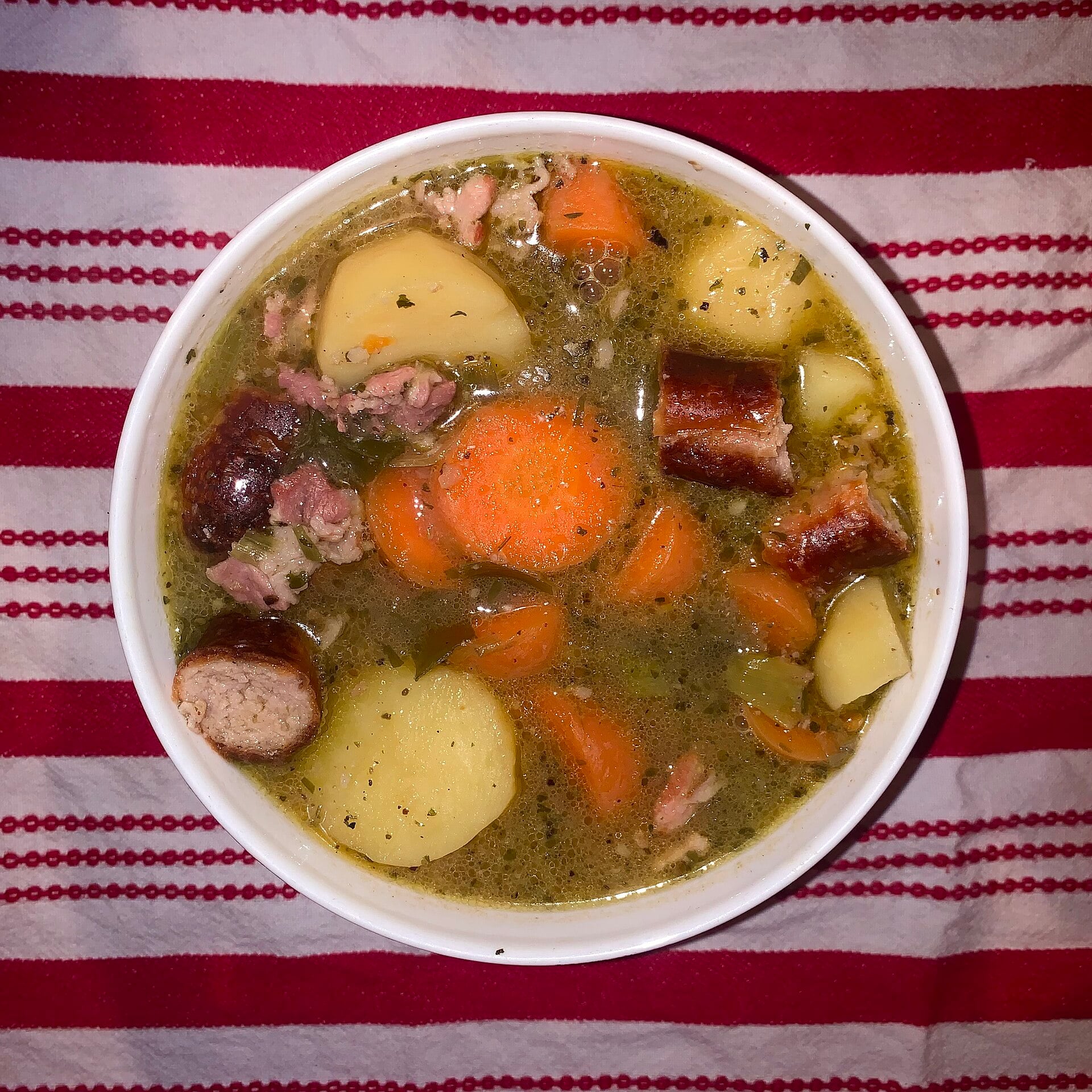
A Dish Only Dublin Knows
Coddle is not an Irish dish. It is a Dublin dish — and the distinction matters.
Ask someone from Galway or Limerick whether they grew up eating coddle and most will look at you blankly. But in the Liberties, in Crumlin, in the red-brick terraces of the Northside, coddle was the centre of the week.
The dish is simple: pork sausages, back bacon rashers, sliced onions, and potatoes, simmered slowly in water or stock. No fixed method. No set proportions. Every family made it their own way. That flexibility was always part of the point — you used what you had.
The Logic of Saturday Night
Saturday was pay day. It was also the last chance to shop before Sunday, when the city went quiet and anything left uncooked sat until Monday.
Sausages near their end. Rashers left over from the week. Potatoes sitting in the press since Tuesday. Coddle took all of it and turned it into dinner — slowly, without fuss, over hours of gentle simmering.
Left on the embers overnight, the pot was ready when the family returned from Mass. No cooking on the Sabbath. No second trip to the shops. The Saturday pot did the work so Sunday morning did not have to.
This was not a workaround. It was a system that lasted three centuries.
Jonathan Swift Noticed
The dish has been in Dublin long enough to catch the attention of Jonathan Swift.
The Dublin-born author of Gulliver’s Travels referenced coddle in his writing in the early 18th century. His references were not flattering — Swift was writing satire, and Dublin’s working poor were rarely treated with sentimentality. But the mention confirms it: coddle was already a recognised part of Dublin life 300 years ago.
It was street food before street food had a name. The smell of it rose through tenement stairwells and clung to narrow hallways. For families who could not always afford much, it was the answer to the question of how you feed six people on what is left at the end of the week.
☘️ Enjoying this? 64,000+ Ireland lovers get stories like this every week. Subscribe free →
The Argument That Never Ended
There is no official recipe for coddle, and Dubliners have been arguing about it for generations.
Purists insist on the cheap, watery sausages sold in Dublin butcher’s shops — not artisan quality. The fat dissolves into the broth and thickens it in a way that no better sausage replicates. Others add pearl barley. Some use chicken stock. Some leave the lid off to reduce the liquid; others keep it covered for the full simmer.
The one rule nobody disputes is that coddle should look unpromising. Pale and grey in the bowl, modest to the eye. Then it should taste like the inside of a warm kitchen on a cold Sunday morning — savoury, soft, and deeply satisfying in a way that has nothing to do with elegance.
The Dublin That Still Makes It
The tenements are long gone. The factories along the Liffey have mostly closed. The families who ate coddle every Saturday have scattered, emigrated, or moved to the suburbs.
But the dish did not go with them. Younger Dubliners who grew up eating coddle make it now for flatmates from Munster or Connacht who have never heard of it. They offer it the way you offer any piece of history: here, try this. This is where we came from. This is what Saturday used to smell like.
You will not find coddle on tourist menus alongside Irish stew and soda bread. But in quiet Dublin pubs and in home kitchens across the city, a pot goes on most Saturdays still. If you are planning a visit to the capital and want to understand what makes it unlike anywhere else in Ireland, the County Dublin guide covers the city and everything beyond it.
For a look at the other dishes that shaped Irish working life — and quietly disappeared — The Forgotten Irish Pub Food That Disappeared Before Anyone Said Goodbye is worth your time.
Coddle never became fashionable. It never appeared in travel magazines or on tasting menus. It survived because people kept making it — quietly, every Saturday, with whatever was left. That turns out to be the most durable kind of tradition there is.
☘️ You Might Also Love
☘️ Join 64,000+ Ireland Lovers
Every Friday, get Ireland’s hidden gems, local secrets, and travel inspiration — the kind you won’t find in any guidebook.
Subscribe free — enter your email:
Free forever · · Unsubscribe anytime
Tours & experiences you might love


Powered by Viator. Some links are affiliate links — we may earn a small commission at no extra cost to you.
Secure Your Dream Irish Experience Before It’s Gone!
Planning a trip to Ireland? Don’t let sold-out tours or packed attractions spoil your journey. Iconic experiences like visiting the Cliffs of Moher, exploring the Rock of Cashel, or enjoying a guided walk through Ireland’s ancient past often sell out quickly—especially during peak travel seasons.

Booking in advance guarantees your place and ensures you can fully immerse yourself in the rich culture and breathtaking scenery without stress or disappointment. You’ll also free up time to explore Ireland’s hidden gems and savour those authentic moments that make your trip truly special.
Make the most of your journey—start planning today and secure those must-do experiences before they’re gone!
Subscribe Free